

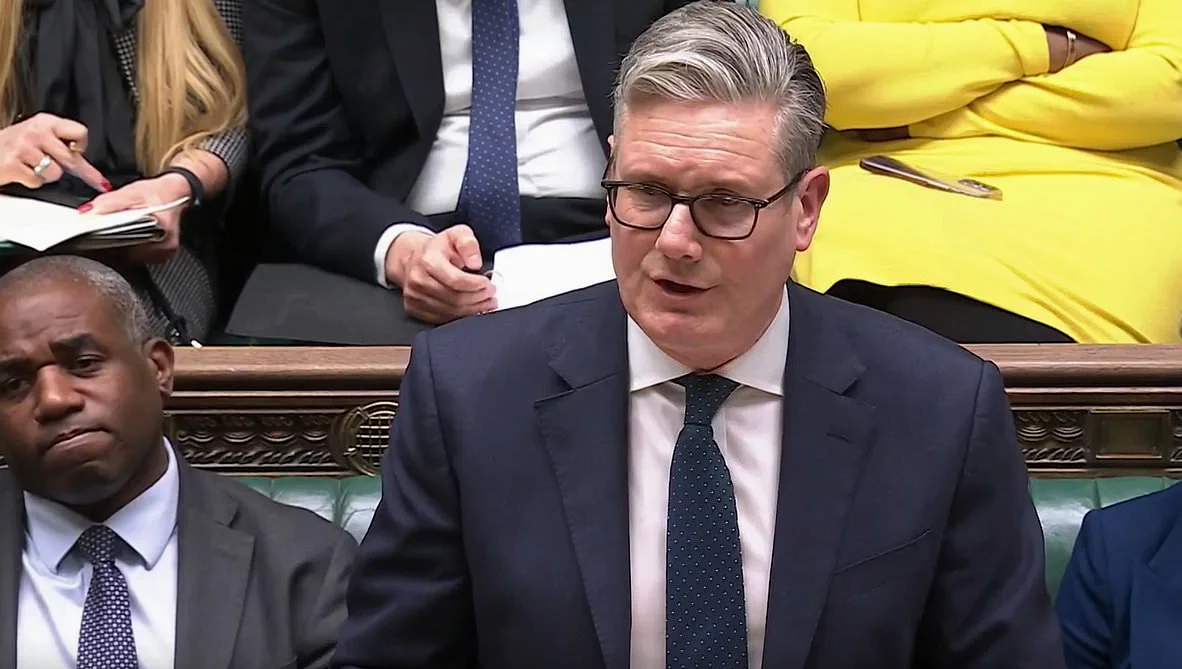
Prime Minister Keir Starmer has denied accusations that he is prioritizing the left wing of his party over addressing the growing tensions in the Middle East, following widespread criticism of his response to Iran’s recent military actions. The PM emphasized that his primary focus remains on the safety of British citizens in the region, as Iran launched a series of missile and drone attacks targeting multiple Gulf states and neighboring countries.
Escalating Tensions and Military Responses
In response to U.S. and Israeli strikes on Iran, the country launched retaliatory attacks on Cyprus, Kuwait, Qatar, Iraq, the UAE, and Bahrain. Speaking in the House of Commons on Monday, Starmer defended his initial decision to prevent the U.S. from using UK bases for strikes. However, he later approved the use of British bases to target Iranian missile facilities in an effort to protect Gulf allies.
Starmer faced significant pressure from left-wing MPs, who urged him to avoid entangling Britain further in the Middle East conflict. During the House of Commons session, several backbenchers, including members of his own party, called on the PM to ‘learn the lessons’ of past Western interventions in the region, such as in Iraq and Afghanistan.
Criticism from Labour and Green MPs
Senior Labour MP Emily Thornberry, chair of the Commons foreign affairs committee, denounced the U.S. strikes as ‘ill-advised, ill-judged, and illegal.’ John McDonnell, the former Labour shadow chancellor, warned of the risks of military action, citing past conflicts in Iraq, Libya, and Afghanistan. He urged Starmer to ensure the UK remains an independent actor, not swayed by U.S. President Donald Trump’s policies.
Imran Hussain, Labour MP for Bradford East, criticized the PM for allowing the UK to be ‘Trump’s poodle’ and called for an end to ‘illegal and endless wars.’ Richard Burgon, Labour MP for Leeds East, warned that the current crisis could lead to a wider conflict, echoing the consequences of previous Western interventions.
Ellie Chowns, leader of the Greens in the Commons, condemned the U.S. and Israeli strikes as ‘deeply irresponsible and illegal,’ and called for a vote in Parliament on any UK involvement. She accused the PM of not standing up against Trump’s ‘loose cannon’ policies and urged the UK to oppose the war.
Legal and Political Challenges
Starmer defended his decision as being in line with international law, stating that the UK is acting in ‘collective self-defence’ following the attacks. The government has published a legal summary outlining its position, emphasizing that the UK is not entering into offensive military action.
Green leader Zack Polanski, who is not an MP, demanded that Starmer withdraw permission for the U.S. to use UK bases for airstrikes on Iran. He accused the PM of allowing the UK to be ‘dragged into another illegal war’ and called for a parliamentary vote on any involvement. Polanski referenced Starmer’s past pledge during his Labour leadership campaign in 2020, where he vowed to end ‘illegal wars’ and put human rights at the center of foreign policy.
Starmer’s decision followed discussions with regional leaders who requested the UK to take more steps to protect their countries from Iranian missiles. The PM insisted that the UK would continue defensive operations, including shooting down Iranian drones threatening northern Iraq and Qatar.
Earlier in the day, Polanski faced backlash for his comments in a TV interview, where he accused Trump of acting in ‘the law of the jungle.’ He argued that international law is eroding and that the world is witnessing a dangerous trend of unchecked military actions.
The controversy comes at a delicate time for Starmer, who recently faced a political setback with Labour’s loss in the Gorton and Denton by-election to the Green Party. This has added pressure on the PM to demonstrate a clear stance on foreign policy and military involvement.
Starmer’s response to the criticism has been firm, reiterating that his primary duty is to protect British nationals in the region. However, the growing divide within his party and the Green Party highlights the deepening concerns over the UK’s role in the Middle East and the potential for further escalation.






Comments
No comments yet
Be the first to share your thoughts