

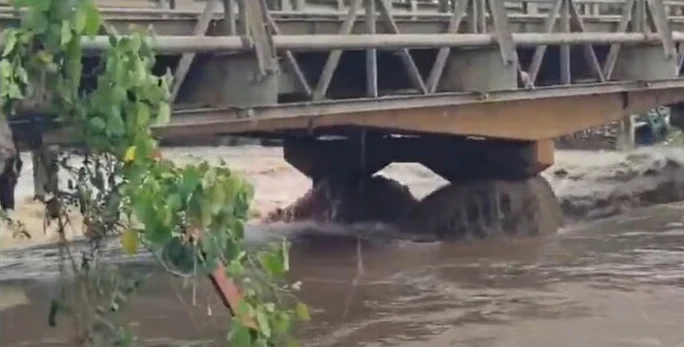
The Kenya National Highways Authority (KeNHA) has indefinitely closed the Migori Footbridge along the Isebania-Sare (A1) Road due to rising water levels and structural instability caused by heavy rainfall in the region.
Structural Weaknesses Prompt Closure
The footbridge, which connects parts of Migori Town, was closed on February 23 after assessments by the County Government of Migori revealed visible signs of deterioration on the Suna West expansion joints, raising serious safety concerns.
Governor Ochilo Ayacko issued a public warning, urging residents to avoid using the bridge due to its alarming structural weaknesses. ‘The County Government of Migori wishes to inform residents and all road users of a developing structural concern affecting the main Migori Bridge in Migori Town,’ Ayacko said in a statement.
Teams from the County Department of Environment and Disaster Management, in coordination with the Office of the County Commissioner and other relevant authorities, conducted an assessment and confirmed the bridge is completely unsafe for use. The decision to close the bridge was made to prevent potential accidents and ensure public safety.
Rising River Levels Exacerbate the Situation
The closure comes amid heavy rainfall that has caused the River Migori to swell, overwhelming the bridge and leading to the erosion of gabion protection on the upstream side. This has left the footbridge suspended dangerously and cut off from the riverbank, posing a risk to pedestrians.
According to KeNHA, the rising water levels are a direct result of ongoing heavy rains across the region. The Kenya Meteorological Department had issued a heavy rainfall alert earlier in the week, predicting rainfall exceeding 20mm within 24 hours on Saturday and potentially reaching more than 30mm daily between Sunday and Tuesday, February 24.
The weather conditions have already caused disruptions in several parts of the country, with reports of flooding in areas around Lake Victoria, the Rift Valley, and the Highlands. In Migori, the combination of rising river levels and pre-existing structural issues has created a dangerous situation.
KeNHA has advised pedestrians to use the main bridge for crossing the river, which remains operational for motorized traffic. The authority has assured the public that the situation is being closely monitored, and restoration works will commence immediately once water levels recede and the site is deemed safe for construction activities.
Impact on Local Residents
The closure of the footbridge has left many residents in Migori without a safe and convenient way to cross the river, particularly those who rely on it for daily commutes and access to essential services. Local business owners have expressed concern about the economic impact of the closure, with some reporting a decline in foot traffic.
‘The bridge was a lifeline for many people in the town,’ said one local shop owner. ‘Without it, it’s much harder to get around, and some of our regular customers can’t make it to the market anymore.’
The situation highlights the vulnerability of infrastructure in regions prone to heavy rainfall and flooding. Similar incidents have occurred in the past, particularly during the 2018 rainy season, when several bridges and roads were damaged due to excessive rainfall and poor drainage systems.
Experts warn that without adequate investment in infrastructure and disaster preparedness, such incidents are likely to become more frequent and severe as climate change continues to alter weather patterns in the region.
What’s next for the Migori Footbridge remains uncertain. KeNHA officials have not provided a timeline for the bridge’s reopening, but they have emphasized the need for careful planning and coordination with local authorities to ensure that any restoration efforts are both safe and sustainable.
As the rainy season continues, the situation in Migori serves as a stark reminder of the challenges posed by climate change and the need for proactive measures to protect both infrastructure and communities at risk.




Comments
No comments yet
Be the first to share your thoughts