

 The Guardian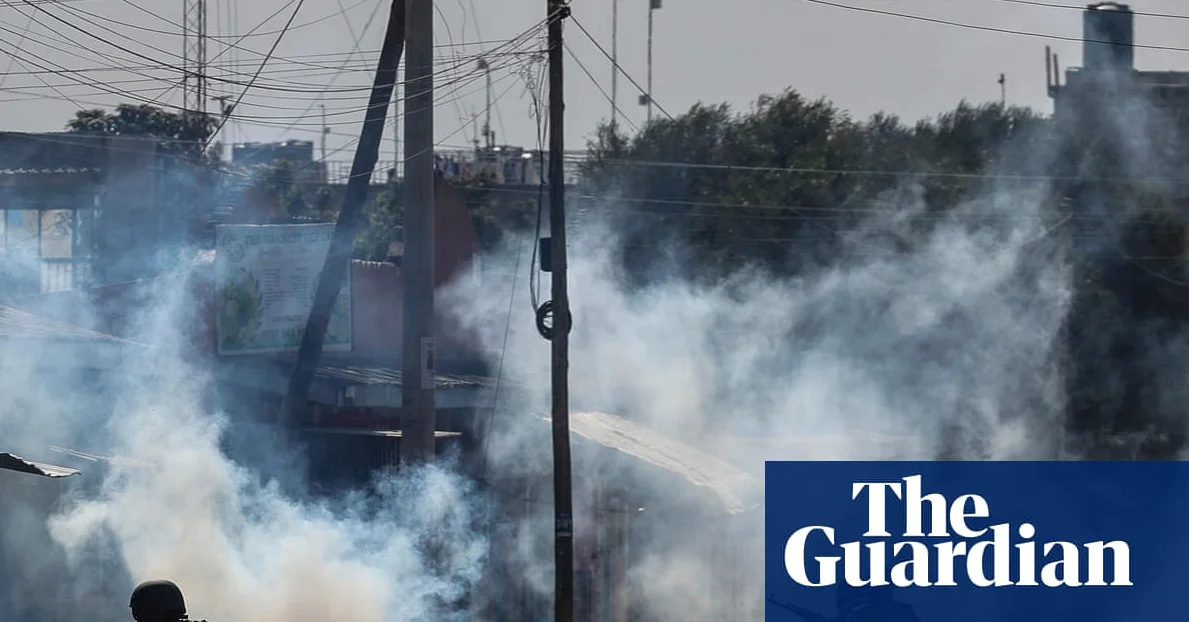
Kenya’s health minister. Aden Duale, told a court on Tuesday he had ordered the immediate and complete cessation of construction at the US-run Ebola quarantine facility at Laikipia air base. The decision came after he was held in contempt for continuing preparations in violation of a court order issued last month.
Protests and Concerns Over the Facility
Many Kenyans have strongly opposed the facility since its announcement in May. Deadly protests have erupted, with three people killed since the facility’s proposal. Two were killed on 1 June and another was shot by police on 9 June.
The facility was to be built at Laikipia air base, about 125 miles from Nairobi, and was intended to include 50 isolation beds managed by US medical staff for citizens evacuated from the Democratic Republic of Congo, where an Ebola outbreak has claimed over 250 lives as of 20 June.
Legal and Political Tensions
In May, the high court ordered a stop to the construction of the facility until a petition by rights groups could be heard. The groups had argued the project was developed secretly without public consultation. The judge, Patricia Nyaundi Mande, discharged Duale with a warning after he apologized and pledged to halt work pending the hearing.
Despite the court order, US officials and diplomats told Reuters that specialist staff and medical equipment continued to be flown into the airbase. Satellite imagery from 22 June also showed a buildup of structures, including tents and paved areas.
In court, Duale defended the facility, stating that fears of the disease spreading beyond it were “scientifically unfounded.” President William Ruto has also supported the project, saying Kenya was “doing the right thing” by allowing it to proceed.
International Context and Funding
The US has pledged $13.5 million to support Kenya’s Ebola preparedness efforts. However, critics argue the arrangement carries colonial overtones and question the necessity of bringing potential carriers of the virus into Kenya, a country that has never recorded an Ebola case.
Dr. Davji Atellah from the Kenya Medical Practitioners, Pharmacists, and Dentists Union expressed concern, stating, “If it is too dangerous for America, it is too dangerous for Kenya.”
The US has historically allowed its citizens to return home for treatment during Ebola outbreaks, but in this case, officials have said no one with the disease will be allowed to enter the US. In May, an American doctor who contracted Ebola in the DRC was flown to Germany for care, along with his family.
The World Health Organization (WHO) declared the outbreak a public health emergency of international concern on 17 May, though experts believe the virus was already circulating before the official announcement. The Bundibugyo strain of Ebola, currently affecting the DRC, has no approved vaccine or treatment.
Modelling by the US Centers for Disease Control and Prevention suggests the current outbreak could be the largest on record. The previous largest outbreak, from 2014 to 2016 in West Africa, infected over 28,000 people and killed more than 11,000.






Comments
No comments yet
Be the first to share your thoughts