

 The Guardian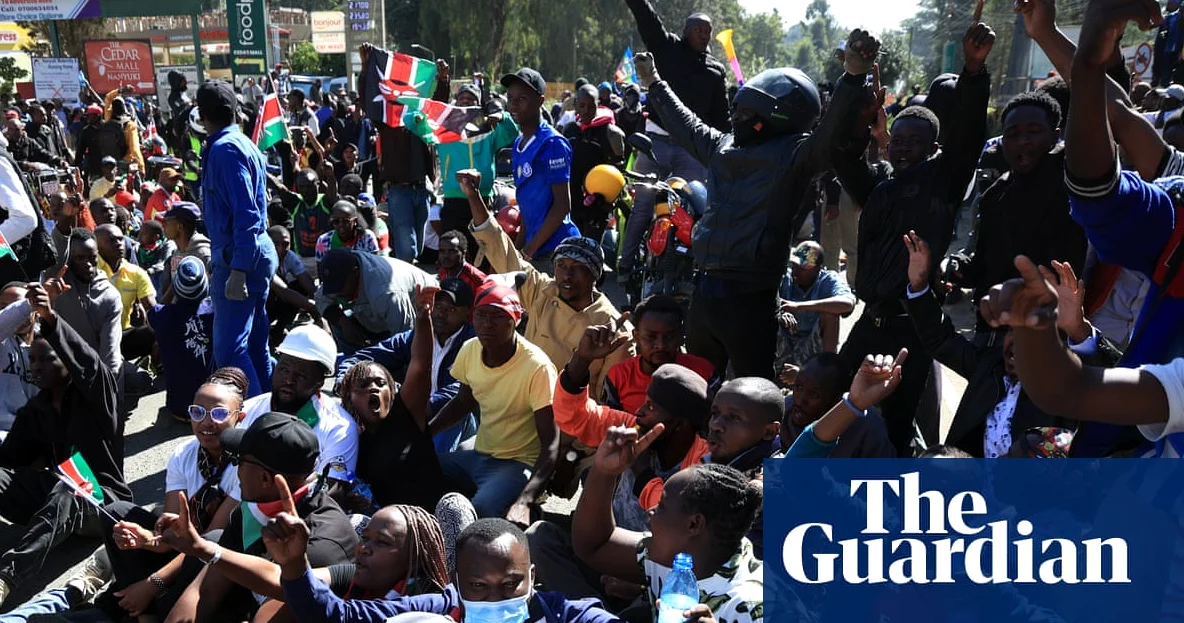
Residents in central Kenya have criticized a plan by the US to establish an Ebola quarantine facility for its citizens, fearing it could expose them to the virus. Charles Mathenge. A taxi driver near the proposed site at Laikipia Air Base in Nanyuki, said, “Everybody should be quarantined in their home country — we shouldn’t allow foreigners to bring us diseases.”.
Kenyans Question US Double Standards
David Mulinge. A souvenir seller. Expressed frustration. Stating, “What’s shocking is that the Americans don’t want their infected fellow citizens to step into their own country but to come to Kenya; That’s like treating us as lesser beings.” The facility, if completed, will have 50 beds and be staffed by 30 US medical personnel.
A recent outbreak of the Bundibugyo virus, which has no vaccine or approved treatment, has been declared a public health emergency of international concern by the World Health Organization (WHO). The outbreak, first declared on 15 May, has resulted in 60 deaths and 344 confirmed cases in the Democratic Republic of the Congo (DRC) and one death and nine confirmed cases in Uganda, the WHO reported on Tuesday.
Legal and Political Responses
In response to the controversy, the Nairobi high court temporarily blocked the establishment of the facility and the admission of people exposed to Ebola into Kenya. The Katiba Institute, a Kenyan nonprofit, filed a petition citing concerns about public health, governance, and sovereignty. Dr. Davji Atellah from the Kenya Medical Practitioners, Pharmacists and Dentists Union said the group would not “sit back and watch Kenya be treated as a containment colony.”
Kenya’s president, William Ruto, defended the plan, stating it was part of a broader system for national health preparedness. “These measures are intended solely to safeguard public health and strengthen our capacity to respond effectively to health emergencies,” he said. However, high court judge Patricia Nyaundi later barred the Kenyan government from proceeding with the plan before the case is resolved. She also ordered the government to disclose all agreements related to the facility within seven days.
Community Fears and Concerns
Simon Ng’ono, a motorcycle taxi operator, questioned why the US, which has more advanced healthcare infrastructure, wanted to bring Americans exposed to Ebola to Nanyuki. Fauzia Owinde, a street food seller, expressed fear of a return to a curfew or lockdown like during the Covid-19 pandemic. “We’d die in our houses,” she said.
Purity Kendi, a business person near the airbase, felt betrayed by the Kenyan government. “We expect our leaders to protect us but they’ve showed us that they don’t care about us,” she said. She urged Kenyans to unite and oppose the plan. “We don’t have another country to run to,” she added.





Comments
No comments yet
Be the first to share your thoughts