

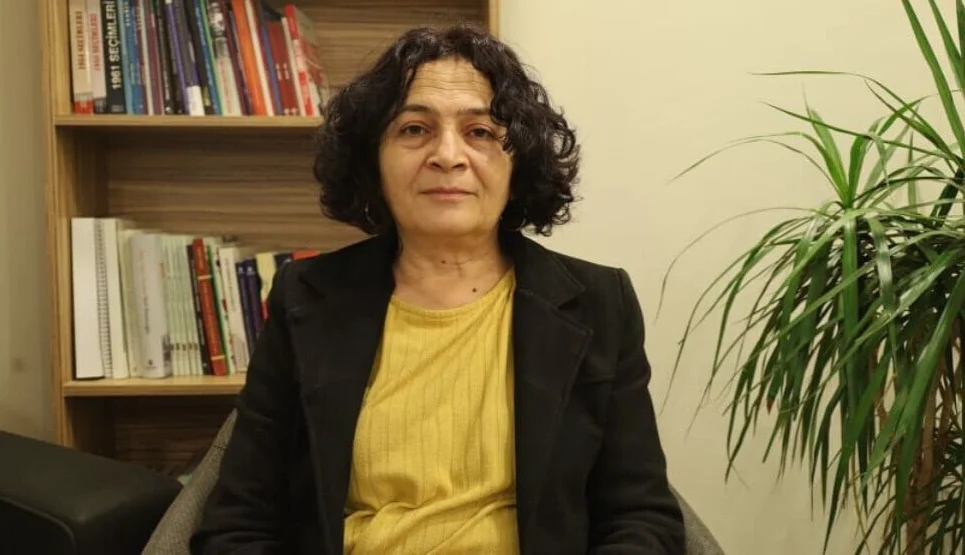
Kurdish women in Turkey are pushing for the recognition of their national identity and the freedom of imprisoned political leader Abdullah Öcalan as they mark International Women’s Day, highlighting what they describe as systemic repression against women in the country. Arife Çınar, co-chair of the People’s Democratic Party (DEM) in Istanbul, emphasized that the government’s policies ignore the will of women and instead promote a narrow definition of the ‘acceptable woman.’
The ‘Acceptable Woman’ Policy and Systemic Repression
Çınar criticized the government’s approach to women, stating that policies framed as ‘reforms’ have instead aimed to shape women’s identity through a male-dominated lens. She said that the state often dismisses femicides as ‘suspicious deaths,’ using language that reinforces patriarchal norms. In one year alone, 400 women were murdered, while thousands more faced various forms of violence, according to Çınar.
Women are also struggling under insecure living conditions, with many forced to work in unsafe environments where profit is prioritized over safety. The recent deaths of women in an unlicensed perfume factory in Dilovası, Çınar said, underscore the dangers women face in such conditions.
According to Çınar, the government’s failure to address femicide and the lack of real confrontation with the issue show that the system serves a male-dominated mentality. She said it is clear that the judiciary and legal system are influenced by this mindset, which continues to objectify women rather than recognizing them as social subjects.
Jin Jiyan Azadî: A Communal Philosophy for Women’s Liberation
Çınar highlighted the significance of the slogan ‘Jin Jiyan Azadî,’ which translates to ‘Women Life Freedom.’ She said that this philosophy, rooted in the ideas of Abdullah Öcalan, has inspired women around the world to build a free and equal society. The Rojava women’s revolution, she said, has become a model for women’s solidarity and organization, weaving every area of life with women’s hands and giving them strength.
Çınar argued that the wars in the Middle East are driven by male-dominated mentalities that aim to reinforce patriarchal control. In these conflicts, women and children are often the victims, and the physical and intellectual toll on women is profound. She said that the struggle against this system must be intensified through women’s solidarity and organization.
Historically, women have experienced intense oppression and exclusion, with their will often ignored. The male-dominated mindset has defined the concept of the ‘acceptable woman,’ and masculinity has been continuously reconstructed to spread sexist ideologies across society. Women, instead of being recognized as social subjects, have been objectified, Çınar said.
Women’s Role in Democratization and Peace Processes
Çınar emphasized that the philosophy of Abdullah Öcalan on women’s liberation has been embraced by women around the world. She quoted Öcalan, saying, ‘Without women being free, society cannot be free.’ Today, women of every identity unite around this philosophy, carrying out the struggle for equality and freedom.
According to Çınar, women must play an active role in democratization and peace processes. The path to a truly equal and free society, she said, will come through the presence and struggle of women. Their struggle, she added, will be a driving force in overcoming the male-dominated system.
Kurdish women, in particular, have clear demands for International Women’s Day, which include an equal life, the freedom of their mother tongue, and the freedom of Abdullah Öcalan. Çınar said that women must become pioneers of life by taking part in decision-making mechanisms in every field and expressing their existence with their own will.
She added that the rights to mother tongue and national identity must be guaranteed. Öcalan, she said, should gain his freedom and be able to meet women from all segments of society under equal conditions, moving from a negative stage to a positive stage and enabling steps toward democratic integration.
Legal changes, Çınar argued, must take place so that women can live under equal and free conditions. Instead of the limits imposed by male-dominated policies, a future must be created where women can make decisions with their own will, speak freely, and build their lives according to their own values.
Women, Çınar said, are carrying out the struggle to build a new life on these lands based on a women’s liberationist, ecological, and democratic model.






Comments
No comments yet
Be the first to share your thoughts