

 BBC
BBC 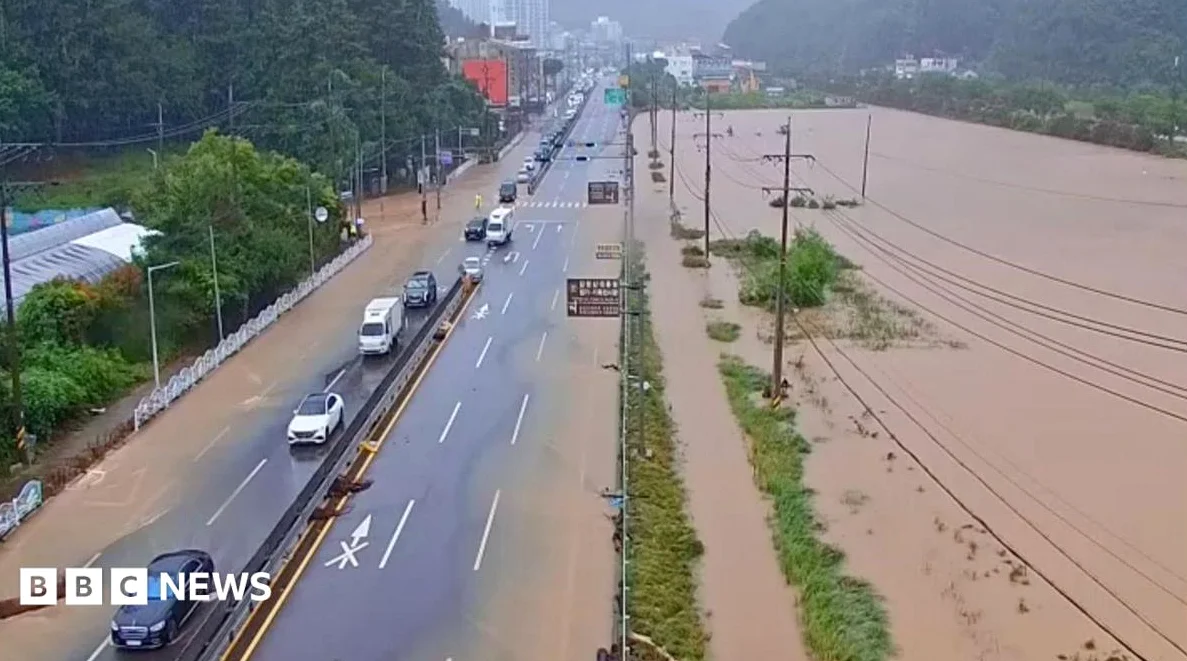
Torrential rains have pummelled South Korea’s Gyeongsang province, triggering a landslide that killed one person and wounded two others, but the landslide buried the first floor of an apartment building in the south-eastern city of Geoje on Monday morning. Rescuers pulled out three people, one of whom was later declared dead, local media report.
Record Rainfall and Flooding
This comes as record rainfall triggered by back-to-back storms caused widespread flooding and landslides in parts of China, Japan, and the Philippines; Geoje city saw 124.5mm of rain in a one-hour period, the highest since South Korea’s meteorological agency started keeping records for the city in 1972.
Between Sunday and Monday, Geoje received more than 400mm of rain overnight. Videos on social media show cars submerged in Geoje as strong currents swept the streets. City authorities announced that some tourist attractions will be closed on Monday due to the heavy rain.
Impact on Daily Life
Bus operations and household waste collection have also been suspended due to flooded or damaged roads, authorities said. On Sunday, authorities urged residents to avoid driving, stay away from places like riverbanks and evacuate to safe areas if needed. Multiple storms swept through large swathes of East and South East Asia this month, causing widespread flooding and damage to infrastructure.
Forecasters said this year’s typhoon season was shaping up to be more intense than usual, due to a strong El Niño that began in June. El Niño pushes up global temperatures and increases the strength of typhoons. Late last week, ‘rare’ rainfall battered Japan’s Chiba prefecture near Tokyo, leaving 10 people dead and stranding thousands at Narita Airport.
Japan’s Flooding Crisis
The deluge also cut power to more than 20,000 households. On Sunday, Japanese authorities said the 10th fatality was a man in his 30s who was found dead at his home from carbon monoxide poisoning. He had been using a generator due to the power outage, public broadcaster NHK reported.






Comments
No comments yet
Be the first to share your thoughts