

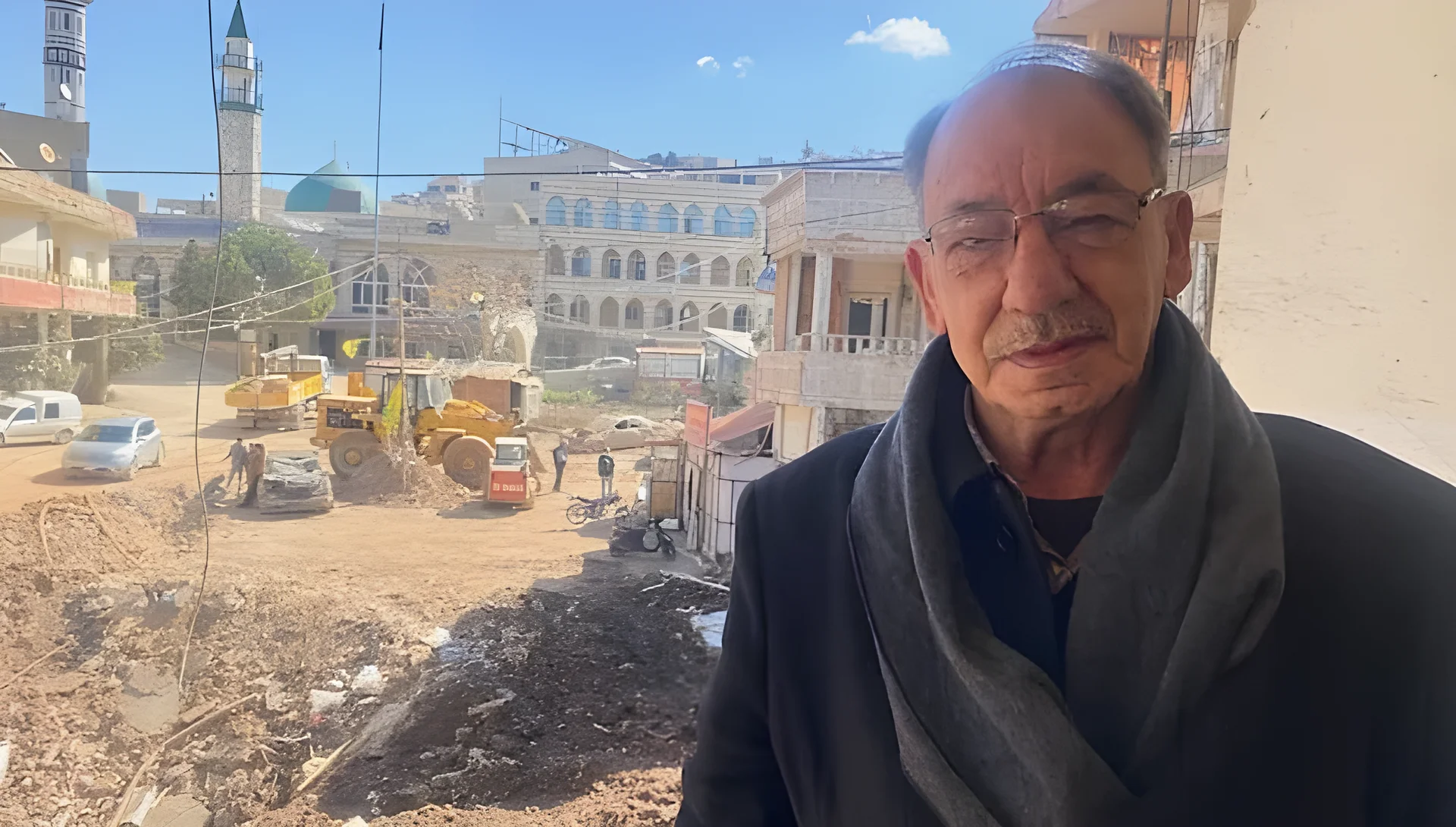
High in the hills of Lebanon’s Bekaa Valley, the town of Nabi Chit bears the scars of recent Israeli airstrikes. The town’s center, once a hub of daily life, is now a landscape of rubble and devastation. A former apartment building has been reduced to a gaping void, with one side completely missing. The mayor of Nabi Chit, standing on a ledge overlooking the destruction, told CBC, ‘We are not invading. They are the ones invading us. We will all rally and we are going to kill them with our own hands. We are not going to let the Zionists fulfill their dreams.’
Existential Threat and International Stance
With its ally Iran under attack by the U.S. and Israel, and Israel’s military pounding Hezbollah’s weapons storage and infrastructure, the question remains: Can Hezbollah survive this war? According to retired Lebanese armed forces brigadier-general Khalil Helou, ‘With a weakened Iran, Iran cannot be very helpful to Hezbollah anymore. Regarding money, regarding weaponry, regarding the logistical support and the training, I think that this will be extremely difficult.’
Helou noted that while Hezbollah has demonstrated the capacity to launch volleys of rockets into Israel, including a large strike coordinated with Iran last week, the disparity in military and air power remains stark. ‘Ultimately, Hezbollah is a loser. The Israelis have the upper hand, but will Hezbollah still be around in a few months? The answer is yes.’
Public Sentiment and International Pressure
Some Lebanese citizens, however, are growing weary of the conflict and quietly want Israel to finish the job. Political analyst and columnist Ali Hamade said, ‘You will hear a lot of Lebanese, Christians, Druze, even a lot of Sunnis, saying they want to get rid of Hezbollah at any cost. They don’t like Israel, they know it is a problem, but they want this saga of Hezbollah to end.’
International pressure is mounting, with Canada, the U.K., Germany, France, and Italy issuing a joint statement urging Hezbollah to stop firing rockets into Israel and calling for a political solution. However, Hezbollah remains defiant, rejecting any disarmament until it perceives continued Israeli aggression.
Control and Resistance in the Bekaa Valley
Hezbollah’s influence remains strong in areas like the Bekaa Valley, where it controls access and messaging. To visit Nabi Chit, a Hezbollah escort was required, guiding journalists in and out of the town. This level of control is evident in other areas where Hezbollah operates as a de facto military, screening who comes in and out.
In the southern suburbs of Beirut and the Bekaa Valley, Hezbollah enjoys strong support, especially from Shia communities. Jano Alawie, a resident who fled her home in the south for temporary security in Beirut, said, ‘Even if we lose all our homes, we will not mourn the rubble. The resistance is protecting us. When our kid is born, his first word is Hezbollah. What do you think he will say when he grows up?’
The humanitarian crisis in Lebanon is worsening, with more than one million people displaced in a country of nearly six million. According to Lebanese authorities, many of those displaced are from Shia villages in southern Lebanon. Retired General Helou warned that ‘The Israelis are solving their problem, but transferring their problem to other parts of Lebanon.’
Escalating Conflict and Casualties
In Nabi Chit, fresh graves at a local cemetery reflect the toll of the war. Israel claimed its forces attempted to recover the remains of an Israeli airman who went missing in Lebanon nearly 40 years ago. However, local fighters engaged in a firefight, resulting in 41 deaths, according to the Lebanese Health Ministry.
In the nearby village of Tamnin al-Tahta, smoke rises from the wreckage of a cement block factory where ten people, including four children, were killed. A farm worker showed us the damage to his tuk-tuk and the shrapnel that pierced his tent. ‘There was nothing here,’ he said, referring to the attack site.
According to the Lebanese Health Ministry, more than 900 people have been killed in Lebanon during the first two weeks of the war. The international community is pushing for a political resolution, but Israel has rejected talks until Hezbollah disarms.
Disarmament and the Path Forward
A disarmament agreement was negotiated with a previous ceasefire, and in 2025, the Lebanese Armed Forces and UNIFIL worked to disarm Hezbollah south of the Litani River. However, Ali Hamade said, ‘It was partially done, but they never said that it was a deep cleaning. Hezbollah still had a cache of arms to draw on.’
With the outbreak of war on March 2, the Lebanese government officially banned Hezbollah’s military activities and rejected launching any missiles or drones from Lebanese territory. However, enforcing this ban during active war remains uncertain.
The Lebanese people are living through a dangerous and chaotic situation. Hamade said, ‘The Lebanese are watching and living stoically with this whole crazy dangerous situation.’






Comments
No comments yet
Be the first to share your thoughts