

 BBC News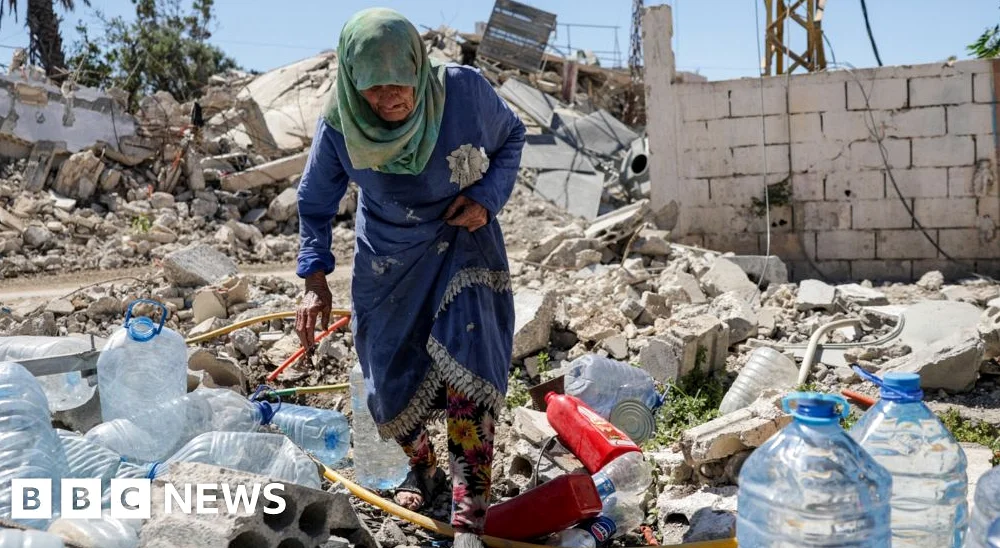
According to Lebanon’s health ministry, the Israeli air strikes in southern Lebanon resulted in at least 18 deaths and 33 injuries — the strikes targeted several buildings in the region.
The Israel Defense Forces (IDF) stated that it had struck 80 targets associated with the Iran-backed armed group Hezbollah and killed ‘dozens’ of its members, but the IDF also confirmed that four of its soldiers were killed in the clashes.
International Deal in Question
This comes a day after the US and Iran signed a deal aimed at ending the conflict in the Middle East, including a permanent cessation of hostilities in Lebanon. However, both Israel and Hezbollah have continued to carry out strikes against each other, raising concerns about the future of the truce.
The US-Iran deal calls for an end to hostilities on all fronts and for Lebanon’s territorial integrity and sovereignty to be respected. Despite this. Israel has stated it has no intention of withdrawing its forces from Lebanon and insists that its conflict with Hezbollah is separate from the war on Iran.
Escalation of Conflict
Lebanon’s state news agency described the overnight bombardment across the Nabatieh district of southern Lebanon as one of the most intense of the war, though Hezbollah claimed it had ambushed an Israeli group, destroying three tanks with guided missiles and targeting troops with rocket and artillery fire.
Since the latest conflict began. At least 3. 912 people have been killed in Lebanon, with a further 11,699 others wounded, according to the country’s health ministry; Around a million people remain displaced, and dozens of communities in the south have been completely destroyed.
Hezbollah has vowed to continue its attacks as long as the Israeli invasion persists. Israel’s Prime Minister Benjamin Netanyahu is under domestic pressure to continue military operations against the group, which could lead to a conflict with US President Donald Trump, who has publicly criticized Israel’s actions in Lebanon.
Domestic and International Reactions
Israel’s far-right National Security Minister Itamar Ben-Gvir responded to the deaths of the four soldiers by stating that ‘all of Lebanon must burn.’ He added that Israel must make it clear to the world that the blood of its citizens is not up for negotiation.
French Foreign Minister Jean-Noël Barrot urged Israel to respect the US-Iran deal and called on the US to exert pressure on the Israeli government. The US-Iran agreement includes provisions on Iran’s nuclear program, sanctions relief, and a commitment to pursue a final settlement within 60 days.
US Secretary of State Anthony Blinken previously criticized members of Netanyahu’s cabinet for their stance on the deal. He named Ben-Gvir and Finance Minister Bezalel Smotrich as critics of the agreement, urging them to reconsider their positions.
Blinken stated that if he were in the Israeli government, he would not attack the only powerful ally Israel has. He emphasized that Israel cannot resolve every national security issue through military action alone.
Netanyahu himself stressed the importance of maintaining Israel’s close ties with the US, highlighting that Washington has stood ‘shoulder to shoulder’ with the country during the war with Iran. US officials have also clarified that while Lebanon is covered by the ceasefire framework, the withdrawal of Israeli forces from Lebanese territory is not a condition of the deal. Israel will retain the right to self-defense.






Comments
No comments yet
Be the first to share your thoughts