

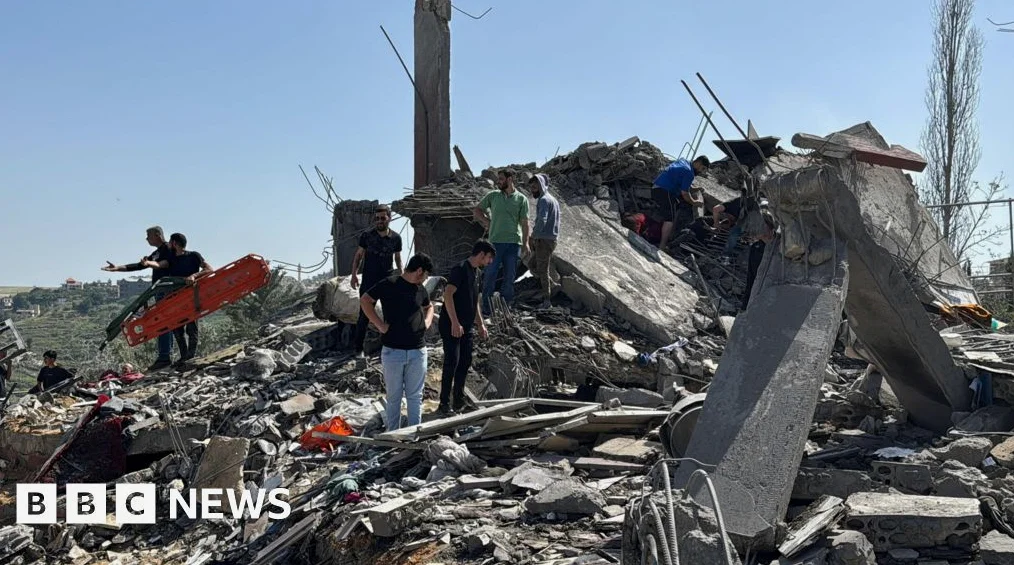
Lebanon’s health ministry has confirmed that Israeli attacks have killed more than 120 people across the country in the last week, including women and children, while the ministry does not distinguish between combatants and civilians in its reports. According to the ministry, 39 people were killed in the past seven days alone.
Israeli military occupation and Hezbollah clashes
The Israeli military is occupying a strip of Lebanese land along the border, with officials stating the goal is to create a Hezbollah-free security zone to protect Israel’s northern communities. In these areas. Entire villages have been destroyed, with tactics similar to those used in Gaza, as Human rights groups have warned that some of these actions may amount to war crimes.
Hezbollah has also launched attacks on Israeli troops in Lebanon and northern Israel using rockets and drones. The group claimed responsibility for a drone strike in northern Israel on Saturday as a response to ongoing Israeli attacks. The Israeli military confirmed it had identified an explosive drone launched by the Hezbollah terrorist organization and stated that three army reservists were injured, one seriously.
Escalation following Iran attack
The current conflict escalated after the US and Israel conducted an attack on Iran on 28 February, which resulted in the death of Iran’s supreme leader. In retaliation, Hezbollah launched rockets and drones into Israel on 2 March. In response, Israel launched air strikes across Lebanon and re-entered southern Lebanon in early March, where it has occupied 10km (6.2 miles) of Lebanese territory and destroyed entire villages.
Death toll and ongoing conflict
According to Lebanon’s health ministry, a total of 2,795 people have been killed in Lebanon since 3 March 2025. This includes both combatants and civilians. The Israeli military has continued near-daily attacks on targets it claims are linked to Hezbollah, despite a ceasefire agreement reached in November 2024 to end a previous conflict. The ongoing violence has drawn international concern over potential war crimes and civilian casualties.






Comments
No comments yet
Be the first to share your thoughts