

 BBC
BBC 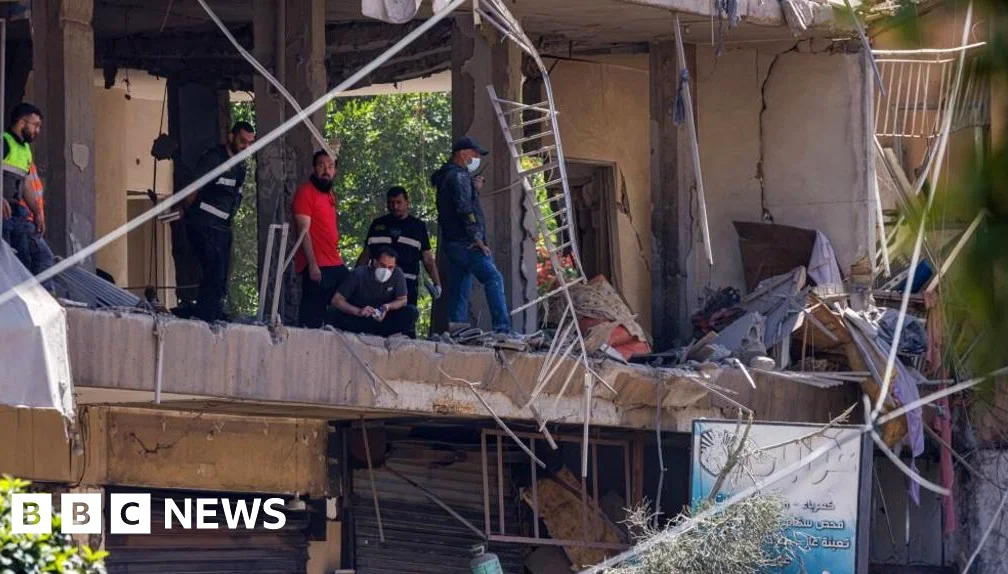
Israeli Targeting of Hezbollah Command Centre
The Israel Defense Forces (IDF) said it targeted a “command centre” used by Hezbollah in Dahieh, after the Iran-backed armed group launched “aerial targets toward Israel.”
Photographs of the scene showed extensive damage around the building that was hit.
Iranian and U.S. Responses to the Strike
A senior Iranian official warned that the Israeli attack south of Beirut could derail an expected deal to end the fighting between Iran and the US.
US President Trump later said the attack “should not have happened, particularly on a special day when we are so close to a Peace Deal with Iran.”
“Israel has the right to defend itself against threats, but the attack it was responding to was very small and meaningless, nobody was hurt, injured, or killed, and should not disrupt this important process,” Trump wrote in a post on Truth Social.
He stressed that “there should be no more attacks by Israel anywhere in Lebanon, but there should also be no more attacks by any other party, including Hezbollah, against Israel.”
“This could be the beginning of a long and beautiful peace — Let’s not blow it!” he added.
Domestic and Regional Implications
Reports in Israel say officials see the deal as a major setback for the country.
Israel appears to have been sidelined in the negotiations and has also insisted it will continue striking Hezbollah, in response to its attacks in northern Israel.
Mohammad Bagher Ghalibaf, Iran’s chief negotiator in the ongoing talks with the US, said that Israel’s attacks on Dahieh on Sunday showed the US was not fulfilling its commitments.
Iran’s senior military official Brig Gen Mohammad Jafar Assadi also warned that the Israeli attack on the Beirut suburbs would not go “unanswered.”
President Trump has typically been an ardent proponent of Israel during both his terms in the White House – but his attempts to extricate himself from a potentially drawn-out and increasingly costly conflict in the Middle East have been frustrated by Israel’s ongoing operation in Lebanon.
Israeli officials say the conflict against Hezbollah is separate to the one in Iran and, in Israel, there is public support for the war in Lebanon to continue.
If Iran is successful in linking the two arenas, Israel may be forced to stop its military activities in Lebanon.
Lebanon was drawn into the war between Israel, the US and Iran on 2 March, when Hezbollah launched rockets into Israel in retaliation for an Israeli strike that killed Iran’s supreme leader.
Israel responded by launching a bombing campaign across Lebanon and invading a significant part of the country’s south.
Israel and the US began launching strikes across Iran on 28 February, prompting Iran to attack Israel and US-allied states in the Gulf – as well as effectively closing the Strait of Hormuz, a key shipping route for the world’s oil and liquefied natural gas.
Despite having agreed a ceasefire in April, the US and Iran have exchanged intermittent fire.
For decades, Iran has been accused by Western countries of trying to build a nuclear weapon — it has denied the accusations saying its programme is for peaceful purposes – to generate electricity and for research purposes.






Comments
No comments yet
Be the first to share your thoughts