

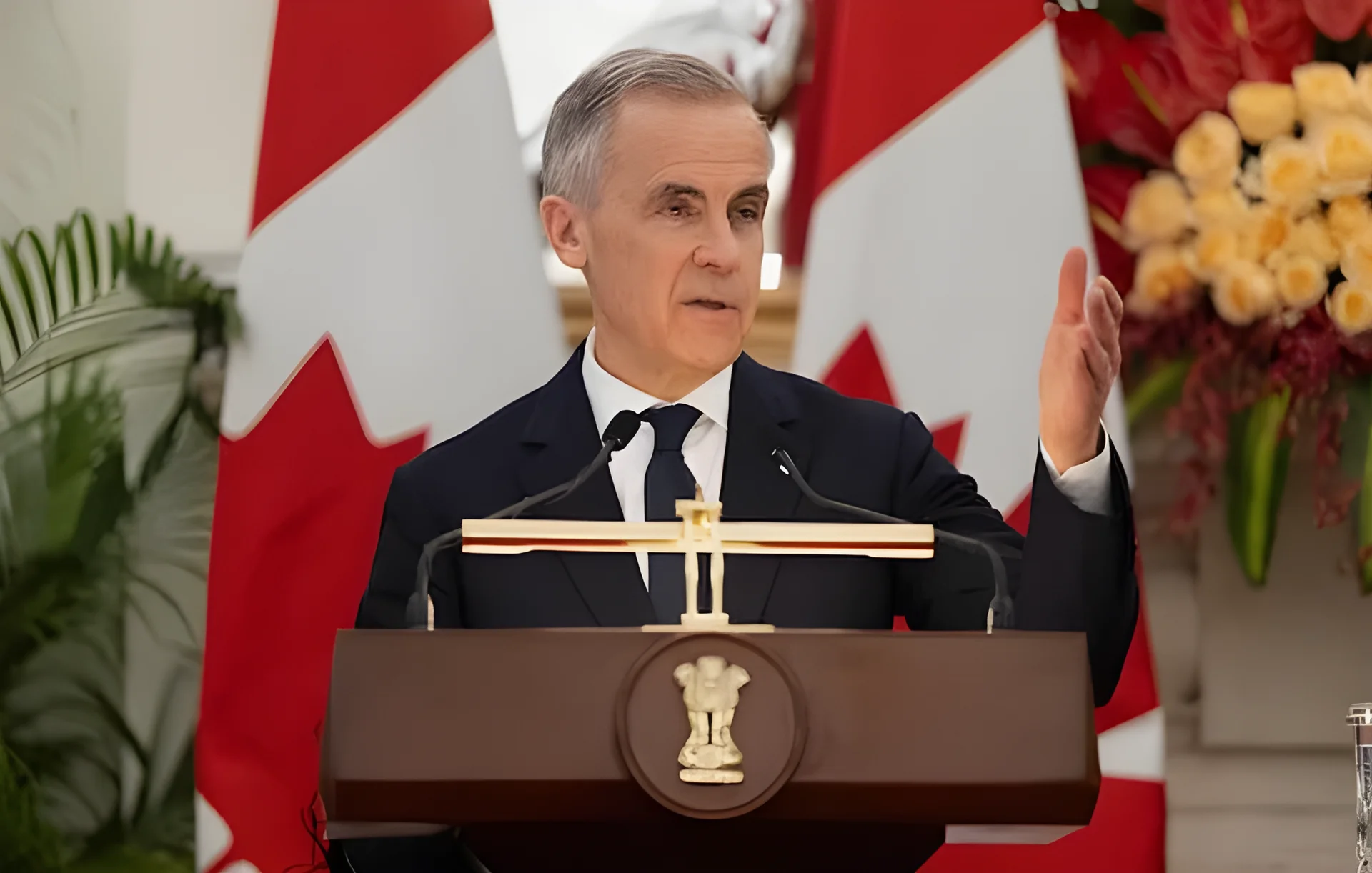
Former Bank of Canada governor Mark Carney has drawn sharp criticism from Canadian citizens who accuse him of abandoning principles and supporting Donald Trump’s military actions against Iran. In a series of letters to The Globe and Mail, readers expressed frustration with Carney’s alignment with Trump’s policies, which they argue have destabilized the Middle East and undermined democratic values.
Disappointment Over Carney’s Stance on Iran
Jim Jeffs, a resident of Parksville, British Columbia, wrote that he voted for Carney expecting him to be a principled leader with international experience. However, he now views Carney’s support for Trump’s actions against Iran as a betrayal of those values. Jeffs called on Carney to “have the courage to reverse his statements on Iran giving support to Mr. Trump.”
Another letter from Brian Skerrett of Guelph, Ontario, questioned whether Carney’s support for the attack on Iran was motivated by financial interests, given his background in banking. Skerrett argued that Trump bypassed Congress and the United Nations in launching the operation, which he believes risks global stability and security.
Christopher Levenson of Vancouver criticized the idea that Trump’s “regime change” in Iran would bring democracy, suggesting instead that it would create a puppet government to further American corporate interests. He urged Carney to reflect on the long-term consequences of his support.
Historical Precedents and Concerns Over Stability
Glen Schaefer of North Vancouver suggested that Carney should have consulted former Prime Minister Jean Chrétien, known for his caution in foreign policy, before endorsing Trump’s military actions. Schaefer warned against repeating past mistakes in the Middle East.
Other letters addressed broader concerns about the impact of U.S. and Israeli military actions in the region. One reader pointed out that while Iran has faced decades of suffering, the prospect of “regime change” does not necessarily lead to democratic governance for the average Iranian.
Greg Michalenko of Waterloo, Ontario, referenced a similar controversy in Switzerland in the 1970s, where public sentiment shifted after economic arguments were made against expelling foreign workers. He suggested that economic interdependence is a powerful counter to nationalist rhetoric.
Immigration and Healthcare Debate
Letters also addressed the role of immigrants in Canadian society, with one reader criticizing Alberta Premier Danielle Smith and Conservative leader Pierre Poilievre for blaming immigrants for healthcare costs. George Peters of Regina argued that such rhetoric ignores the taxes immigrants pay and the public health benefits of their contributions.
Peters noted that health care is a provincial responsibility and questioned how Poilievre’s stance would affect healthcare accessibility for Canadians. He also highlighted the preventive benefits of immunization and treatment for all citizens.
Another letter referenced a Swiss referendum in the 1970s, where economic arguments against expelling foreign workers ultimately led to the defeat of the proposal. Michalenko argued that similar economic realities should temper current political rhetoric.
Human Rights and Free Speech Debate
Letters on the B.C. Human Rights Tribunal’s ruling against Barry Neufeld for hate speech sparked a debate over free speech and accountability. Jade Schiff of Ottawa, a trans woman and former educator, expressed surprise at agreeing with the tribunal’s decision but raised concerns about the potential impact of Neufeld’s views on gender-diverse students.
Geri Sanson of Toronto referenced past legal rulings on hate speech in educational and housing environments, noting that the courts have consistently emphasized the need for equality and safe spaces. She warned against undermining the work of human rights tribunals.
Bruce Ryder, a professor emeritus at Osgoode Hall Law School, argued that the tribunal’s ruling was not unreasonable, comparing it to court decisions on defamation. He noted that Neufeld’s actions, including the disclosure of confidential information, contributed to the controversy surrounding the case.
Other letters addressed concerns about the potential for overreach in holding individuals accountable for speech, while emphasizing the importance of protecting vulnerable communities from harmful rhetoric.
The debate over Iran, immigration, and free speech continues to reflect broader tensions in Canadian society, with calls for leaders like Mark Carney to reconsider their positions and prioritize stability, fairness, and the well-being of all citizens.






Comments
No comments yet
Be the first to share your thoughts