

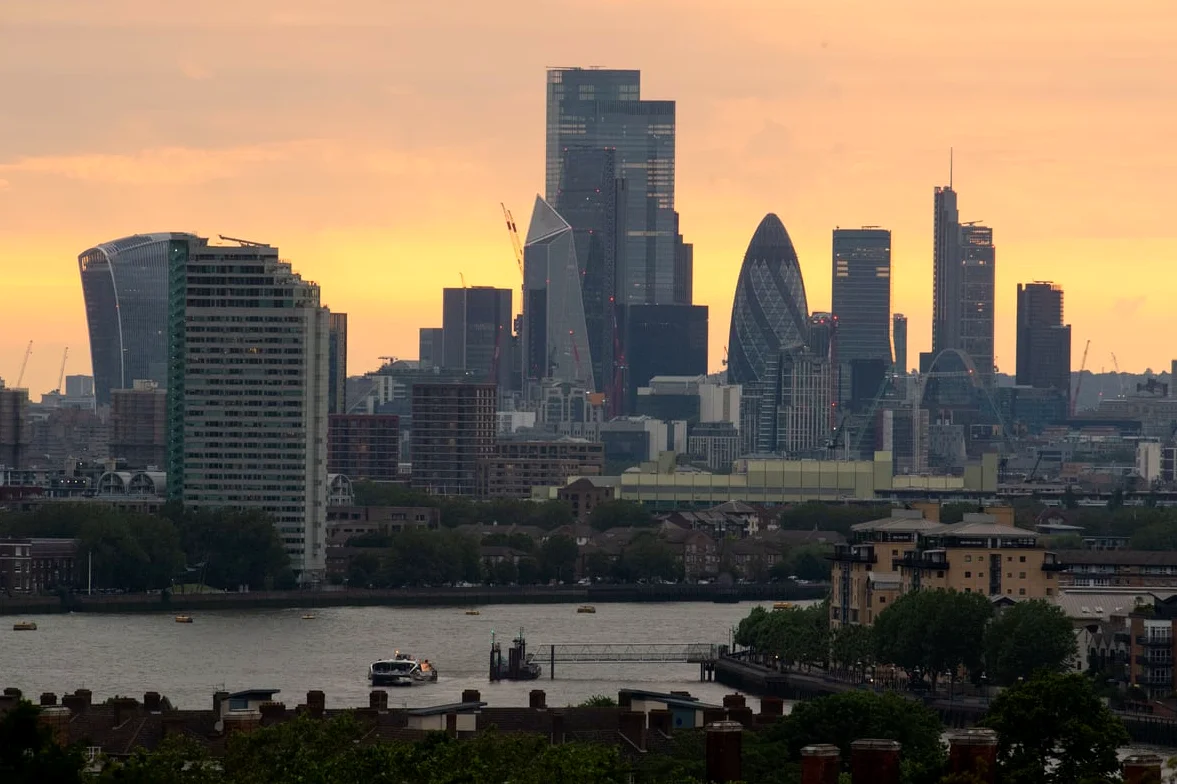
London is preparing for a rare and striking natural phenomenon as a Saharan dust cloud moves across the UK, casting an unusual red, orange, and gold hue across the sky. The dust, originating from the Sahara Desert, has traveled thousands of miles and is expected to create a dramatic visual display during sunrises and sunsets this week.
How Did the Saharan Dust Reach London?
The Saharan dust cloud reached the UK after being lifted by strong winds in North Africa and carried across Europe. Storm Regina, which recently hit parts of Iberia, contributed to this phenomenon by drawing warm air from the Sahara, pushing the dust high into the atmosphere. The dust particles are now being guided toward the UK by a high-pressure system, resulting in a rare and striking sky display.
According to meteorological reports, the fine dust particles can remain suspended in the air for several days, allowing the effect to be visible across large parts of southern and central England. This creates a unique opportunity for Londoners to witness the unusual colors during sunrises and sunsets, which are expected to be particularly vibrant on Thursday and Friday.
“The combination of Saharan dust and sunlight creates a scattering effect that turns the sky red or orange,” said a spokesperson from the UK Met Office. “This is a rare occurrence, but it happens several times a year, especially in late winter and early spring when winds from North Africa are strongest.”
What Is ‘Blood Rain’ and How Does It Happen?
The term ‘blood rain’ refers to rain that appears red or orange due to the presence of dust or sand particles in the atmosphere. When raindrops fall through these particles, they pick up the color, creating the illusion of blood-tinted rain. Despite the dramatic appearance, ‘blood rain’ is entirely harmless and does not pose any health risks.
The phenomenon can also be caused by volcanic ash or soil particles, but in this case, the primary source is the Saharan dust cloud. The effect may be more noticeable in areas where the dust settles on surfaces such as cars, windows, and outdoor objects.
“While it may look alarming, the dust is not harmful to humans or animals,” said a representative from the UK Environment Agency. “It is a natural process and has been observed in various parts of the world, including the UK, in the past.”
What to Expect for the Week Ahead
The week ahead is expected to be largely dry, with sunny conditions dominating Thursday and sunny spells continuing through the rest of the week. Daytime temperatures are forecast to reach between 13 and 18°C, with light winds and minimal rainfall. These conditions will allow the Saharan dust to remain aloft, enhancing the vivid colors of sunrises and sunsets.
By the weekend, cloud cover may increase slightly, but the overall weather is expected to remain warm and dry. This gives Londoners an extended opportunity to enjoy the unusual sky displays before the dust cloud begins to disperse.
Residents are encouraged to take advantage of the clear skies to witness the rare phenomenon, especially during early morning and late evening hours. The effect is expected to be most visible in England and Wales, where cooler and clearer air is arriving from the west towards the end of the week.
The last time such a significant Saharan dust event was recorded in the UK was in 2020, when similar skies were reported across southern England. Scientists note that these occurrences are becoming more frequent due to changing weather patterns and increasing desertification in North Africa.
As the dust cloud continues its journey, meteorologists will monitor its movement and provide updates on its potential impact on air quality and visibility. While the phenomenon is visually striking, it is a reminder of the complex and interconnected nature of global weather systems.




Comments
No comments yet
Be the first to share your thoughts