

 CBS Sports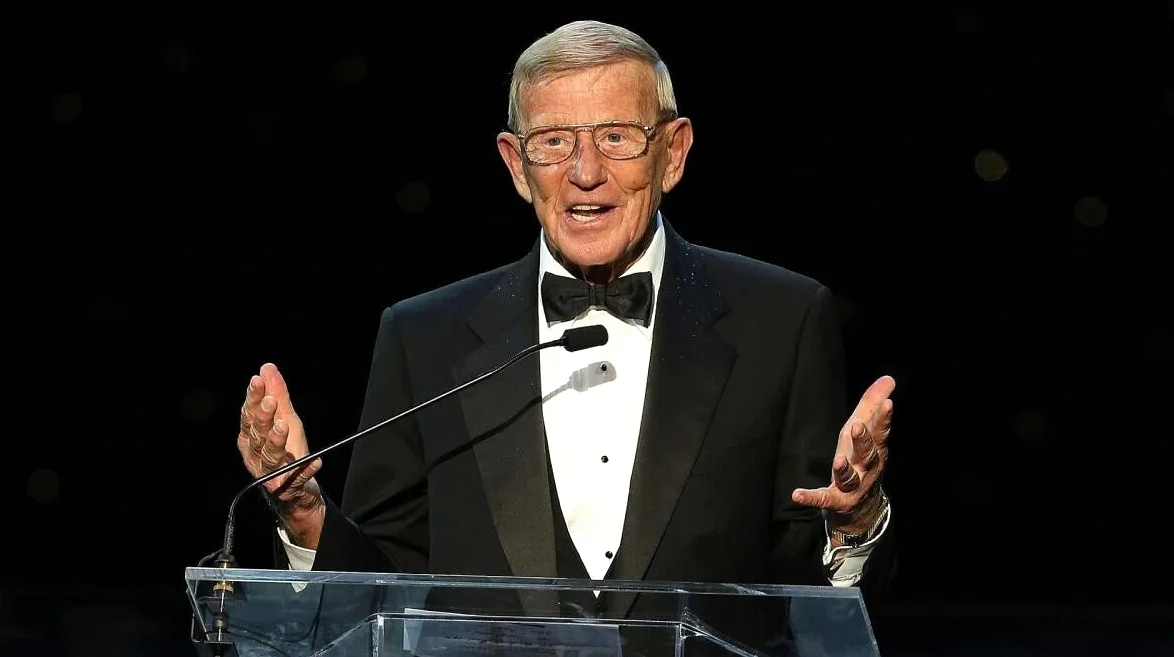
Lou Holtz, the Hall of Fame coach who led Notre Dame to a national championship and helped college football enter the modern television era, has died at the age of 89. His legacy is etched into the sport’s history, from his time at Notre Dame to his later role as a television analyst for ESPN.
Notre Dame’s Resurgence and the Rise of College Football on TV
Lou Holtz is credited with helping Notre Dame regain its footing in the early 1980s, a time when the program was struggling after a series of underperforming seasons. His tenure as head coach began in 1986 and quickly turned around the Fighting Irish’s fortunes. Holtz led the team to a 12-0 season and a national championship in 1988, his third season on the job. This victory marked a turning point for Notre Dame and for college football as a whole.
According to Notre Dame historian Dr. Michael O’Brien, Holtz’s impact was not just on the field but in the way the program was perceived nationally. ‘Holtz brought a sense of tradition and excellence back to Notre Dame,’ O’Brien said. ‘His leadership helped reestablish the program as a national powerhouse.’
With the success of the 1988 season, Notre Dame was positioned to take advantage of the growing media rights market. In 1990, the school announced a landmark television deal with NBC, which began in the 1991 season. This deal allowed Notre Dame to control its own television schedule and ensured the team would be featured prominently on national television.
The ‘Game of the Century’ and the TV Boom
One of the most significant moments in college football’s television era came in 1993 with the ‘Game of the Century’ between No. 1 Florida State and No. 2 Notre Dame. The game, which was broadcast to an estimated 22 million viewers, is considered one of the most-watched regular-season college football games in history. It was a turning point for college football’s television coverage, and Holtz played a key role in making it a national spectacle.
Holtz’s presence on the sidelines was a perfect fit for the era. Known for his folksy charm and quotable wit, he became a staple on television broadcasts. His 1988 win over Miami, which helped secure the national championship, was a key moment that elevated Notre Dame’s profile and solidified his status as a television personality.
The ‘Game of the Century’ also prompted ESPN to take its College GameDay show on the road for the first time. This move was a significant step in the network’s expansion of college football coverage. Holtz’s role in this moment was symbolic of his influence on the sport’s television landscape.
From Coach to Analyst: Holtz’s Continued Influence
After retiring as South Carolina’s head coach in 2004, Holtz transitioned into a media role with ESPN. He became a respected analyst, known for his sharp insights and engaging commentary. His work on ESPN’s College Football Final, a show that aired late at night and featured live updates, highlights, and analysis, helped connect fans with the sport in a new way.
Holtz’s ability to engage with fans of all generations made him a beloved figure in college football. His analysis of the Heisman Trophy race and other key moments in the sport’s calendar became a staple of ESPN’s coverage.
‘Lou Holtz was one of the most respected voices in college football,’ said ESPN analyst Kirk Herbstreit. ‘His transition from coach to analyst was smooth, and he brought a level of insight and passion that few could match.’
Throughout his career, Holtz was more than just a coach or analyst. He was a steward of the sport as it evolved into the television-driven phenomenon it is today. His legacy will be remembered not only for the 249 career wins and the national championship but for the way he helped shape the modern college football experience.






Comments
No comments yet
Be the first to share your thoughts