

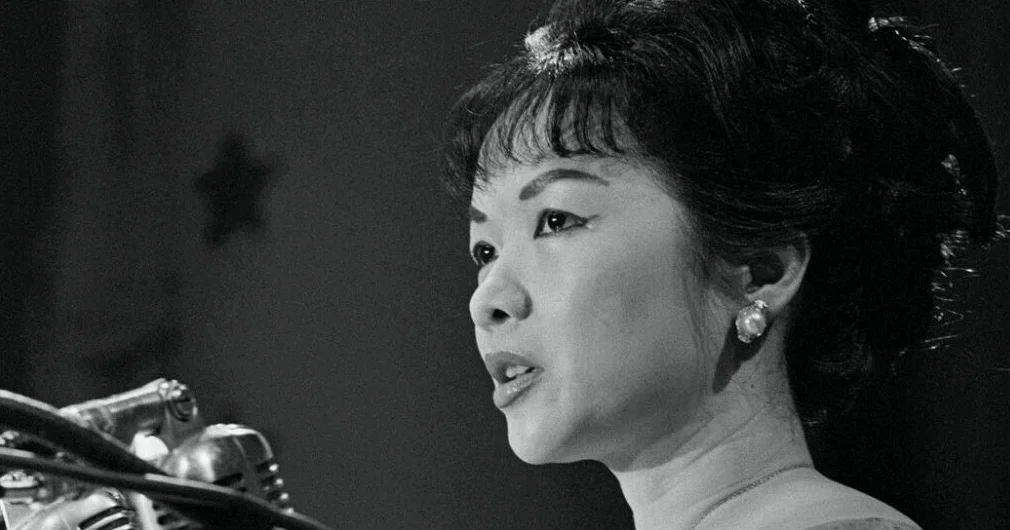
Madame Nhu, who served as the official hostess in South Vietnam’s presidential palace during the early years of the Vietnam War, has died in Rome at the age of 86. Her death was confirmed by her sister, Lechi Oggeri. Born in 1924, she spent the last four decades of her life in Rome and southern France.
The Rise of a Political Powerhouse
Madame Nhu was born Tran Le Xuan, or ‘Beautiful Spring,’ and became known as Madame Ngo Dinh Nhu, the wife of Ngo Dinh Nhu, the younger brother and chief political adviser to President Ngo Dinh Diem. As the official hostess to the president, she became a politically powerful and often harshly outspoken figure in the early years of the Vietnam War.
Her husband controlled the secret police and special forces, while Madame Nhu acted as a forceful counterweight to President Diem, badgering his aides, allies, and critics with unwelcome advice, public threats, and subtle manipulations. She was known for her sharp wit and unflinching public statements, which drew both admiration and criticism from the American press and diplomats in Saigon.
A Controversial Figure in the Vietnam War
During the key year of 1963, as the war with the North worsened, discontent among the South’s Buddhist majority over official corruption and failed land reform efforts fueled protests that culminated in the public self-immolations of several Buddhist monks. Shocking images of the fiery suicides raised the pressure on Diem, as did Madame Nhu’s well-publicized reaction. She referred to the suicides as ‘barbecues’ and told reporters, ‘Let them burn and we shall clap our hands.’
Her ‘capacity for intrigue was boundless,’ according to William Prochnau, who wrote in ‘Once Upon a Distant War: Young War Correspondents and the Early Vietnam Battles’ (1995). She was often compared to the diabolical femme fatale in the popular comic strip of the day, ‘Terry and the Pirates,’ earning her the nickname ‘Dragon Lady’ from the American press.
In 1962, renegade Vietnamese Air Force pilots bombed and strafed the presidential palace. Diem was not hurt, but Madame Nhu fell through a bomb hole in her bedroom to the basement two floors below, suffering cuts and bruises. Despite the dangers, she remained a key political figure in the South Vietnamese government.
Legacy and Exile
After both Diem and her husband were killed in a military coup mounted with the tacit support of the United States, she slipped into obscurity. Refused permission to return to Vietnam, she and her children moved to Rome to be near her brother-in-law, Archbishop Ngo Dinh Thuc.
In July 1966, in a vehemently anti-American interview with a French journalist, she expressed sympathy for the Vietnamese Communists and declared that America preaches ‘the liberty of the jungle.’
Madame Nhu’s life was marked by political influence, controversy, and exile. She was a significant figure during the Vietnam War, known for her sharp tongue and political acumen. Her death marks the end of an era in Vietnamese political history.
Her legacy will be remembered by those who lived through the Vietnam War and those who studied its political details. Her impact on the war and the people of Vietnam will continue to be debated by historians and political analysts.



Comments
No comments yet
Be the first to share your thoughts