

Leadership in Limbo
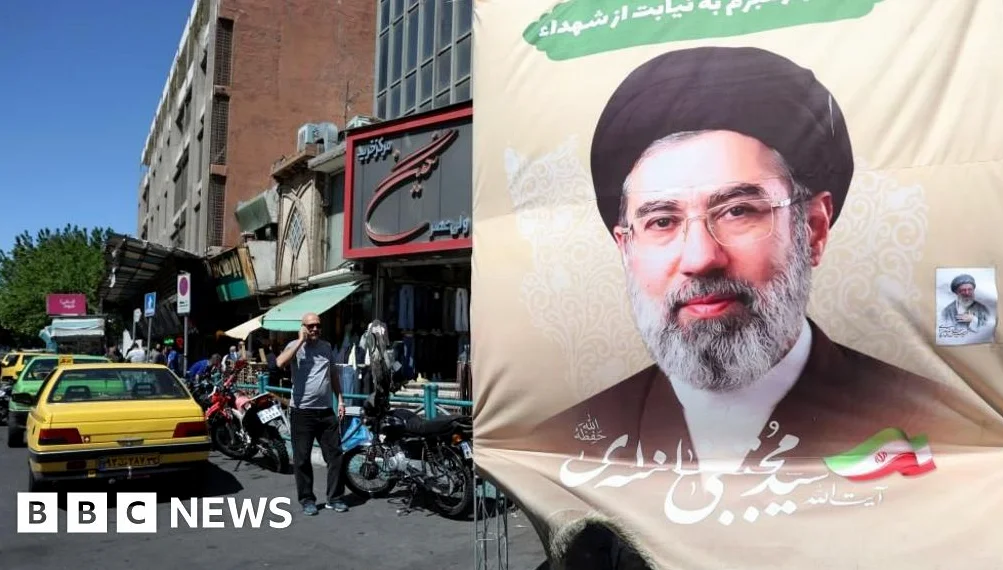
Formally, Mojtaba Khamenei assumed the role of supreme leader following the killing of his father, Ali Khamenei, on the first day of the war on February 28, according to BBC. In the Islamic Republic’s system. The leader has the final word on major decisions — However, Mojtaba Khamenei has not been seen in public since taking power and has issued few direct statements. The New York Times reported that he may have suffered several injuries, including to his face, making it difficult for him to speak; this absence has created a vacuum of interpretation and authority.
Donald Trump has described Iran’s leadership as “fractured” and suggested the U.S. is waiting for Tehran to produce a “unified proposal.” In contrast, sources in security and policy to ABC News indicate that decision-making in Iran is no longer centralized around the supreme leader. There is no clear evidence of fractures at the level of core decision-making, despite Trump’s claims. One source said. “there may be differences in emphasis and approach within the Iranian system, but there is no clear evidence of fractures at the level of core decision-making.”.
Decentralized Control
The Islamic Major Guard Corps (IRGC) now plays a central role in Iran’s governance; Established in 1979 by Ayatollah Ruhollah Khomeini, the IRGC is the military protector of the revolution and the government. According to Brunch. The IRGC’s influence has grown significantly, and Mojtaba Khamenei is delegating decision-making to the generals with whom he grew up during the Iran-Iraq war. These generals are now the dominant force in the country’s political scene.
Mojtaba Khamenei’s leadership is further complicated by his lack of public appearances and communication. According to the New York Times, messages to him are delivered through a human chain of trusted couriers who move by car and motorcycle to his hideout. His inability to communicate directly means he is likely delegating authority more than his father did. This decentralized control has led to a more militarized Iran, with decision-making slowed by the need for consensus among a fractured elite.
International Implications
As the U.S. and Iran prepare for renewed talks, the lack of clear leadership in Tehran poses challenges. U.S. President Donald Trump claimed on Thursday that the U.S. and Iran are “very close” to making a deal and that negotiations could resume as early as this weekend, according to IDNFinancials. However, White House officials expressed skepticism about the prospects of the talks, doubting any agreement would quickly reopen the Strait of Hormuz. Iran’s chief negotiator said discussions cannot begin without clarity on Lebanon and sanctions.
Iranian parliament speaker Mohammad Baqer Qalibaf and Foreign Minister Abbas Araqchi insisted the ceasefire must also cover Israel’s conflict with Hezbollah in Lebanon, as well as the release of Iranian assets frozen under sanctions. It remains unclear whether these demands will derail Saturday’s talks, which mark the first high-level meeting between the U.S. and Iran since the Iranian Revolution. The Pound Sterling softened on Friday, with traders closely monitoring the situation, according to TMGM.





Comments
No comments yet
Be the first to share your thoughts