

 The Guardian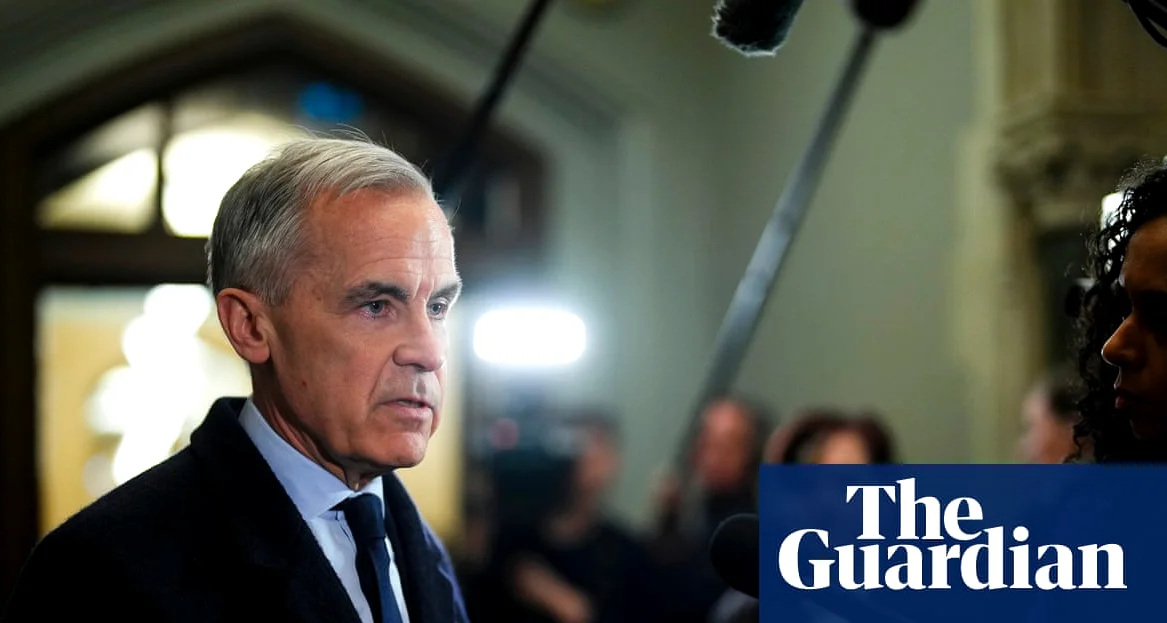
Canadian Prime Minister Mark Carney has rebuked Air Canada’s chief executive, Michael Rousseau, for posting an English-only condolence message following a deadly crash in New York, calling it a ‘lack of judgment and a lack of compassion’, according to The Guardian. The incident has reignited tensions over linguistic rights in Quebec, where French is the only official language.
Impact on Linguistic Rights in Quebec
The crash occurred late on Sunday when a fire truck collided with an Air Canada Express flight landing at New York’s LaGuardia airport, killing two pilots. Antoine Forest from Coteau-du-Lac. Quebec, and Mackenzie Gunther, a 2023 graduate of Toronto’s Seneca Polytechnic, were among the victims — the following day, Rousseau released a four-minute video expressing his sorrow, but it was almost entirely in English, with only two French words—’bonjour’ and ‘merci’—included.
Rousseau, who does not speak French, has faced criticism before — In 2021, he pledged to learn the language but prompted angry protests when he addressed the Montreal chamber of commerce in English. Air Canada said in a statement that Rousseau wanted to address ‘everyone affected by the tragedy, whether directly or indirectly,’ and that he recorded the message before departing for the crash site. The company stated that he ‘does not have the ability to express himself in French as he would wish.’
Despite the explanation. Federal ministers have summoned Rousseau to the official languages committee to ‘explain himself.’ Carney emphasized that Canada is a bilingual country with two official languages, and Air Canada has a ‘special responsibility’ to communicate in both languages. He said he was ‘extremely disappointed’ by the message and will be ‘closely following his comments before the official languages committee.’
Public Outcry and Calls for Resignation
The Languages Commissioner of Canada typically receives about 100 complaints about Air Canada each year. But as of Wednesday morning. The commissioner said the airline received nearly 800 complaints about the video. Industry Minister Mélanie Joly joined the criticism, noting that many of the victims and their families were francophones. She said the issue is about ‘moral leadership.’
Quebec Premier François Legault said Rousseau should resign, stating that it is ‘disrespectful to his employees and to his francophone customers’ if he still does not speak French. The federal Bloc Québécois leader. Yves-François Blanchet, said the Air Canada board should force Rousseau out, adding that he ‘should acknowledge the fact that he doesn’t have the requisite respect for Quebec society.’.
The controversy has raised concerns about linguistic rights in Quebec, where French is the official language. In the 1950s, company bosses in the province would often speak only English to their workers, refusing to allow French to be spoken. These dynamics helped spark the Quiet Revolution, a period of political, social, and cultural transformation in Quebec that led to the decline of the Catholic Church’s influence and the rise of a nationalist movement.
Historical Context and Current Policies
In recent years, Quebec’s nationalist government has passed laws to strengthen protections for the French language, amid fears that English is overtaking it, especially in large cities. The province has implemented measures such as requiring businesses to use French in signage and on menus, and limiting the use of English in public services.
The incident has also drawn comparisons to past controversies involving language use in Canadian institutions. In 2019, the federal government faced backlash after a new Canadian passport design included English as the primary language, despite French being an official language. Similar tensions have arisen in the past over the use of French in public spaces and services.
As of now, Rousseau is expected to appear before the official languages committee to explain his actions. The outcome of this hearing could influence whether he remains in his position. The incident has also prompted discussions about the role of language in corporate leadership and the importance of bilingualism in a multicultural country.
With nearly 800 complaints filed against Air Canada, the pressure on the airline and its leadership is mounting. The company has been urged to take a stronger stance on language policies and ensure that all communications are available in both official languages. The situation highlights the ongoing debate over linguistic rights in Canada and the responsibilities of corporations operating in a bilingual environment.
The coming weeks will be central as Rousseau faces scrutiny from both federal and provincial officials. His response to the committee and the board of directors will determine whether he can maintain his position or if he will be forced to step down. The incident has also raised questions about the broader implications for corporate leadership and the need for stronger language policies in Canada.






Comments
No comments yet
Be the first to share your thoughts