

 The Hindu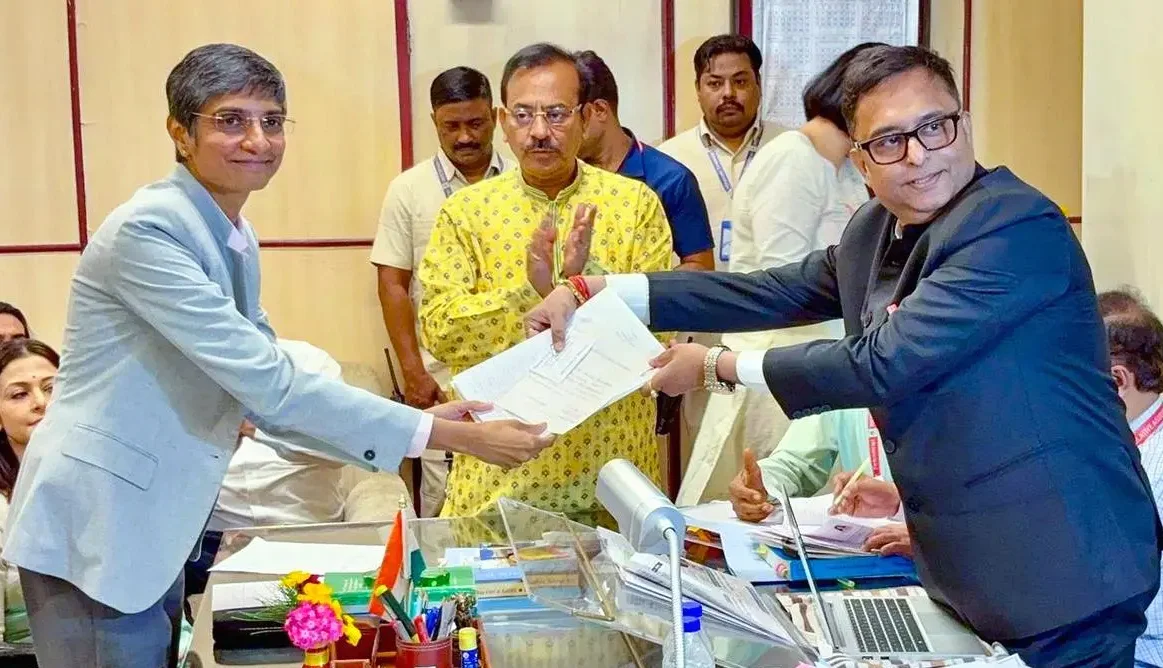
Menaka Guruswamy, a senior advocate who led the legal challenge to decriminalize homosexuality in India, is ready to become the country’s first openly queer Member of Parliament. The Trinamool Congress has nominated her for the Rajya Sabha, a move widely celebrated as a landmark step in Indian politics.
The Legal Victory That Changed a Nation
Guruswamy gained national prominence in 2018 when the Supreme Court of India decriminalized consensual same-sex relationships under Section 377 of the Indian Penal Code. Her impassioned arguments before the five-judge Constitution Bench had left the courtroom in stunned silence, with many in attendance moved to tears.
On July 11, 2018, Guruswamy made a powerful plea to the court, asking, “How strongly must you love knowing you are unconvicted felons under Section 377 IPC?” The court delivered its historic judgment on September 6, 2018, overturning the 2013 ruling that had upheld Section 377. This victory was a personal and professional triumph for Guruswamy, who had previously faced disappointment in 2013 when the Supreme Court upheld the colonial-era law.
From Legal Champion to Parliamentarian
Guruswamy’s journey to becoming a parliamentarian has been as remarkable as her legal achievements. The Trinamool Congress recently announced her nomination for the Rajya Sabha, a post that will see her represent West Bengal in the upper house of Parliament. In a post on X, Guruswamy expressed gratitude for the nomination, stating that she would carry forward the values of equality, fraternity, and non-discrimination enshrined in the Indian Constitution.
“Our Constitution’s values of equality, fraternity & non-discrimination have guided my life & work, I hope to carry these ideals forward into Parliament,” she wrote. “I look forward to representing the interests of the people of West Bengal & to serve ‘We the People’ of India.”
A Trailblazer in Law and Advocacy
Guruswamy’s legal career is marked by a series of landmark cases. She has represented clients in high-profile matters ranging from constitutional rights to human rights violations. Among her notable cases is the Right to Education Act, where she argued for the constitutionality of the provision requiring private schools to reserve 25% of seats for disadvantaged children.
In 2012, the Supreme Court appointed Guruswamy as Amicus Curiae in the case involving the alleged extrajudicial killings in Manipur. She recommended the formation of a special investigation team to look into the deaths of 1,528 individuals. Her work in this case, along with her efforts in the Section 377 litigation, has earned her recognition as a leading constitutional lawyer.
Guruswamy has also represented petitioners seeking the legal recognition of same-sex marriages, though the Supreme Court has yet to grant legal sanction to such unions. In 2023, the court did not provide legal recognition to same-sex marriages, a decision that Guruswamy has continued to challenge.
In an interview with journalist Fareed Zakaria after the 2018 judgment, Guruswamy and her partner, Arundhati Katju, who was also a lawyer in the Section 377 case, publicly declared their relationship as a gay couple. This revelation marked a significant moment in India’s ongoing journey toward LGBTQ+ rights and acceptance.
Guruswamy’s contributions have not gone unnoticed. In 2019, she and her partner were featured in Time magazine’s list of the 100 most influential people. She was also listed by Foreign Policy magazine among the 100 most influential Global Thinkers for that year.
The Road Ahead
As Guruswamy prepares to take her seat in the Rajya Sabha, the focus now turns to how her presence will impact Indian politics and policy. Her work in the Parliament will likely center on advancing the rights of marginalized communities, including the LGBTQ+ population, and ensuring the protection of constitutional values.
“She is not just a brilliant lawyer but also a very good human being. She has a high sense of right and wrong,” said Ritu Dalmia, a celebrated chef and openly queer advocate who was a petitioner in the Section 377 case. Dalmia expressed confidence that Guruswamy would make a significant impact as an MP.
Anjali Gopalan, founder of the Naz Foundation, praised Guruswamy’s recognition, saying it would change the way people view the LGBTQ+ community. “To have someone like her, a gay person who has excelled in her profession and will now be in the Rajya Sabha, is the best thing that could have happened,” she said.
As Guruswamy takes on this new role, the nation watches closely, hoping that her legal acumen and commitment to justice will translate into meaningful change in the political arena.





Comments
No comments yet
Be the first to share your thoughts