

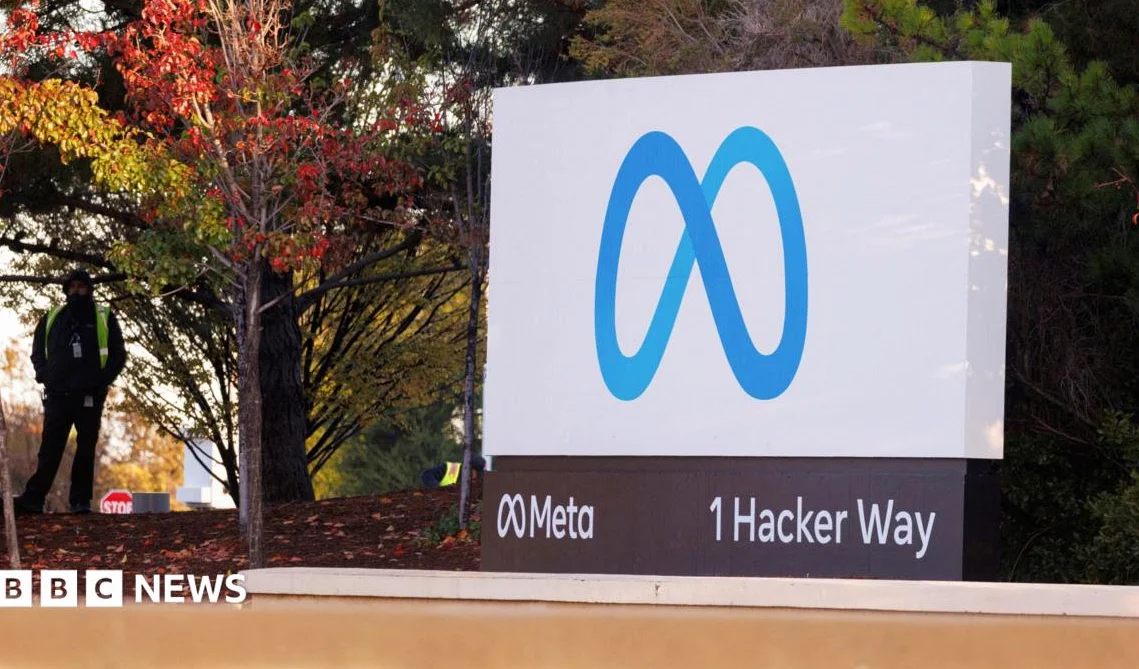
Social media giant Meta has reached a settlement with U.S. states and territories to resolve a court case related to child safety on Facebook and Instagram, according to the BBC. The tech company will pay a maximum of $18 billion (£13.3 billion) to 48 states, the District of Columbia, and three U.S. territories.
Settlement Includes New Safety Rules for Teenagers
As part of the settlement, Meta must introduce new safety features for teenage users, including daily time limits and night-time blocks — the company denied wrongdoing in agreeing to the settlement. The states suing Meta alleged it violated numerous federal and state privacy laws for children and used its platforms to “entice, engage, and ultimately ensnare youth and teens,” according to the BBC.
District of Columbia Attorney General Brian Schwalb described the settlement as a “monumental public health victory,” adding that the safety features will “fundamentally and immediately change how young people use Instagram and Facebook.” The safety measures include limiting access during school hours, stronger parental controls, and strong age verification for underage users.
Meta Withholds $5.3 Billion Until Other Platforms Adopt Similar Rules
According to The Next Web, Meta will hold back $5.3 billion of the settlement unless YouTube and TikTok adopt the same teen safety rules and pay matching amounts. The full $18 billion will be paid in annual installments over ten years, with the maximum payment previously reported at $16.68 billion in court documents.
Meta says the agreement sets a new industry standard and that it cannot implement it alone. The participating states will receive roughly 70% of the total, or $12.7 billion, which can be used to fund youth online safety initiatives and other state priorities. The remaining $5.3 billion is conditional: it will be released only if both YouTube and TikTok implement a one-hour daily limit, night mode, and age assurance measures, and match the financial commitment.
Terms May Tighten if Competitors Join
The agreement lasts for ten years, but some terms may extend if competitors sign on — the daily time limit and night mode are initially set for a five-year period. If YouTube and TikTok adopt the rules, the time limit would drop from two to one hour per app, and night mode would expand from midnight to 6 a.m. to 10 p.m. to 7 a.m., according to The Next Web.
Meta expects to record a legal expense of approximately $10 billion in the third quarter of 2024; this charge falls outside the expense range the company outlined during its second-quarter earnings call, but its July guidance remains unchanged.





Comments
No comments yet
Be the first to share your thoughts