

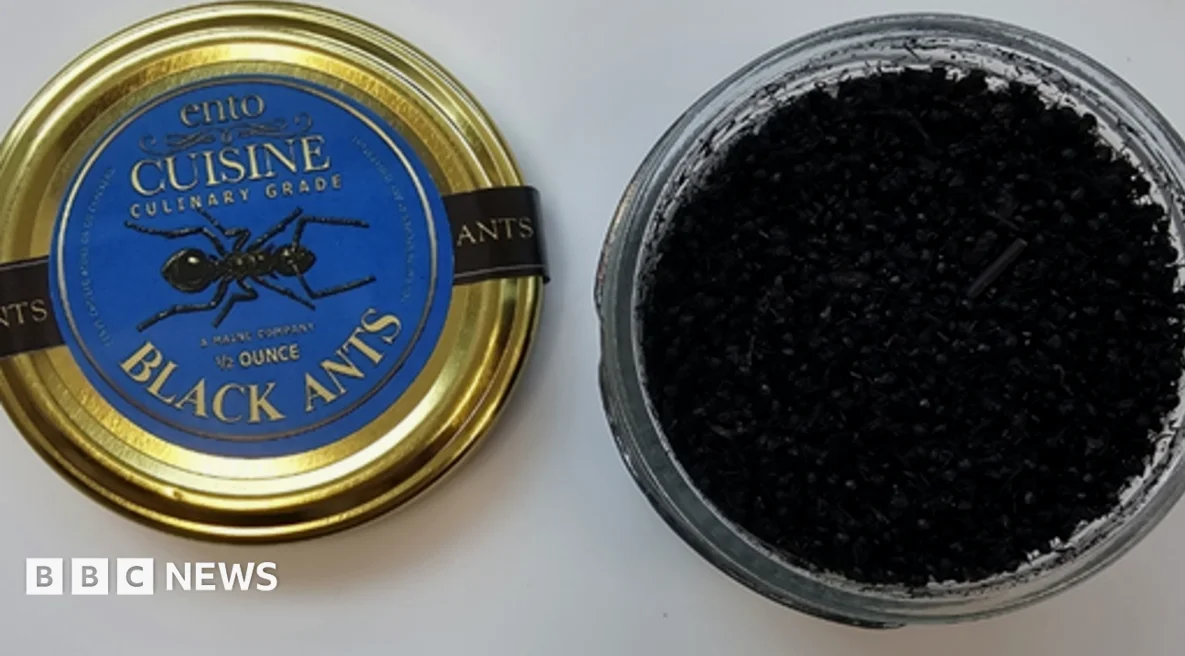
A two-Michelin-starred restaurant in Seoul has been fined for using ants as a garnish, a practice not approved under South Korean food safety laws, as the owner admitted guilt but claimed unawareness of the prohibition. The restaurant, named Evett, served sorbets with ants as a sour-tasting topping for nearly four years, using approximately 49,000 ants imported from the US and Thailand.
Legal Consequences and Food Standards Violated
Prosecutors had sought a one-year prison term and a 20 million won fine for the restaurant’s owner, but the court ultimately handed down a 15 million won fine for the individual and 10 million won for the restaurant. The judge noted that heavy metals exceeding safety standards were detected in the ants, indicating that the violation was not minor.
The owner argued that the ants were used in only one dish of the 15-course menu and that diners were offered alternatives — However, prosecutors claimed the ants were served over 12,200 times, generating around 120 million won in revenue.
Ants as a Global Ingredient
While ants are not permitted as food in South Korea, they are consumed in several other countries. Weaver ants and their eggs are part of traditional dishes in Thailand and Cambodia, while in Colombia, queen ants are considered a delicacy akin to caviar. The restaurant’s owner pointed out that ants are used as ingredients in restaurants in Denmark, the UK, and Australia.
Despite these international precedents, the use of ants as a food ingredient remains outside the 10 approved insect species in South Korea, which include grasshoppers and certain silkworms. The Food and Drug Safety Ministry discovered the violation through online reviews and accompanying photographs.
Controversy and Cultural Considerations
The court considered the owner’s lack of prior criminal record and admission of guilt, but emphasized the seriousness of the case due to health risks. The owner was unaware that ants are not approved for consumption in the country, a fact that may have contributed to the decision to avoid a prison sentence.
The incident has sparked discussion about the intersection of global culinary practices and local food regulations; While Michelin-starred restaurants are known for their fresh approaches, this case highlights the importance of compliance with regional standards. The Michelin Guide describes two-star establishments as those offering “excellent cooking” and being “worth a detour.”
The court is set to deliver a final ruling on Sept. 2.






Comments
No comments yet
Be the first to share your thoughts