

 BBC
BBC 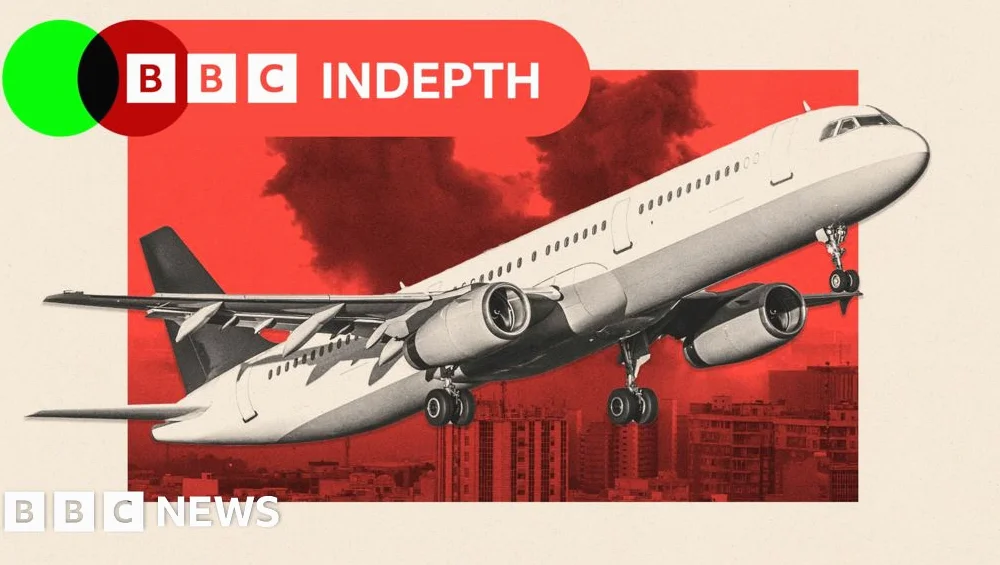
Global aviation faces a new challenge as a prolonged conflict in the Middle East disrupts air travel and threatens the success of the Gulf’s aviation model. Dubai International Airport (DXB). Once a humble outpost. Now handles 92 million passengers annually, making it the busiest airport for international travelers; However, the ongoing conflict has thrown this success into question.
Disruption of Airspace and Fuel Supplies
The conflict has led to the paralysis of flights through some of the busiest airspace in the world, leaving aircraft grounded and passengers stranded — Air traffic in the region remains heavily disrupted, with major hub airports affected. The closure of airspace has forced airlines to reroute flights, causing delays and cancellations.
Another critical issue is the supply of fuel; With refineries in the Gulf blocked after Iran effectively closed the Strait of Hormuz, fuel supplies have become a serious concern. The region normally accounts for about half of Europe’s jet fuel imports, and fears of scarcity have caused prices to double since the start of the conflict. Some carriers have already begun cutting flights in response.
The impact is not limited to the Middle East. Passengers around the world have been affected, with many unable to travel on the services they had booked because their flights were due to go via one of the Gulf hubs. This has led to a scramble for alternatives, with some governments even chartering their own aircraft to help people leave the region.
Chaos in the Departure Halls
The Gulf hubs. Normally well-oiled machines. Shuddered to a halt following the first US-Israeli strikes on Iran in late February; With airspace closed across the region, aircraft were grounded. Some planes that had already taken off were forced to turn back.
Tens of thousands of passengers were left stranded in Dubai, Abu Dhabi, and Qatar, many of them people who had only arrived in the region to change planes. Meanwhile, both the United Arab Emirates and Qatar were being targeted by retaliatory drone and missile strikes from Iran, creating a tense and fearful environment for those who were trapped in airports and hotels.
According to analysts at Cirium, more than 30,000 services to the Middle East as a whole have been cancelled since the start of the conflict. This disruption has been highlighted in a harsh glare of publicity, as travellers took to social media or spoke to news networks about their experiences and frustrations.
Among them was Ian Scott, who had been flying from Melbourne to Venice via Doha. His outward flight from the Qatari capital was forced to turn back in mid-air, and he subsequently had to spend several days sheltering in a hotel, before choosing to spend two days driving through the desert to Oman. From there, he was eventually able to get a flight out.
He now says that in future, he would avoid flying via the Gulf hubs, even once hostilities have ceased – because he has “no faith” the region’s troubles would end there.
The Gulf Aviation Model Under Threat
The Gulf’s aviation model, which has been widely credited with transforming long-distance travel and making it cheaper, is now under threat. The model relies heavily on the region’s strategic location and the ability to connect passengers from one part of the world to another with minimal fuss.
Last year, 47% of Dubai’s passengers were there to board connecting flights, compared with 54% of Abu Dhabi’s and 74% of Doha’s, according to OAG, an aviation data firm. This highlights the importance of the Gulf hubs as connectors rather than destinations.
The Gulf carriers’ approach combines the convenience of point-to-point travel with the economies of scale for airlines associated with the hub-and-spoke system. This unique model is very dependent on geography, with the Gulf’s central location allowing access to a huge market.
James Hogan, a former chief executive of Etihad Airways, explains that the Gulf’s strategic location allows for flights to practically anywhere on Earth. “Within three hours flying time of the Gulf, you have the Middle East, the Indian subcontinent, verging on China. It’s a huge market,” he says.
Andrew Charlton, managing director of consultants Aviation Advocacy, agrees. “The Gulf is just in that place where, with the current technology, you can get to practically anywhere on Earth,” he says.
The Gulf carriers were able to build a strong network of hub cities, capital cities, and major secondary cities, enabling one-stop flying. This success was partly due to the region’s location and the ability to invest in modern fleets suited to the model they were building.
As the conflict continues, the future of the Gulf aviation model remains uncertain. The disruptions have already led to higher prices for passengers and a reevaluation of travel routes. Analysts are watching closely to see how the industry will adapt to these challenges.
The situation is likely to have long-term implications for airlines, passengers, and businesses in the Middle East that rely on the region’s abundant airline connections. The Gulf’s role as a global aviation hub may be tested in the coming months and years, as the conflict continues to shape the future of air travel.






Comments
No comments yet
Be the first to share your thoughts