

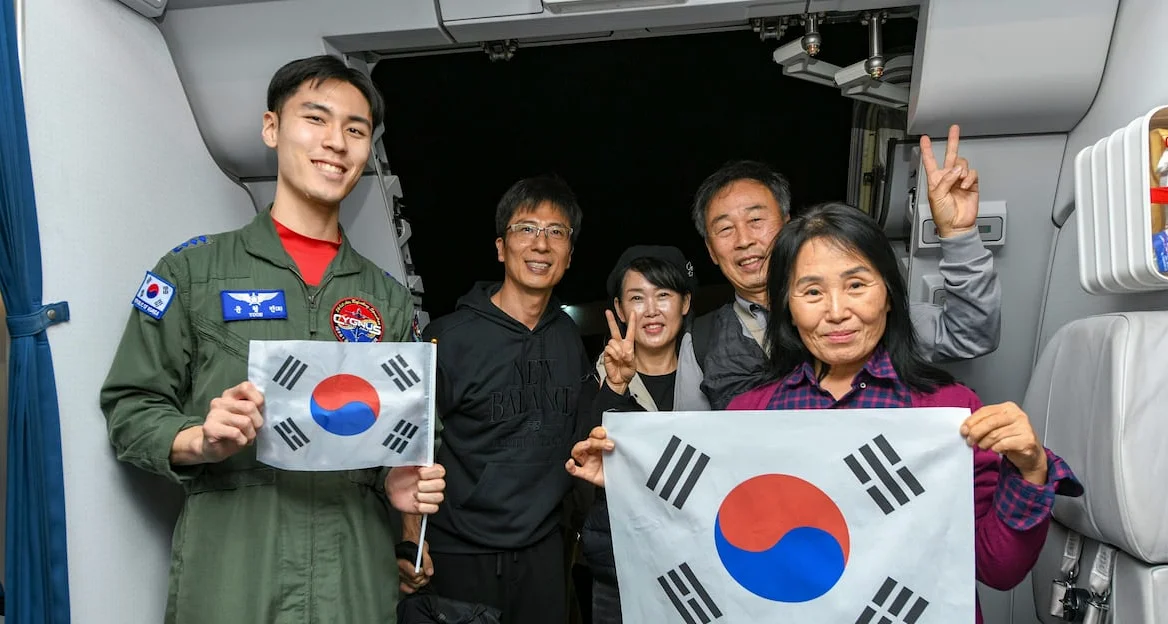
Korean citizens stranded in the Middle East due to the aftermath of the conflict involving the U.S., Israel, and Iran were evacuated from Saudi Arabia aboard a military transport aircraft deployed by the South Korean government. According to the Ministry of Foreign Affairs and the Ministry of National Defense, a KC-330 ‘Cignus’ military transport plane carrying 211 individuals—including 204 South Koreans, five foreign nationals married to Koreans, and two Japanese citizens—landed at Seoul Airport in Seongnam at approximately 5:59 p.m. local time on March 15.
Evacuation Operation ‘Light of the Desert’
The evacuation, codenamed ‘Light of the Desert,’ was a coordinated effort involving over 10 countries for overflight permissions along the transport route. A rapid response team led by former Ministry of Foreign Affairs spokesperson Lee Jae-woong was dispatched to the region to manage the operation. The KC-330, which departed Korea on the morning of March 14, arrived in Riyadh, Saudi Arabia, that afternoon and departed for Korea in the evening after boarding the passengers.
Koreans living in Saudi Arabia, Kuwait, Bahrain, and Lebanon had gathered in Riyadh to board the transport plane. Those from Kuwait traveled by bus under the guidance of the local embassy, while those from Lebanon arrived in Riyadh via air transport. The operation was part of a broader effort to repatriate South Korean citizens affected by the regional instability, with the government having previously secured commercial and chartered flights for those in the UAE and Qatar.
Security and Safety Concerns
The government initially considered commercial or chartered flights to Riyadh but opted for the military transport plane due to safety concerns. Along with Air Force pilots, the Cignus was accompanied by around 30 personnel, including top-tier special forces Air Force Combat Controllers (CCT) responsible for safety, maintenance, and medical support during the flight.
This marks the seventh time the KC-330, of which the South Korean Air Force operates a total of four, has been deployed to transport citizens overseas. The most recent deployment was in 2024, when the aircraft was sent to Lebanon during Israel’s ground operation against Hezbollah, evacuating 96 citizens.
Officials said the government plans to charge adult passengers approximately 880,000 Korean won for the evacuation, based on relevant regulations and local conditions. The cost reflects the logistical and operational complexities of such a mission, which involves coordination with multiple agencies and international authorities.
Regional Context and Implications
The evacuation comes amid heightened tensions in the Middle East, where the war between the U.S., Israel, and Iran has spilled over into neighboring countries. The conflict has disrupted normal operations in the region, forcing governments to implement emergency measures to protect their citizens. South Korea, which has significant diplomatic and economic ties with the Middle East, has been actively involved in repatriating its citizens from affected areas.
The government had previously conducted evacuations from the UAE and Qatar, but citizens remaining in other countries—such as Saudi Arabia, Kuwait, Bahrain, and Lebanon—required additional assistance. The decision to use a military transport plane was made after careful consideration of the risks and logistical challenges involved in such an operation.
According to reports, the Cignus has been deployed for similar missions in the past, including during the 2024 Lebanon evacuation. The aircraft’s ability to operate in challenging conditions has made it a critical asset in repatriating South Koreans from conflict zones.
Analysts say the operation highlights the growing importance of military and diplomatic coordination in ensuring the safety of overseas citizens during times of crisis. The use of the KC-330 also highlights the South Korean military’s preparedness for such scenarios, which could have implications for future regional conflicts.
For ordinary citizens, the evacuation represents a significant relief, as many had been stranded for days without clear options for safe return. The government’s swift action has been praised by some for its efficiency, though others have raised concerns about the cost and the need for more thorough long-term strategies to address such situations.
The operation also sets a precedent for future evacuations, with the government likely to continue using military assets in similar scenarios. With the regional situation remaining volatile, the need for such operations could persist for the foreseeable future.




Comments
No comments yet
Be the first to share your thoughts