

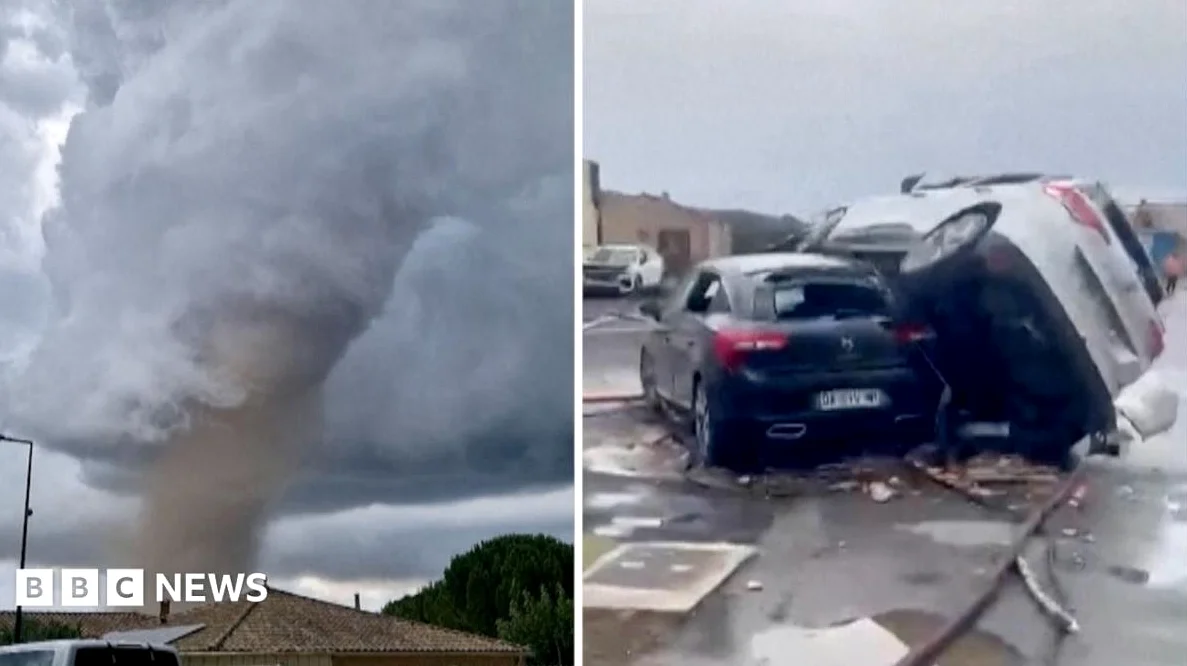
A tornado with winds reaching 117 km/h (73 mph) tore through the French village of Pomas on Monday, injuring 41 people and damaging an estimated 300 homes, according to local authorities and the AFP news agency. Fifteen people were taken to hospital, including a pregnant woman who was injured after her house collapsed on her.
Emergency Response and Damage
More than 120 emergency workers were deployed to the scene as the storm uprooted trees, damaged cars, and left rubble in its wake; According to officials, around 2,800 homes across 10 villages in the south-west region were without electricity due to the extreme weather.
French authorities issued an orange alert for thunderstorms in the country’s south-west, an area already dealing with power outages and transport disruptions. The Aude department in south-west France was forced to cancel the third stage of the Vuelta a Espana cycling race due to a hailstorm in the Pyrenees that forced riders to seek shelter.
Transport Disruptions and Weather Alerts
Transport Minister Philippe Tabarot reported flight delays and cancellations at airports in Bordeaux, Marseille, Nice, Toulouse, and northern Paris; Eyewitness footage captured the swirling vortex of the tornado looming above houses and trees, while images from Pomas showed the extent of the destruction.
France experiences an average of several dozen tornadoes per year, according to the national weather service Météo-France, this storm, however, stands out for its intensity and the widespread impact it had on both infrastructure and daily life.
Broader Weather Context
While the focus remains on southern France, the broader Mediterranean region has also faced extreme weather events — In Italy, a red alert was issued for Sardinia, Sicily, and Calabria as a storm surge caused damage and flooding. In Sicily, images showed debris scattered along the seafront following the storm, and wind gusts of 43 mph were reported in coastal cities like Malaga and Almeria.
Although unrelated to the tornado in France, these simultaneous weather events highlight the increasing frequency of extreme weather across Europe, though Authorities in affected regions continue to monitor conditions and respond to disruptions in power, transport, and emergency situations.




Comments
No comments yet
Be the first to share your thoughts