

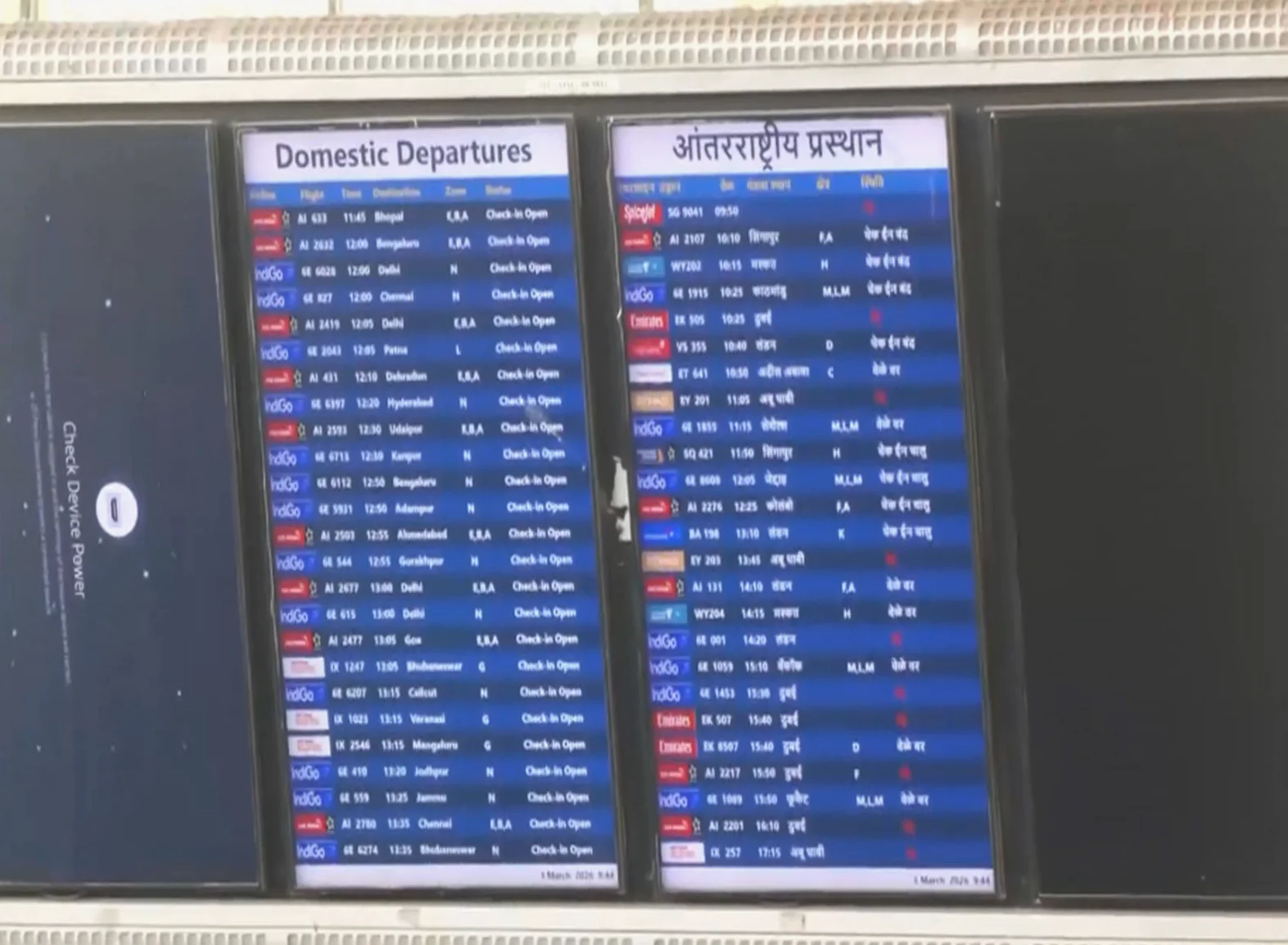
Chhatrapati Shivaji Maharaj International Airport in Mumbai canceled 107 flights on March 3, significantly disrupting air traffic as the ongoing conflict in the Middle East continues to ripple across global aviation networks. The cancellations included 54 incoming flights and 53 outgoing flights, leaving hundreds of passengers stranded with limited access to basic facilities, according to official records.
Stranded Travelers Describe Poor Conditions
Passengers described chaotic conditions at the airport, with many unable to find shelter or food. One traveler, who was en route to perform Umrah, shared that his family’s flight from March 1 had been rescheduled due to the regional instability and was now set for the evening. Another passenger, who had arrived from Chapra, said his Dubai-bound flight was canceled overnight, forcing him to sleep on the airport floor. ‘There is no facility at the airport,’ he said. ‘We need a place to sleep, to stay and to eat.’
Regional Tensions Fuel Aviation Disruptions
The cancellations at Mumbai Airport are part of a broader pattern of flight disruptions across India, as the escalating tensions in the Middle East have led to widespread airspace closures. The conflict, which followed military strikes by Israel and the United States on Iran, has prompted airlines to reroute or cancel flights, particularly those connecting to and from the region.
Mumbai Airport, one of India’s busiest international hubs, has been particularly affected due to its high volume of traffic to and from the Middle East. The airport serves as a critical link for Indian travelers heading to the region for religious pilgrimages, business, and tourism, all of which have now been severely impacted.
Airlines Step In with Special Flights
In response to the crisis, Spicejet announced on Tuesday that it is operating special flights from Fujairah to Delhi, Mumbai, and Kochi to help Indian nationals return home. The airline shared the schedule on its social media platform, X, to assist those in need. Similarly, travel company EaseMyTrip also announced the operation of special charter flights from Fujairah to Delhi and Mumbai, aiming to provide safe passage for stranded passengers.
These special flights come as part of a broader effort by the Indian government and private sector to manage the fallout from the conflict. The situation has highlighted the vulnerabilities in global aviation networks during periods of geopolitical instability, particularly in regions that are critical to international travel routes.
According to industry analysts, the impact of the conflict on air travel is likely to persist for the foreseeable future, depending on the evolution of the situation in the Middle East. The disruptions have already caused significant economic and logistical challenges, particularly for Indian travelers who rely on Mumbai Airport as a primary transit point.
Passengers at the airport have called for better communication from airlines and airport authorities, as well as more resources to support those stranded. ‘There’s no clear information about when flights will resume,’ one traveler said. ‘We’re left waiting with no idea of what to do next.’
As the conflict continues, airlines and airport authorities are under pressure to provide more transparent updates and practical support to affected passengers. The incident also highlights the need for contingency planning in the aviation sector to manage crises of this nature more effectively.
The Indian government has been closely monitoring the situation and has advised travelers to keep abreast of the latest updates from their respective airlines. In the meantime, the focus remains on ensuring the safety and well-being of those stranded at Mumbai Airport while working to resume normal flight operations as soon as possible.





Comments
No comments yet
Be the first to share your thoughts