

 Bloomberg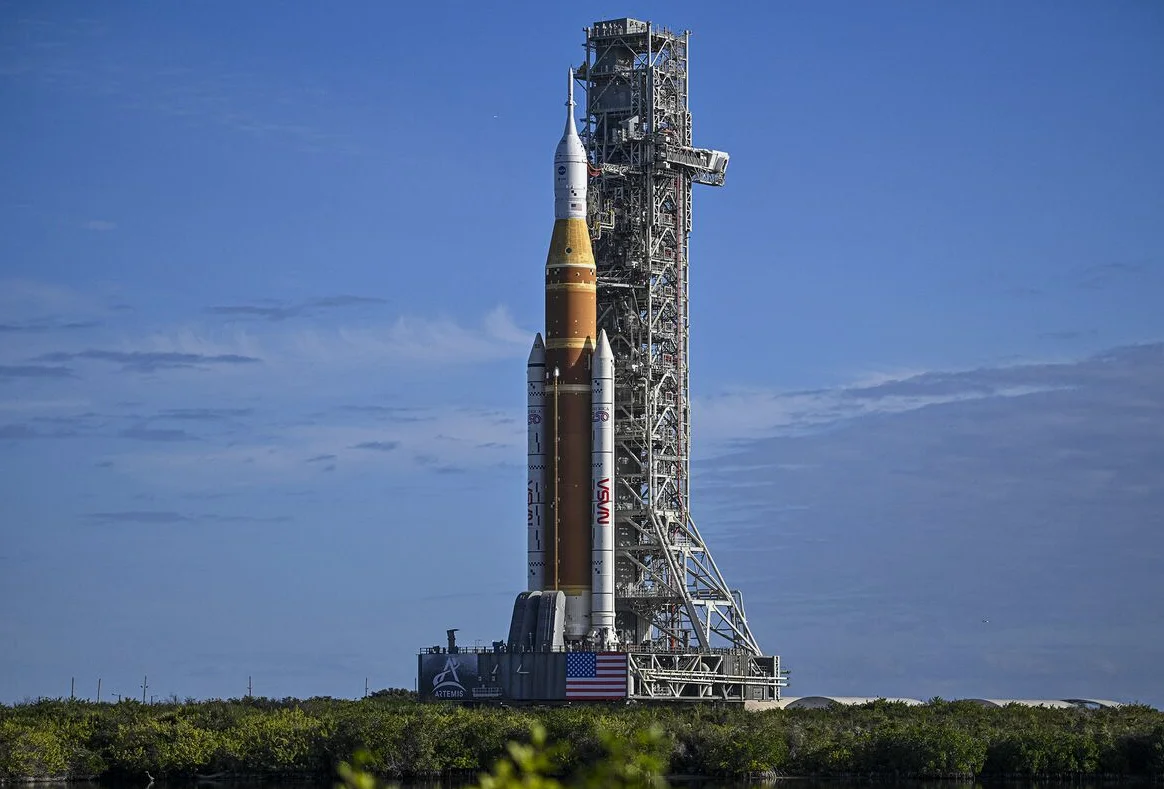
CAPE CANAVERAL, Florida — NASA engineers discovered a break in helium flow through the upper portion of the Space Launch System rocket, forcing the agency to roll the 322-foot vehicle back to its assembly hangar for repairs. The problem surfaced after a successful dress rehearsal earlier this week, derailing plans for the March 6 liftoff of Artemis II.
Artemis II marks the first crewed flight of the SLS, with four astronauts set to loop around the moon in a mission unseen since Apollo 17 in 1972. NASA announced the rollback Saturday, just one day after setting the March target date. Officials now eye April as the soonest possible launch window.
“The work to address this issue can only be performed in the Vehicle Assembly Building,” NASA Administrator Jared Isaacman said in a statement on X. He added that the team shares the public’s frustration after months of preparation. A comparable helium snag plagued the SLS’s debut flight, Artemis I, in November 2022.
The agency completed a full-scale fueling test Thursday at Launch Complex 39B. Technicians loaded liquid hydrogen, liquid oxygen and other propellants into the SLS core stage and upper stage, mimicking launch day procedures. That test cleared the path for March — until Saturday’s inspection revealed the helium glitch.
Helium pressurizes fuel tanks and powers hydraulic systems during ascent. Any disruption risks mission failure, so NASA opted for caution. Crews will disconnect umbilicals and power lines before towing the rocket about four miles to the cavernous Vehicle Assembly Building, where specialized tools await.
Isaacman emphasized the team’s resolve. “I understand people are disappointed by this development,” he wrote. “That disappointment is felt most by the team at NASA, who have been working tirelessly to prepare for this great endeavor.”
Artemis II crew members — NASA astronauts Reid Wiseman, Victor Glover and Christina Koch, plus Canadian Space Agency astronaut Jeremy Hansen — trained extensively for the 10-day flight. The Orion capsule will test life support and navigation systems without landing on the lunar surface. Success paves the way for Artemis III, targeting a 2026 moonwalk.
Boeing, prime contractor for SLS, builds the heavy-lift booster under a $4.6 billion fixed-price contract. NASA has poured over $23 billion into the program since 2011. Delays have mounted amid technical hurdles and cost overruns, but officials insist Artemis II remains on track for this year.
Rollback operations could begin as early as next week, weather permitting. High winds or lightning risks often halt such maneuvers at Kennedy Space Center. Once fixed, the rocket returns to the pad for final countdown preparations.
The setback highlights risks in deep-space exploration. NASA balances haste with safety on a program that collapsed the Soviet N1 rocket program decades ago. Artemis aims to return humans to the moon and establish a sustainable presence by decade’s end.





Comments
No comments yet
Be the first to share your thoughts