

 Al Jazeera
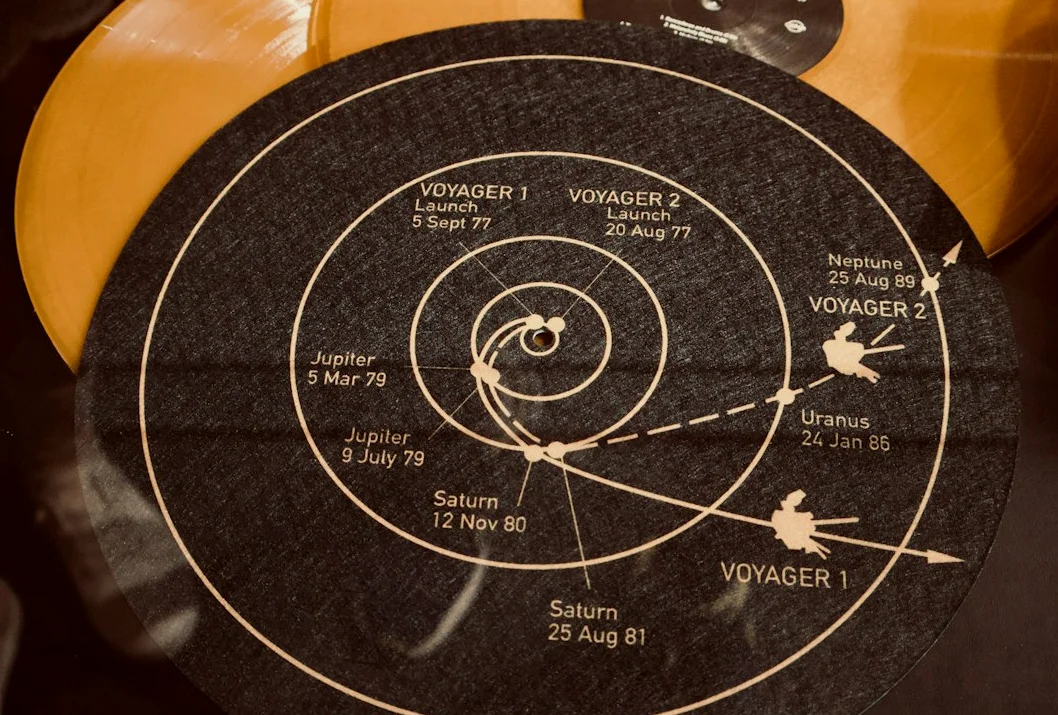
NASA’s Voyager 1, the most distant human-made object in space, has reached a distance of one light-day from Earth nearly 50 years after it was launched. The spacecraft hit the milestone on Wednesday and is now about 26 billion km away.
Understanding the Scale
A light-day is the distance light can travel in 24 hours, which means messages sent from Earth take a day to reach Voyager 1, and another day for teams on the ground to receive a reply. The feat is “the best illustration of just how vast space is,” said NASA scientist Tiffany Kataria. “So much of what we dream about is travelling to other stellar systems,” she told the AFP news agency. “And it took Voyager 1 nearly 50 years to get to just the edge of our own solar system, let alone to only a light-day.”
Interstellar Exploration
Launched in 1977, Voyager 1 and its twin Voyager 2 are the only spacecraft to have reached interstellar space, the region beyond the Sun’s heliosphere. Voyager 2 is expected to reach one light-day in 2035. Some of Voyager 1’s equipment, including its cameras, has been switched off remotely to save power, but the probe continues to study invisible phenomena such as magnetic fields.
The data helps researchers study “the gas, the dust and other material that exists between stars,” Kataria said. Both craft carry “Golden Records,” 30cm gold-plated copper discs intended to convey the story of our world to extraterrestrials. Earlier in their journeys, the Voyagers explored the giant planets Jupiter, Saturn, Uranus and Neptune.
Historical Significance
Images of Jupiter taken by Voyager 1 first revealed the existence of rings around the planet and helped scientists understand the “really extreme vortices and weather” in its atmosphere. Voyager 1 exited the sun’s protective shield of charged particles and magnetic fields in 2012, crossing a boundary called the heliopause and entering interstellar space. The probe is now a message in a bottle, carrying a 12-inch, gold-plated copper disk engraved with information about human culture and the diversity of life on Earth.
The disk contains photos and greetings in 55 human languages, music by Mozart and Chuck Berry, the sound of a baby crying and a whale singing. It also has a time stamp and a map that orients the position of our solar system to 14 pulsars that rotate rapidly and emit beams of radiation like flashing cosmic lighthouses. The message says, in essence: this is where we live and who we are. We thrive on connection. Come see us sometime.
The astronomer Carl Sagan chaired a committee that designed the disk. In the late 1980s, as Voyager 1 hastened through the outer solar system, he tried to convince NASA to turn the probe’s sensitive cameras back toward home. NASA resisted, concerned about the risk of instrument damage. Finally, on Valentine’s Day 1990, the cameras turned. The result was one of the most profound images ever captured in space exploration. Sagan called it the “pale blue dot,” wherein Earth appears as a fraction of a pixel, “like a mote of dust caught in a sunbeam.”
At that moment, Voyager 1 began to probe us, forcing us, from a great distance and with great irony, to take a close look at ourselves. “From this vantage point,” Sagan said, “the Earth might not seem of any particular interest. But for us, it’s home … On it everyone you love, everyone you know, everyone you ever heard of, every human being who ever was, lived out their lives.”
On this small planet and against all odds, molecules composed themselves into organisms, then into us. On it, we have created the technologies that have allowed us to launch objects like Voyager 1 into the depths of space, to explore and understand the universe beyond our world.





Comments
No comments yet
Be the first to share your thoughts