

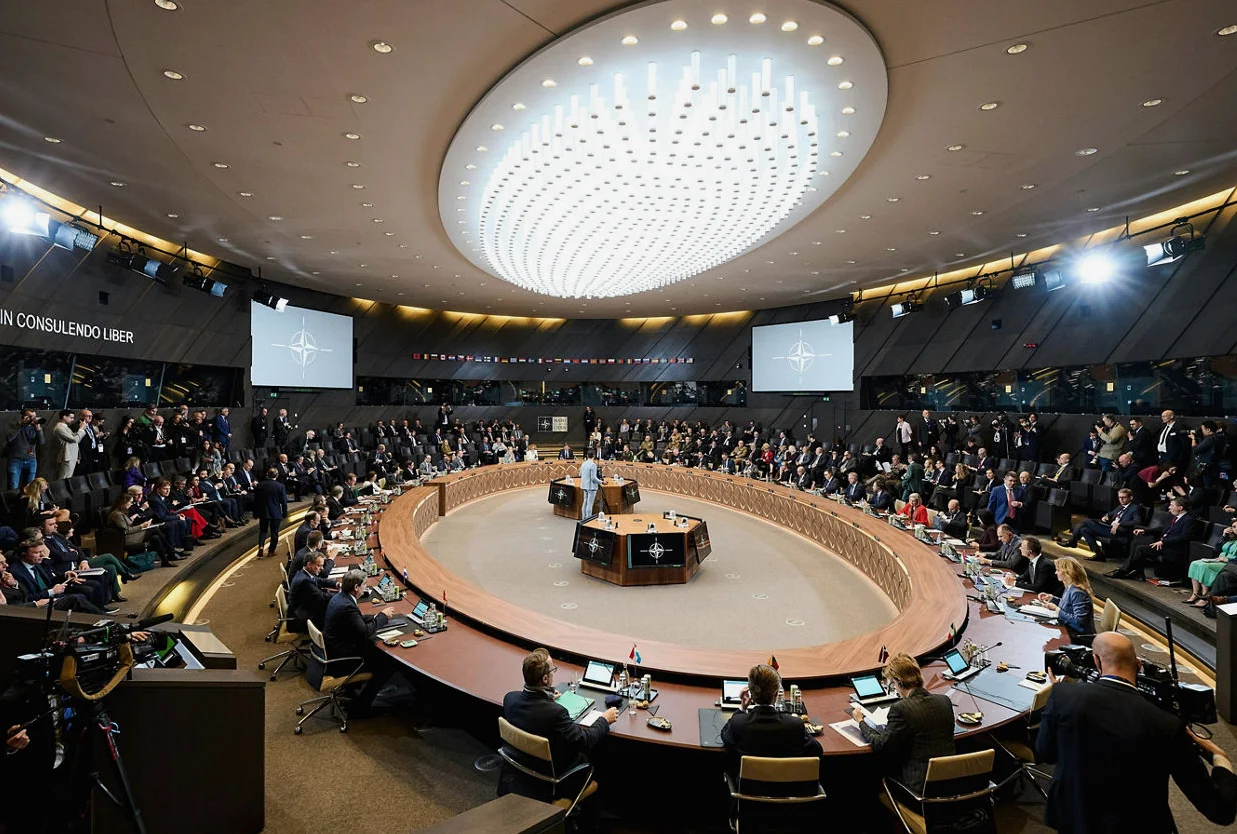
NATO’s North Atlantic Council convened with Gulf partners from Bahrain, Kuwait, Qatar, and the United Arab Emirates on March 18, 2026, to address the growing security concerns in the Middle East. The discussions, held in a closed session, emphasized the need for enhanced cooperation to counter threats posed by Iran and other regional actors. The meeting underscored the strategic importance of the Gulf states as key allies in maintaining global stability.
Focus on Regional Security and Iran
The meeting centered on the current security dynamics in the Middle East, particularly the actions of Iran, which have been increasingly aggressive in recent years. NATO Deputy Secretary General Radmila Shekerinska reiterated the alliance’s strong condemnation of Iran’s indiscriminate attacks across the region, which have affected not only Gulf states but also international shipping lanes and European interests.
Participants acknowledged the recent UN Security Council Resolution 2817, which was adopted in response to Iran’s ongoing ballistic missile and drone attacks. The resolution reaffirms the right of Gulf partners to self-defense under the UN Charter, a point that was explicitly highlighted during the discussions.
“We stand firmly with our Gulf partners in their right to defend themselves against unprovoked aggression,” Shekerinska said in a statement following the meeting. “The actions of Iran have destabilized the region and must be addressed through international cooperation and multilateral frameworks.”
Strengthening Practical Cooperation
The talks also focused on strengthening practical cooperation between NATO and Gulf partners in several key areas. These include maritime security, countering uncrewed aerial systems (UAS), and the protection of critical infrastructure. The Gulf states have expressed a strong interest in collaborating with NATO to enhance their defense capabilities and resilience against emerging threats.
Maritime security has been a particular concern, as Iran’s activities in the Strait of Hormuz have disrupted global oil trade and raised fears of a potential conflict. The Gulf partners emphasized the need for a coordinated response to ensure the free flow of commercial traffic through the region’s critical waterways.
“We are committed to deepening our collaboration with NATO in all areas that contribute to regional stability,” said a representative from the United Arab Emirates. “Our shared interests demand a unified approach to counter threats that affect both our nations and the global economy.”
Historical Context and Partnership
Bahrain, Kuwait, Qatar, and the United Arab Emirates are members of NATO’s Istanbul Cooperation Initiative (ICI), a partnership forum established in 2004 to promote political dialogue and practical cooperation in the region. The ICI has been instrumental in supporting ties between NATO and Gulf states, particularly in the areas of counterterrorism, military training, and crisis management.
Since its inception, the ICI has facilitated joint exercises and capacity-building programs, helping Gulf countries to modernize their defense structures and align more closely with Western security standards. The latest discussions mark a continuation of this long-standing partnership, which has grown in importance as regional tensions have escalated.
“The Istanbul Cooperation Initiative has been a vital platform for dialogue and collaboration,” said a NATO official. “As the security landscape evolves, we are committed to expanding our cooperation with our Gulf partners to address new and emerging challenges.”
The meeting also touched on the broader implications of the Middle East’s security situation for Euro-Atlantic stability. With Iran’s nuclear ambitions and its support for proxy groups in Syria, Yemen, and Lebanon, the region has become a flashpoint for international conflict. NATO and Gulf partners acknowledged the need for a unified response to prevent the situation from spiraling into a broader regional war.
Looking ahead, the discussions laid the groundwork for future collaboration, including the possibility of joint military exercises and intelligence-sharing agreements. The next meeting of the North Atlantic Council and Gulf partners is scheduled for later in the year, with a focus on implementing the strategies outlined during this session.
The current geopolitical climate has seen a significant increase in military activity in the Middle East, with several Gulf states investing heavily in defense modernization. In 2025 alone, the Gulf Cooperation Council (GCC) countries spent an estimated $60 billion on military upgrades, reflecting the growing threat perception in the region.
Analysts suggest that the increasing alignment between NATO and Gulf states could have far-reaching implications for global security. “This partnership is not just about regional stability; it’s about reinforcing the broader international order,” said Dr. Sarah Al-Mansouri, a security expert at the Gulf Institute. “By working closely with NATO, Gulf states are sending a clear message that they are not isolated in their efforts to maintain peace and security in the region.”
The outcome of the March 18 meeting is expected to influence future defense policies and international relations. With the global security environment becoming more complex, the collaboration between NATO and Gulf partners is likely to play a crucial role in shaping the future of Middle East stability.






Comments
No comments yet
Be the first to share your thoughts