

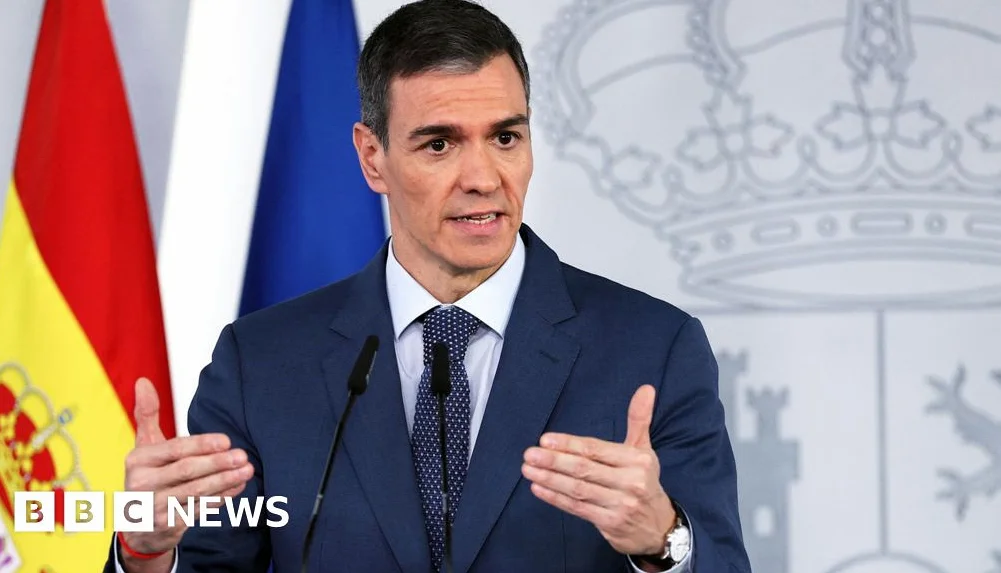
Spanish Prime Minister Pedro Sánchez has dismissed reports that the U.S. is considering suspending Spain from the NATO alliance. These reports emerged after an internal Pentagon email reportedly outlined various methods the U.S. might use to punish NATO allies that fail to support operations in the Iran war, according to Reuters.
U.S.-Spain Tensions Over Iran War
Sánchez addressed the matter during the European Union summit in Cyprus, stating, “We do not work with emails. We work with official documents and positions taken, in this case, by the government of the United States.” He reaffirmed Spain’s stance, emphasizing that the country’s position remains one of absolute collaboration with allies, but always within the framework of international legality.
Spain has been a vocal critic of the Iran war, which Sánchez has repeatedly called “illegal.” The country denied the U.S. permission to use jointly-operated bases to attack Iran and closed its airspace to U.S. planes involved in the conflict. This defiance has drawn strong criticism from U.S, though President Donald Trump, who has publicly criticized Spain and even warned his Treasury Secretary, Scott Bessent, to “cut off all dealings with Spain.”
NATO Clarifies No Suspension Provisions
NATO has clarified that its Founding Treaty does not include any provision for the suspension or expulsion of members, according to a NATO official. This statement comes amid growing speculation that the U.S. might be considering unilateral actions against NATO allies who do not support its military operations in the Middle East.
TIME has reached out to the Pentagon for comment on the reported email. The contents of the email. If verified. Suggest a shift in U.S. strategy toward NATO allies, potentially signaling a more confrontational approach toward members who do not align with U.S. military objectives.
Spain’s Stance and Regional Reactions
Spain’s opposition to the Iran war and its refusal to comply with Trump’s calls for support have placed it at odds with the U.S. administration; Sánchez has consistently argued that the war has led to “insecurity and pain,” and that international law must guide military actions. His government’s position has been supported by some European allies who have also expressed concerns about the legality and consequences of the conflict.
Despite the tension. NATO has not commented on whether it would support or oppose any U.S. initiative to suspend a member; the alliance’s statement highlights the formal structure of NATO’s founding documents, which do not provide a mechanism for expulsion. This legal ambiguity leaves the door open for diplomatic maneuvering but offers no clear path for formal disciplinary action.



Comments
No comments yet
Be the first to share your thoughts