

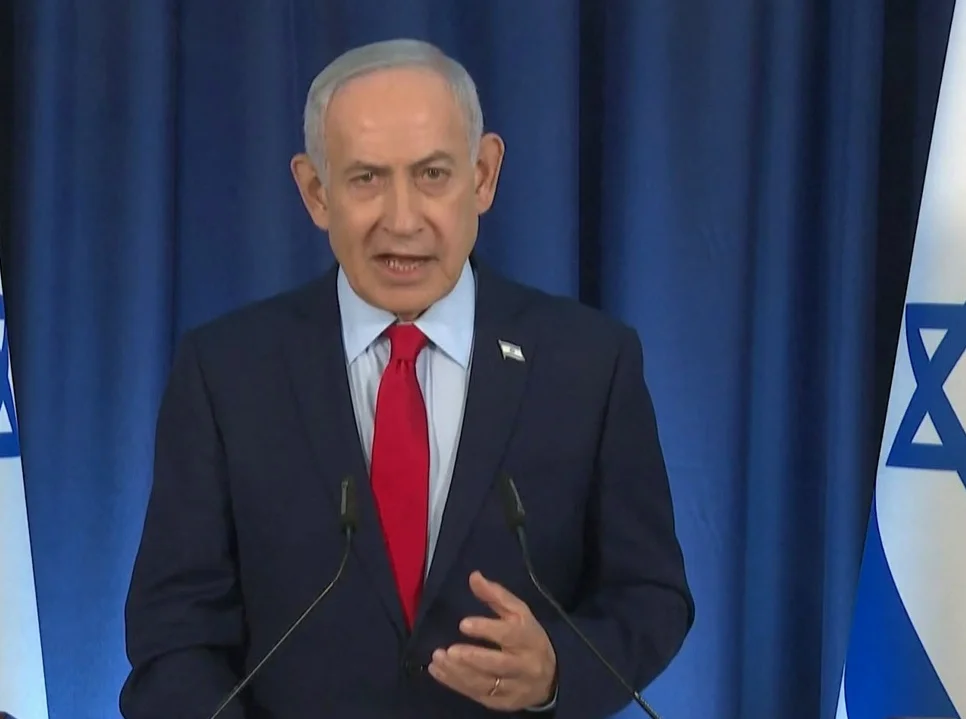
Israeli Prime Minister Benjamin Netanyahu asserted in a press conference that Iran no longer possesses the ability to enrich uranium or manufacture ballistic missiles, a claim that has drawn significant attention from regional and global observers. Speaking shortly after an Israeli TV report suggested the current military campaign was only halfway complete and expected to last weeks, Netanyahu emphasized that the conflict had significantly weakened Iran’s military infrastructure.
Impact on Regional Power Dynamics
Netanyahu’s statements highlight a major shift in the balance of power across the Middle East. According to the prime minister, Israel has emerged as a dominant force in the region, a transformation he described as the result of his commitment to changing the geopolitical landscape. ‘I pledged to change the Middle East, and we have done so, and Israel has become a regional superpower,’ Netanyahu said during the press conference.
Analysts suggest that if Netanyahu’s claims are accurate, Iran’s ability to conduct large-scale missile attacks or develop nuclear capabilities could be severely curtailed. However, the lack of independent verification has left many questions unanswered. ‘It’s too soon to tell if Iranians will take to the streets,’ one anonymous official said, indicating that the political and social consequences of the conflict are still unfolding.
The Israeli military has been conducting a sustained campaign against Iranian targets, which Netanyahu described as ‘a campaign that will take as long as necessary.’ According to recent reports, Iran had previously amassed thousands of ballistic missiles and posed a significant threat to Israel’s security. However, Netanyahu claimed that the recent strikes have left Iran with ‘few ballistic missiles left’ and no capacity to enrich uranium.
Escalation and Uncertainty
Despite Netanyahu’s confidence, the situation remains volatile. During the press conference, news emerged that Iran had launched missiles toward Israel, signaling that the conflict is far from over. The Israeli military has not confirmed the attack, but the report adds another layer of uncertainty to the already tense situation.
According to the Israeli TV report, the military mission is expected to last weeks, and the current phase is only halfway completed. This timeline suggests that the conflict may intensify in the coming days. ‘The campaign will take as long as necessary,’ Netanyahu reiterated, indicating that Israel is prepared for a prolonged engagement with Iran.
The potential for further escalation is heightened by the fact that Iran has been working to develop its missile capabilities and nuclear program for years. If Netanyahu’s claims are accurate, it would represent a major turning point in the long-standing rivalry between the two nations. However, if Iran has managed to preserve some of its capabilities, the risk of a larger regional conflict could increase.
Iran’s leadership has not publicly commented on Netanyahu’s statements, but internal reports suggest that the Iranian government is working to restore its military infrastructure. ‘What falls are the towers of Tehran and Beirut,’ Netanyahu said, referencing the potential for further destruction in both cities as a result of the ongoing conflict.
What Analysts Say
Regional analysts have been closely monitoring the situation, with many expressing skepticism about the extent of Iran’s current military limitations. ‘It’s important to assess whether the Israeli military has indeed crippled Iran’s capabilities or if there are still hidden reserves,’ said Dr. Samir Al-Khouri, a political scientist at the University of Cairo. ‘The international community is waiting for more evidence before taking any major actions.’
According to a recent report by the Institute for the Study of War, Iran has been working to diversify its military technology and reduce its reliance on traditional ballistic missiles. This strategy may have allowed Iran to maintain some level of military readiness despite the current conflict. However, the report also noted that the Israeli strikes have significantly disrupted Iran’s military operations.
Another concern for analysts is the potential for a ground invasion. While Netanyahu has not ruled out such an option, he has emphasized that the current campaign is focused on air and naval strikes. ‘We are not looking for a prolonged occupation, but we will take the necessary steps to ensure Israel’s security,’ he said during the press conference.
The international community has also been watching closely, with many countries expressing concern over the potential for a wider regional war. The United Nations has called for a de-escalation of hostilities, but so far, no major diplomatic efforts have been successful in calming the situation.
As the conflict continues, the focus will remain on whether Iran can rebuild its military capabilities or if the Israeli strikes have permanently altered the balance of power in the region. The next few weeks will be critical in determining the outcome of this ongoing crisis.






Comments
No comments yet
Be the first to share your thoughts