

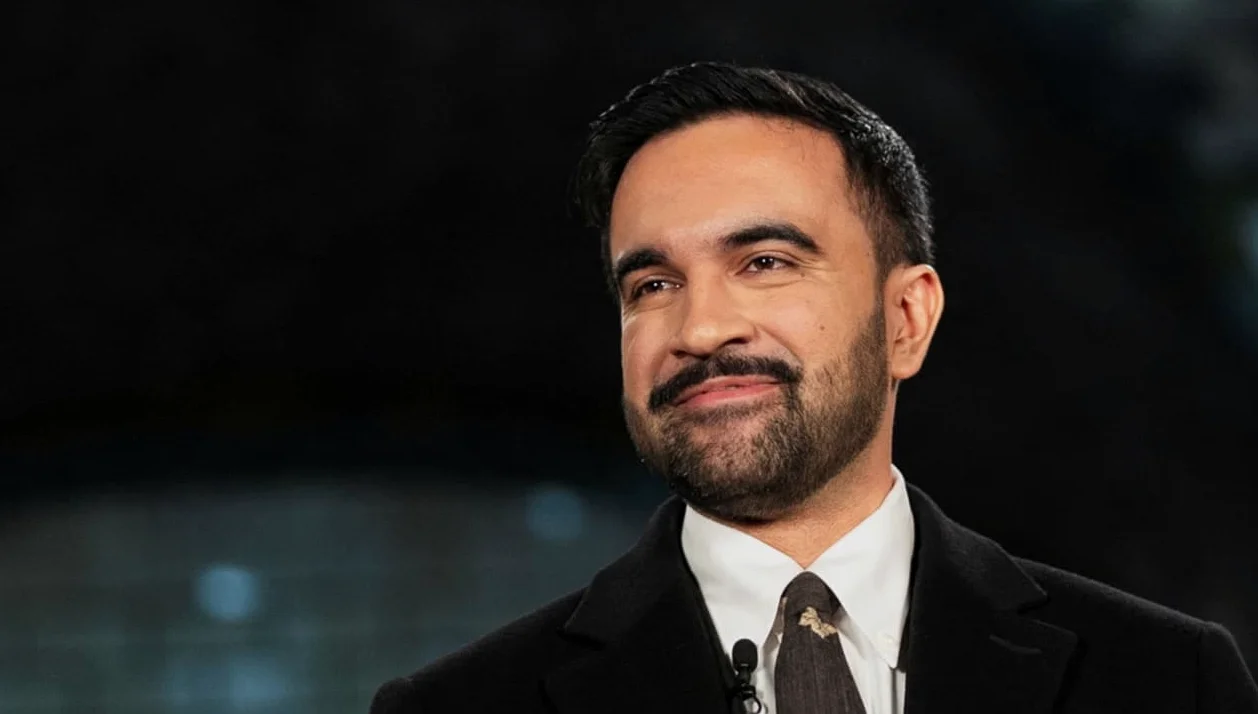
New York City Mayor Zohran Mamdani hosted controversial anti-Israeli activist Mahmoud Khalil, along with his wife and young son, earlier this week for iftar, the traditional meal breaking the daily fast during Ramadan, at the mayor’s official residence, Gracie Mansion. The event, reported by the New York Post on Tuesday, took place at the home of Mamdani and his wife, Rama, and was shared on Mamdani’s Instagram account.
Mayor’s Public Advocacy for Khalil
“Last night, marking a year since his arrest, Rama and I had the great honor of hosting Mahmoud, Noor, and their son Dean at Gracie Mansion to break the fast together,” Mamdani wrote in a post on Monday. The mayor included a photo from the event, showing his wife holding a plate of food beside Khalil, who appeared to be enjoying the meal in the luxurious setting.
Khalil, a Syrian-born social activist and former master’s student at Columbia University, was arrested by US Immigration and Customs Enforcement at the beginning of last year. He is now facing deportation after the Trump administration accused him of fraud in his green card application. The administration claims Khalil is a supporter of Hamas, a group designated as a terrorist organization by the U.S. government.
The U.S. administration is using a rarely invoked legal provision that allows for the deportation of non-citizen residents if their beliefs or activities could pose a threat to the core interests of U.S. foreign policy. This provision has been used in limited cases, often involving individuals linked to groups deemed hostile to American interests.
Controversial Advocacy and Legal Battle
According to the New York Post, Mamdani has long served as Khalil’s public advocate. Khalil spent three months in a federal detention facility in Louisiana before a panel of three judges in New Jersey ruled last June that he should be allowed to continue his immigration process as normal.
“For Mahmoud Khalil, the past year has been marked by profound hardship, but also by great courage,” Mamdani wrote on social media. “And yet, even in the face of this cruelty, there was also beauty. We saw New Yorkers raising their voices in solidarity. This is a city that refuses to look the other way. Mahmoud regained his freedom, and a father was finally reunited with his child.”
Khalil’s son, the couple’s first child, is expected to celebrate his first birthday next month. The child was born while Khalil was being held in immigration custody in Louisiana, several states away from his family.
“Mahmoud is a New Yorker, and his natural place is here in New York City,” Mamdani declared emphatically. As early as January this year, Mamdani addressed the issue during a press conference, where he said: “I see the attack against him as part of a broader attack on freedom of expression, one that is especially evident when that freedom is used to challenge policies related to human rights.”
Political and Social Implications
The hosting of Khalil by Mamdani has raised concerns among some New York residents and political figures. The mayor’s office has not commented on the specific nature of Khalil’s activities or his alleged ties to Hamas, but Mamdani has been vocal in his defense of Khalil’s rights and his stance against what he calls an attack on freedom of expression.
Analysts have noted that Mamdani’s public support for Khalil could have broader political implications, particularly in a city with a diverse population and a complex relationship with Israel and the Middle East. Some experts have called for greater transparency regarding Khalil’s activities and the basis for the government’s claims against him.
“It is important to understand the full context of Khalil’s case and the legal basis for his potential deportation,” said one immigration law expert, who requested anonymity. “The public deserves clarity, especially when the mayor is so visibly supportive of an individual facing deportation.”
Khalil’s case is expected to be a topic of discussion during upcoming immigration policy reviews, with a potential decision expected by the end of the year. Mamdani’s role in the matter is likely to remain a point of contention in local politics.
The incident highlights the broader debate over the balance between national security concerns and civil liberties, a discussion that has gained renewed attention in recent months.






Comments
No comments yet
Be the first to share your thoughts