

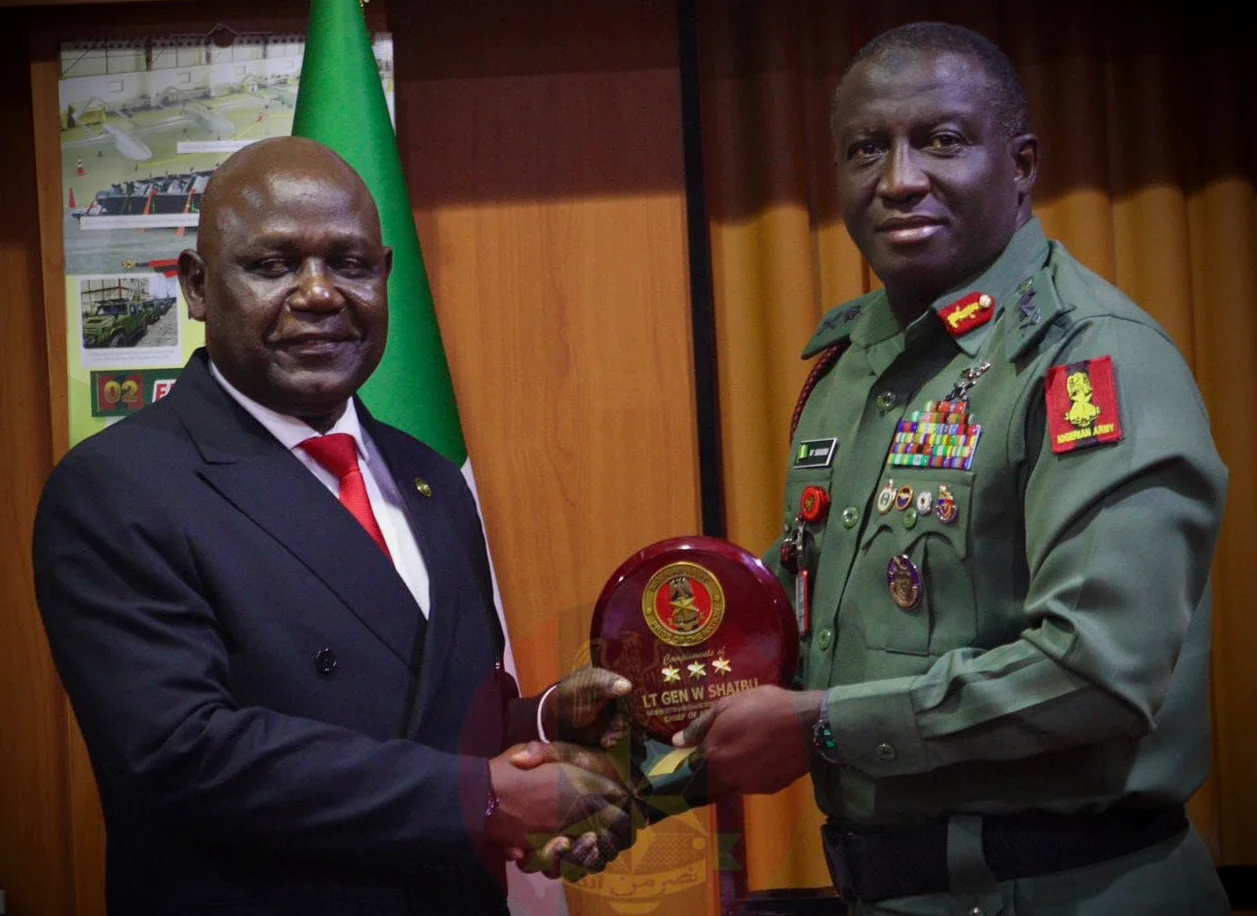
The Nigerian Army is moving forward with plans to significantly expand its aviation wing in response to evolving security challenges across the country, according to Lieutenant General Waidi Shaibu, the Chief of Army Staff (COAS). The decision comes amid ongoing concerns over insurgency, banditry, and other threats that have persisted in various regions.
Modernization and Operational Advantages
Gen. Shaibu emphasized that the aviation wing is a crucial component of the Army’s modernization strategy and serves as a force multiplier in current operations. The expansion includes the enhancement of unmanned aerial systems (UAS), which have proven to be instrumental in improving response times, precision engagement, and situational awareness across multiple operational theatres.
During a meeting with the Permanent Secretary of the Ministry of Defence, Richard Pheelangwa, at the Army Headquarters in Abuja, Gen. Shaibu outlined the necessity of this expansion. He noted that the integration of advanced aviation platforms and UAS with responsive administrative frameworks is key to achieving operational superiority in today’s complex security environment.
According to the COAS, these advancements are changing battlefield dynamics and significantly bolstering the Army’s ability to project power, dominate operational space, and protect civilians. ‘These capabilities are redefining the battlefield and enhancing the Army’s ability to project power and protect the populace,’ Shaibu stated.
Resource Allocation and Infrastructure Needs
Gen. Shaibu highlighted that the success of these modernization efforts is largely dependent on sustainable funding, efficient procurement, and strong logistical support. He emphasized that predictable resource flows are critical to ensuring the continuity and operational effectiveness of the Army Aviation component.
With the recent approval by President Bola Ahmed Tinubu to increase the Army’s personnel strength, the COAS noted the growing infrastructural and logistical demands. He called for deliberate investment in barracks construction and facility upgrades to accommodate the thousands of recruits currently undergoing training. This, he said, is essential for maintaining adequate living conditions, morale, and operational readiness.
‘Adequate accommodation, enhanced welfare, and improved living standards are not just luxuries—they are essential to morale, cohesion, and operational effectiveness,’ Shaibu remarked during the meeting.
Government Commitment and Strategic Collaboration
Richard Pheelangwa, the Permanent Secretary of the Ministry of Defence, reaffirmed the ministry’s commitment to supporting the Army’s aviation expansion and broader modernization agenda. He described the meeting as a strategic engagement aimed at deepening collaboration between the Ministry of Defence and the Nigerian Army.
Pheelangwa emphasized the need to eliminate procedural bottlenecks and prioritize resource governance and policy implementation to ensure sustained operational superiority and national security. ‘We are committed to strengthening administrative cooperation and providing the necessary support to the Army’s aviation expansion efforts,’ he said.
The Nigerian Army’s push for expanded aviation capabilities is part of a broader modernization drive that has gained momentum under President Tinubu’s administration. The government has allocated significant resources to upgrade military infrastructure and enhance operational readiness, particularly in response to persistent security threats in the north and northeast of the country.
According to recent reports, the Army has already begun acquiring new aircraft and upgrading existing ones, with a focus on surveillance, reconnaissance, and rapid response capabilities. The expansion is expected to be completed by 2025, with the first batch of new UAS and aircraft expected to be deployed by mid-2024.
Analysts believe that the expanded aviation wing will play a key role in countering insurgent groups such as Boko Haram and the Islamic State in West Africa (ISWAP), as well as banditry and criminal activities in the north. The improved aerial support is expected to enhance the Army’s ability to conduct precision strikes, monitor movement, and provide real-time intelligence to ground forces.
As the Nigerian Army continues its modernization efforts, the focus remains on ensuring that these advancements are sustained through adequate funding and effective governance. The collaboration between the Ministry of Defence and the Army is seen as a critical factor in achieving the strategic objectives set forth in the national security agenda.






Comments
No comments yet
Be the first to share your thoughts