

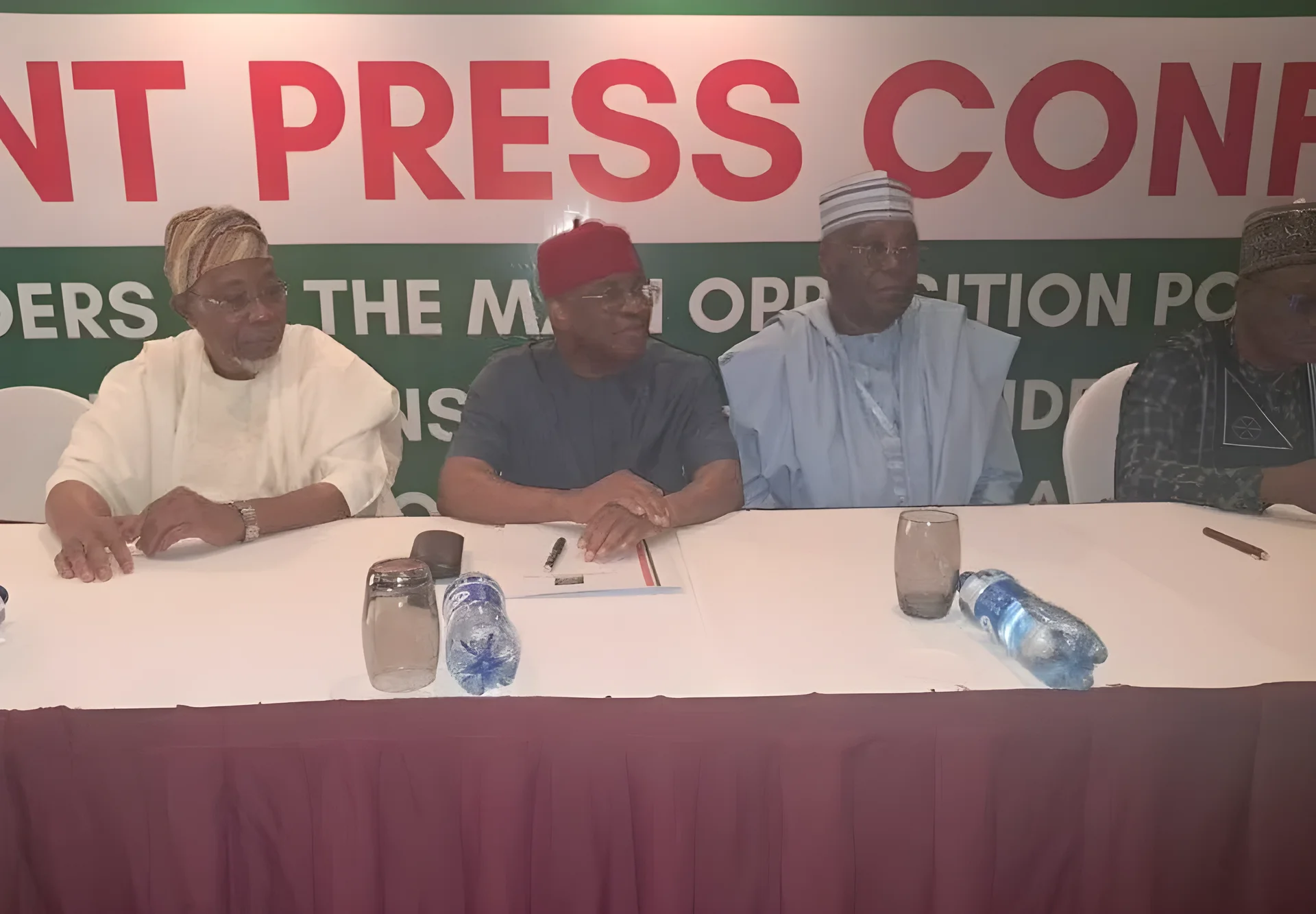
Nigerian opposition leaders from the African Democratic Congress (ADC) and New Nigeria Peoples Party (NNPP) have called on the National Assembly to discard the recently enacted Electoral Act (Amendment) 2026 and initiate a new amendment process to protect Nigeria’s democratic framework. The demand was made during a high-profile press conference held on Thursday at the Lagos/Osun Hall of the Transcorp Hilton Hotel in Abuja.
Urgent Call to Save Democracy
Speaking on behalf of the opposition coalition, NNPP National Chairman Ajuji Ahmed urged federal lawmakers to ‘expunge all objectionable provisions contained in the Act,’ arguing that the current law undermines electoral integrity and paves the way for potential manipulation in future polls, including the 2027 general elections.
Ahmed emphasized that the freshly signed amendments, assented to by President Bola Tinubu following passage by the National Assembly, fall short of addressing longstanding demands for greater transparency, particularly around the mandatory real-time electronic transmission of election results from polling units.
Concerns Over Electoral Integrity
Opposition voices have repeatedly highlighted concerns over provisions allowing discretionary manual processes in cases of technical failures, which they claim weaken safeguards against fraud observed in previous election cycles. These concerns were echoed by former Senate President and ADC National Chairman David Mark, who has been vocal about the need for stronger electoral reforms.
ADC National Publicity Secretary Bolaji Abdullahi reiterated that the opposition is not satisfied with the current amendments, which include provisions such as the mandatory use of the Bimodal Voter Accreditation System (BVAS), dedicated funding for the Independent National Electoral Commission (INEC), and stricter regulations on political parties.
Despite these additions, opposition leaders argue that the amendments do not sufficiently address the core issues of transparency and accountability in the electoral process. The gathering, described by participants as an ‘urgent call to save Nigeria’s democracy,’ reflects growing opposition frustration with what critics view as insufficient reforms to the electoral framework.
Escalating Political Tensions
This unified push comes amid broader coalition-building efforts among the People’s Democratic Party (PDP), ADC, NNPP, and Labour Party ahead of the 2027 elections. The press conference signals escalating political tensions, with opposition leaders warning that disputed electoral laws could erode public trust and credibility in future contests.
Neither the National Assembly nor the presidency has issued an immediate formal response to today’s demands. Earlier justifications for the 2026 amendments have pointed to inclusions such as mandatory use of the Bimodal Voter Accreditation System (BVAS), dedicated funding for INEC, and stricter regulations on political parties as advancements toward credible elections.
According to opposition leaders, the current electoral laws do not provide the necessary safeguards to prevent electoral fraud or ensure fair and transparent elections. They argue that the lack of real-time electronic transmission of election results from polling units could lead to discrepancies and manipulation in the counting process.
The opposition is calling for a complete overhaul of the Electoral Act, emphasizing the need for a thorough review and revision of the existing provisions. They believe that a new amendment process is necessary to address the concerns of the Nigerian electorate and ensure that the electoral framework is strong and credible.
With the 2027 general elections approaching, the opposition’s call for a new amendment process is likely to have significant implications for the political landscape in Nigeria. The National Assembly and the presidency are expected to respond to these demands in the coming weeks, as the issue of electoral integrity remains a critical concern for the Nigerian public.





Comments
No comments yet
Be the first to share your thoughts