

At the Ninth Congress of the Workers’ Party of Korea, held every five years, North Korea’s leader Kim Jong-un reaffirmed the country’s nuclear ambitions and deepened its alignment with Russia, marking a significant shift in regional dynamics. The congress, which lasted seven days, saw the replacement of more than 40% of senior officials with younger loyalists, including Kim’s sister, Kim Yo-jong, who was to general affairs director of the Central Committee.
Formalizing Nuclear Deterrence
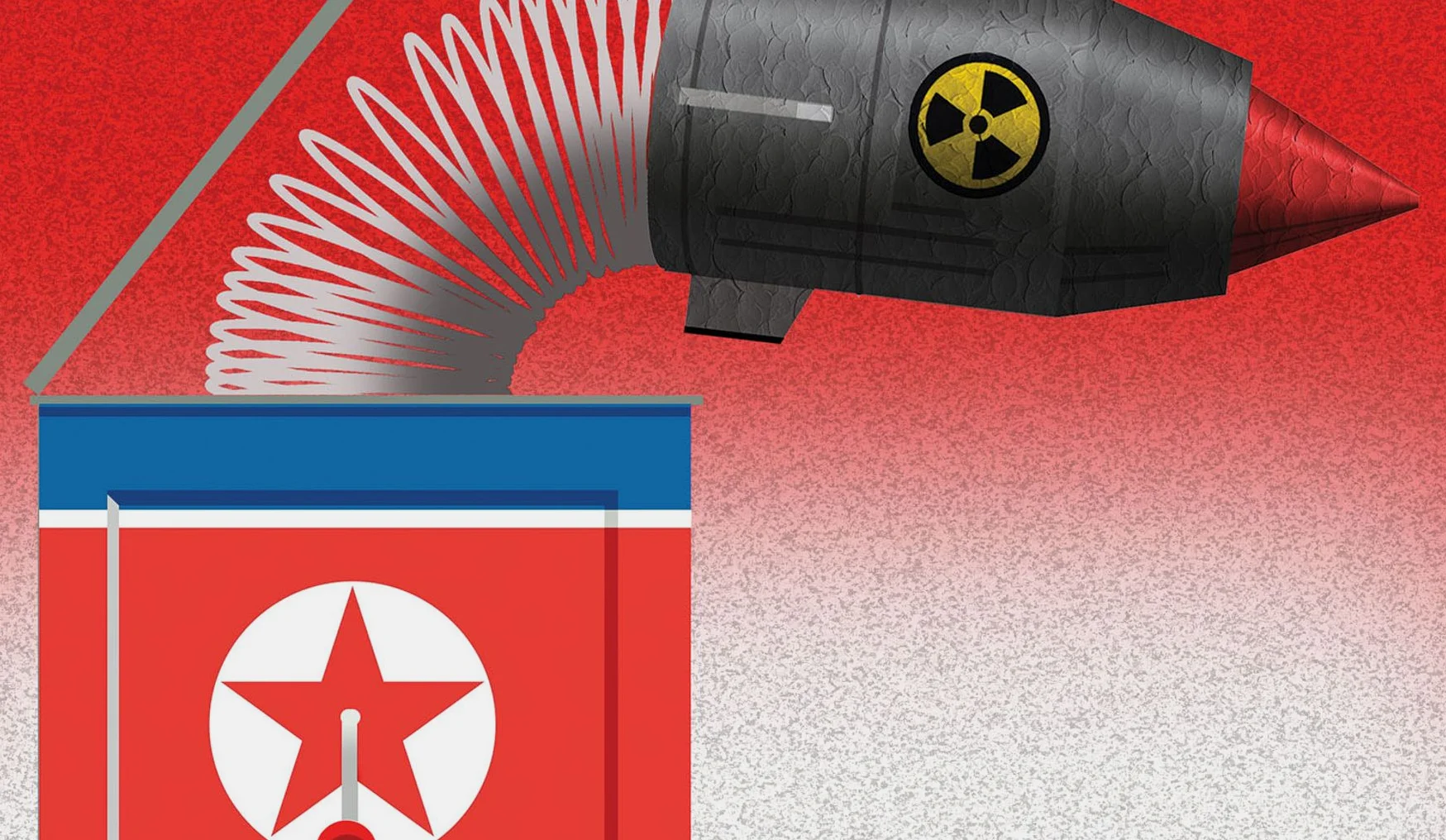
The congress codified North Korea’s status as a permanent nuclear-armed state, emphasizing further nuclear expansion and modernization. A new concept, known as ‘Haekpangasoe’ (nuclear trigger), was formalized as an integrated nuclear crisis response system designed to ensure the national nuclear shield can be operated promptly and accurately at any time.
According to the Korean Central News Agency, North Korea’s nuclear deterrent now includes a preemptive nuclear strike capability. This doctrine ensures that nuclear weapons can and will be used in response to perceived threats, a significant escalation from previous policies.
Reaffirming Hostility Toward South Korea
North Korea formally reaffirmed its hostility toward South Korea, designating it the ‘first hostile state’ and institutionalizing severed ties. This move effectively discards the long-standing policy of reunification, adopting instead the ‘two hostile states’ doctrine, which positions both South Korea and the United States as adversaries.
While clearly emphasizing antagonism toward South Korea, Kim suggested openness to talks with Washington, but only if the U.S. accepts North Korea’s nuclear status and abandons its ‘hostile policy’ toward the country. This stance leaves the door open for potential diplomatic engagement, albeit with stringent conditions.
Recent Developments and Strategic Alliances
North Korea has also deepened its military and economic ties with Russia, culminating in a June 2024 thorough strategic partnership and a mutual defense treaty. North Korea is providing Russia with more than 12,000 troops to support its war in Ukraine, along with artillery shells and ballistic missiles. In return, Russia is reportedly offering missile and nuclear assistance to North Korea.
The situation on the Korean Peninsula has become increasingly tense, with North Korea, aligned with Russia and China, viewing South Korea as its primary adversary. The emphasis on tactical nuclear weapons and the doctrine of preemptive use of nuclear weapons has raised concerns about regional stability and the potential for conflict.
Kim’s comments at the Ninth Party Congress that North Korea could ‘get along’ with the U.S. and his apparent willingness to again meet with President Donald Trump could be the only viable option for defusing the potential for conflict on the Korean Peninsula. However, this does not necessarily mean the U.S. has to accept North Korea as a nuclear weapons state. Instead, it opens the possibility for discussions on sanctions relief, economic development assistance, peaceful nuclear energy, and a path to normal relations when North Korea makes progress on human rights.
In return, North Korea will have to agree to a moratorium on nuclear tests, fissile material production for nuclear weapons, and medium- and long-range ballistic missile launches. Eventually, denuclearization on the Korean Peninsula will have to be discussed, but that could be after a decade or more of negotiations.
Another summit between the leaders of the U.S. and North Korea is in the interest of peace and stability in East Asia, according to analysts. The U.S. and North Korea have had previous summits, such as the 2018 meeting in Singapore, which resulted in a joint statement committing both countries to establishing a new relationship in accordance with the desire of the peoples of the two countries for peace and prosperity.
However, the 2019 summit in Hanoi failed when Trump ended the meeting abruptly after Kim would include his plutonium reactor at Yongbyon only in exchange for the lifting of sanctions. A brief symbolic meeting at the Demilitarized Zone later in 2019 did not include a substantive discussion of sanctions relief for denuclearization.
Since the Eighth Party Congress in January 2021, complete and verifiable denuclearization is now off the table. In 2022, North Korea officially enshrined the right to use preemptive nuclear strikes to protect itself from an imminent or perceived imminent attack.
With the Ninth Party Congress now memorializing the ‘Haekpangasoe’ nuclear trigger doctrine, the situation remains highly volatile, with the potential for further escalation if diplomatic efforts fail to yield results.

Comments
No comments yet
Be the first to share your thoughts