

 BBC
BBC 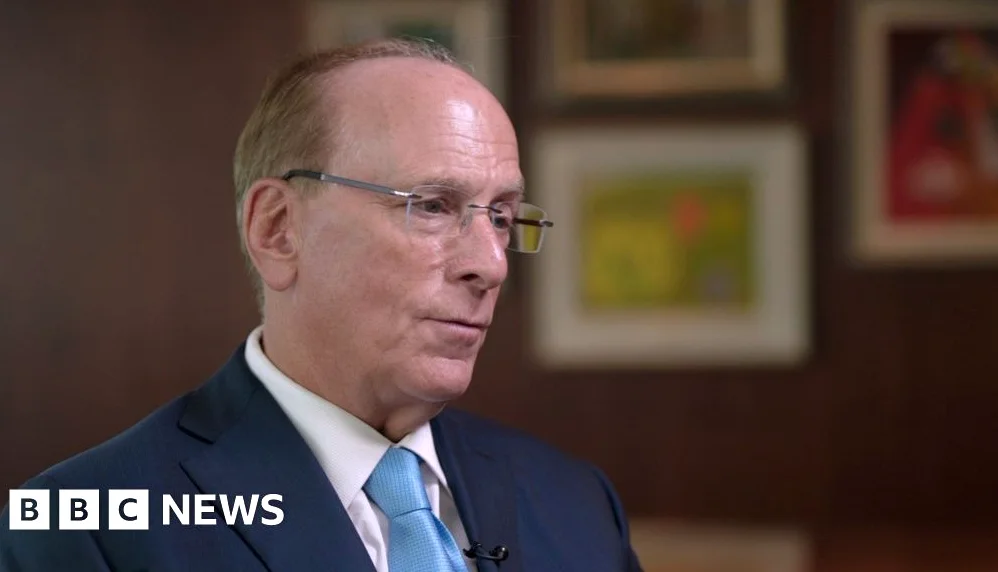
BlackRock, the world’s largest asset manager with $14 trillion in assets under management, has warned that oil prices reaching $150 a barrel could trigger a global recession. Larry Fink. The firm’s chief executive. Said the situation could lead to ‘profound implications’ for the world economy if Iran remains a threat and energy costs remain high.
Energy Prices and Economic Impact
Fink outlined two possible scenarios for the Middle East conflict. If the situation stabilizes and Iran is reintegrated into the international community, oil prices could fall below pre-war levels. However, if the conflict continues, oil prices could remain above $100 and even reach $150, leading to a ‘stark and steep recession.’
Rising energy prices have been described by Fink as a ‘very regressive tax,’ disproportionately affecting the poor. He emphasized that countries must be pragmatic about their energy mix, using all available sources while aggressively moving toward alternatives like solar and wind power.
Fink warned that sustained high oil prices could accelerate the transition to renewable energy. ‘You would have so many countries moving so rapidly towards solar and maybe even wind,’ he said, highlighting the need for diversification in energy sources to ensure economic stability and growth.
Financial Stability and AI Investment
Fink rejected comparisons to the 2007-08 financial crisis, stating that ‘there is no chance of a repeat of the financial trauma seen in 2007-08.’ He argued that today’s financial institutions are more secure and that the issues affecting some funds are a small fraction of the overall market.
Regarding artificial intelligence, Fink said there is no bubble in the technology sector. ‘I do not believe we have a bubble at all,’ he said. ‘Could we have one or two failures in AI? Sure, that I’m fine with.’
Fink emphasized the importance of investing in AI to maintain technological dominance, noting that BlackRock was part of a $40 billion deal to buy Aligned Data Centres, a major data centre provider. ‘I believe it’s mandatory that we are aggressively building out our AI capabilities,’ he said.
AI and Job Creation
Fink acknowledged that the AI boom could widen inequality but argued that it would also create new jobs. ‘AI will create jobs for plumbers and electricians,’ he said, emphasizing the need for a rebalanced approach to education and career choices.
In his annual letter to shareholders, Fink warned that the AI revolution could disrupt traditional office jobs but stressed the need to adapt to changing societal demands. ‘We need to rebalance that approach,’ he said, calling for a renewed focus on practical skills and trades.
Fink criticized the overemphasis on higher education in the US after World War Two, saying that ‘we probably overdid it’ with the message to pursue college degrees. He argued that careers in plumbing and electrical work can be just as strong and valuable as those in academia or corporate sectors.
He also urged the US to focus more on solar power to support the energy needs of AI development, noting that ‘we better start focusing on solar… because we need to have cheap, inexpensive power to move into AI.’
Meanwhile, the UK has been urged to increase domestic oil and gas production to reduce reliance on imports amid global instability. Industry body Offshore Energies UK warned that without more domestic production, the country risks becoming increasingly dependent on foreign energy sources.
Fink’s warnings about oil prices and the potential for a global recession reveal the interconnectedness of energy markets and the global economy. As tensions in the Middle East persist, the world watches closely for signs of whether oil prices will remain high or stabilize, with significant implications for economic growth and stability.






Comments
No comments yet
Be the first to share your thoughts