

 BBC
BBC 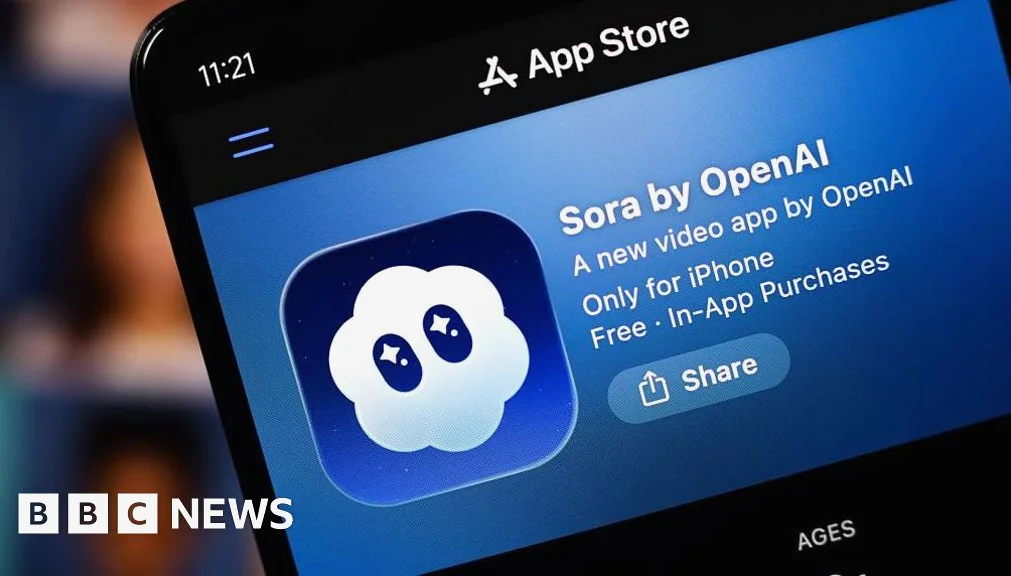
OpenAI has announced the closure of its artificial intelligence (AI) video-generation app Sora, less than two years after its launch, which had made headlines for creating realistic video clips based on simple prompts. The BBC has learned that the company will also wind down its content partnership with entertainment giant Disney.
Shift in Focus for OpenAI
OpenAI told the BBC on Wednesday that it has discontinued Sora to focus on other developments, such as robotics that will help people solve real-world, physical tasks. The company said it will no longer focus on developing video-generation tools, and both its Sora consumer app and the internet-based platform for professional users will be shut down.
A spokesperson for The Walt Disney Company said, ‘We respect OpenAI’s decision to exit the video generation business and to shift its priorities elsewhere.’ The company added that Disney will continue to engage with other AI platforms to find ways to responsibly use the technology without infringing on intellectual property rights.
OpenAI said it plans to apply the same technology used to teach AI how to produce realistic videos to training robots. The firm aims to create other forms of advanced AI, including ‘agentic’ technology capable of autonomously completing tasks with little human oversight.
Background of Sora’s Launch
Sora launched in 2024 and quickly gained worldwide attention due to the high quality of its videos, which looked as if they were produced by a professional studio. The app’s ability to generate realistic video content from simple text prompts sparked both excitement and concern, particularly around copyright issues and the potential threat to the media industry.
In December. Disney became the first major studio to license intellectual property (IP) to OpenAI for use in its AI video tools, though the three-year deal allowed Sora users to create AI videos featuring Disney characters like Mickey Mouse and Yoda from Star Wars. The agreement was seen as a turning point for the tech industry and Hollywood, coming after major studios had issued legal challenges to AI firms over the use of their IP.
Some in the media industry raised concerns that the deal would mark a major step toward AI replacing entertainment industry talent. The move also drew attention to the growing competition in the AI video-making market, with companies like China’s Seedance creating controversy in February after realistic videos featuring Hollywood characters generated by its app went viral online.
Impact on the AI and Entertainment Industries
The closure of Sora and the end of the partnership with Disney come at a time of increasing scrutiny over the ethical and legal implications of content. The BBC understands that OpenAI will no longer focus on developing video-generation tools, which had been a key part of its strategy since 2024.
Disney’s decision to license its IP to OpenAI was a significant development in the ongoing debate about how AI should be used in the entertainment industry. The three-year deal. Which allowed Sora users to create AI videos with Disney characters, was the first of its kind for a major studio and marked a shift in how Hollywood is approaching AI technology.
OpenAI’s spokesperson said that the company’s focus will now be on developing other forms of advanced AI, including robotics and ‘agentic’ technology. The firm said that the technology used to train AI to produce realistic videos will be applied to training robots, which could have wide-ranging implications in various sectors, including healthcare, manufacturing, and logistics.
The closure of Sora also raises questions about the future of video content. While the app had gained widespread attention for its ability to create realistic videos from simple prompts, it also sparked concerns about copyright violations and the potential threat it posed to the media industry. The BBC understands that OpenAI will no longer focus on developing video-generation tools, but it remains to be seen how the industry will adapt to this change.
OpenAI said that its image-making tools on ChatGPT have not been affected by Sora’s closure. The company also stated that it will continue to invest in other areas of AI development, including robotics and ‘agentic’ technology. The firm has not provided further details on its plans for the future, but it is clear that its focus has shifted away from video-generation tools.
With the closure of Sora and the end of the partnership with Disney, OpenAI is signaling a new direction for its AI development — the company’s decision to focus on robotics and other forms of advanced AI may have far-reaching implications for the future of the technology industry. As AI continues to evolve. It will be important to monitor how companies like OpenAI are shaping the future of artificial intelligence.





Comments
No comments yet
Be the first to share your thoughts