

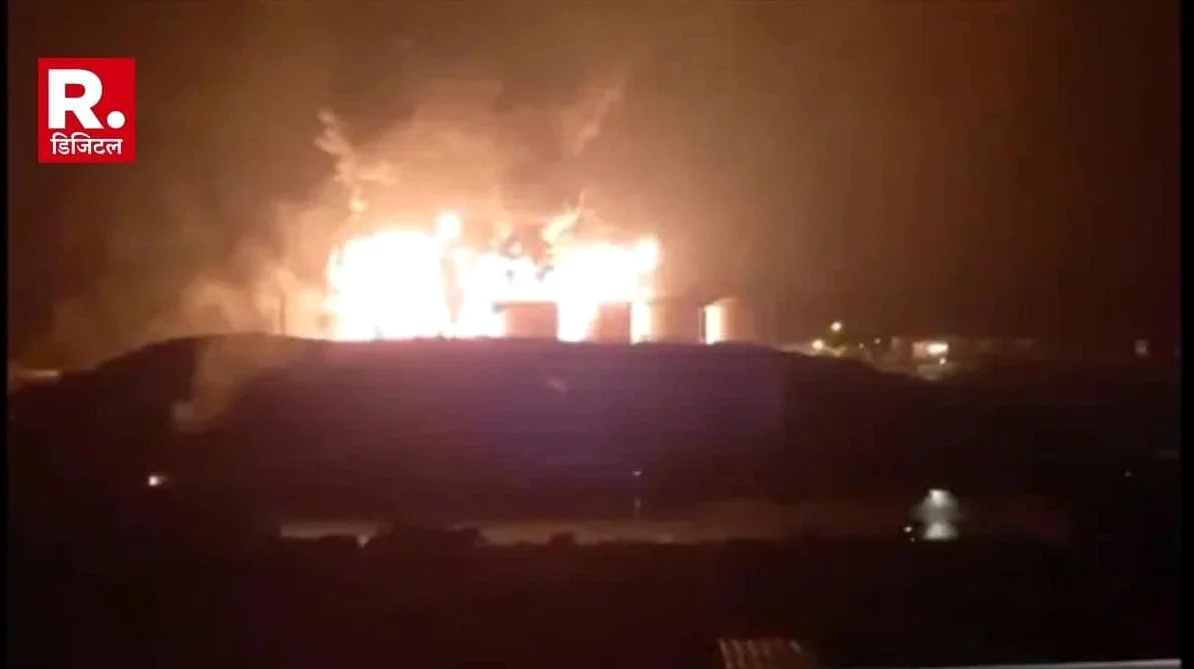
Operation Epic Fury, a newly launched military and diplomatic initiative involving the United States and Israel, has intensified regional tensions in the Middle East, with Iran at the center of the conflict. The operation, which began in early 2025, marks a significant escalation in the long-standing rivalry between Israel and Iran, while also signaling a broader U.S. strategy to counter China’s rising influence in the region. According to defense analysts, this campaign is not just a regional conflict but a key moment in the 21st-century global power struggle.
Escalation in the Middle East
The operation has seen increased military activity in the Persian Gulf, with both the U.S. and Israel conducting coordinated air strikes and naval exercises in the Strait of Hormuz. According to the U.S. Department of Defense, these operations aim to disrupt Iranian military movements and secure critical shipping lanes. Iran has responded with missile attacks on Israeli positions in the occupied Golan Heights and has threatened to expand its operations into other regions if provoked further.
The U.S. has deployed additional troops to the Gulf region, with more than 20,000 soldiers now stationed in the area. This deployment, according to a Pentagon spokesperson, is to protect American interests and ensure the free flow of oil through the region. However, the move has been criticized by some as an overreach that risks further destabilizing the region.
Israel has also increased its military presence along its border with Lebanon and Syria, with reports of Israeli forces conducting targeted strikes on Iranian-backed militias. According to Israeli military officials, these actions are in response to perceived threats from Iran’s regional allies, including Hezbollah and the Iranian Major Guard Corps.
China’s Strategic Influence
While the U.S. and Israel focus on countering Iran, China’s role in the region has grown significantly. Beijing has been expanding its economic and military ties with countries in the Middle East, including Iran, Iraq, and Sudan. According to a report by the U.S. Congressional Research Service, China has invested over $100 billion in infrastructure projects in the Middle East over the past decade, including ports, railways, and energy facilities.
Iran, in particular, has deepened its economic ties with China, with Beijing becoming its largest trading partner. In a recent agreement, China pledged to invest $25 billion in Iranian oil and gas projects, including the development of a new pipeline to transport Iranian crude to China. This partnership, according to analysts, gives China a strategic foothold in the region and reduces Iran’s reliance on Western markets.
China’s growing influence has also been seen in its military engagements with Iran. In a recent joint military exercise, Chinese and Iranian forces conducted drills in the Gulf of Oman, a move that has raised concerns among Western powers. According to a U.S. State Department official, these exercises are part of a broader strategy by China to challenge U.S. dominance in the region.
Analysts say China’s increasing involvement in the Middle East is not just a response to U.S. military presence but also a strategic move to secure its economic interests. “China is positioning itself as a key player in the region,” said Dr. Sarah Lin, a Middle East expert at the University of Chicago. “Their investments and military cooperation with Iran are part of a larger effort to counterbalance U.S. influence.”
Implications for the Global Order
The conflict in the Middle East under Operation Epic Fury has far-reaching implications for the global order. The region is a critical hub for global energy supplies, and any disruption could have significant economic consequences. According to the International Energy Agency, the Middle East accounts for nearly 30% of the world’s oil production, with the Gulf states alone supplying about 15% of global oil consumption.
The U.S. has warned that any attempt to disrupt oil shipments through the Strait of Hormuz could lead to severe economic consequences. In a recent statement, U.S. Secretary of State Antony Blinken said, “We will not allow any country or group to disrupt the flow of oil and gas through the region.”
However, the situation remains volatile. With Iran’s military capabilities growing and China’s influence expanding, the region is at a crossroads. According to a recent report by the Center for Strategic and International Studies, the likelihood of a major conflict in the Middle East has increased by 25% in the past year, with the potential for a wider regional war if tensions continue to escalate.
What comes next is uncertain. The U.S. and Israel are likely to continue their military operations, while China is expected to deepen its economic and strategic ties with Iran. The outcome of Operation Epic Fury will not only determine the future of the Middle East but also shape the global balance of power in the 21st century.






Comments
No comments yet
Be the first to share your thoughts