

 Associated Press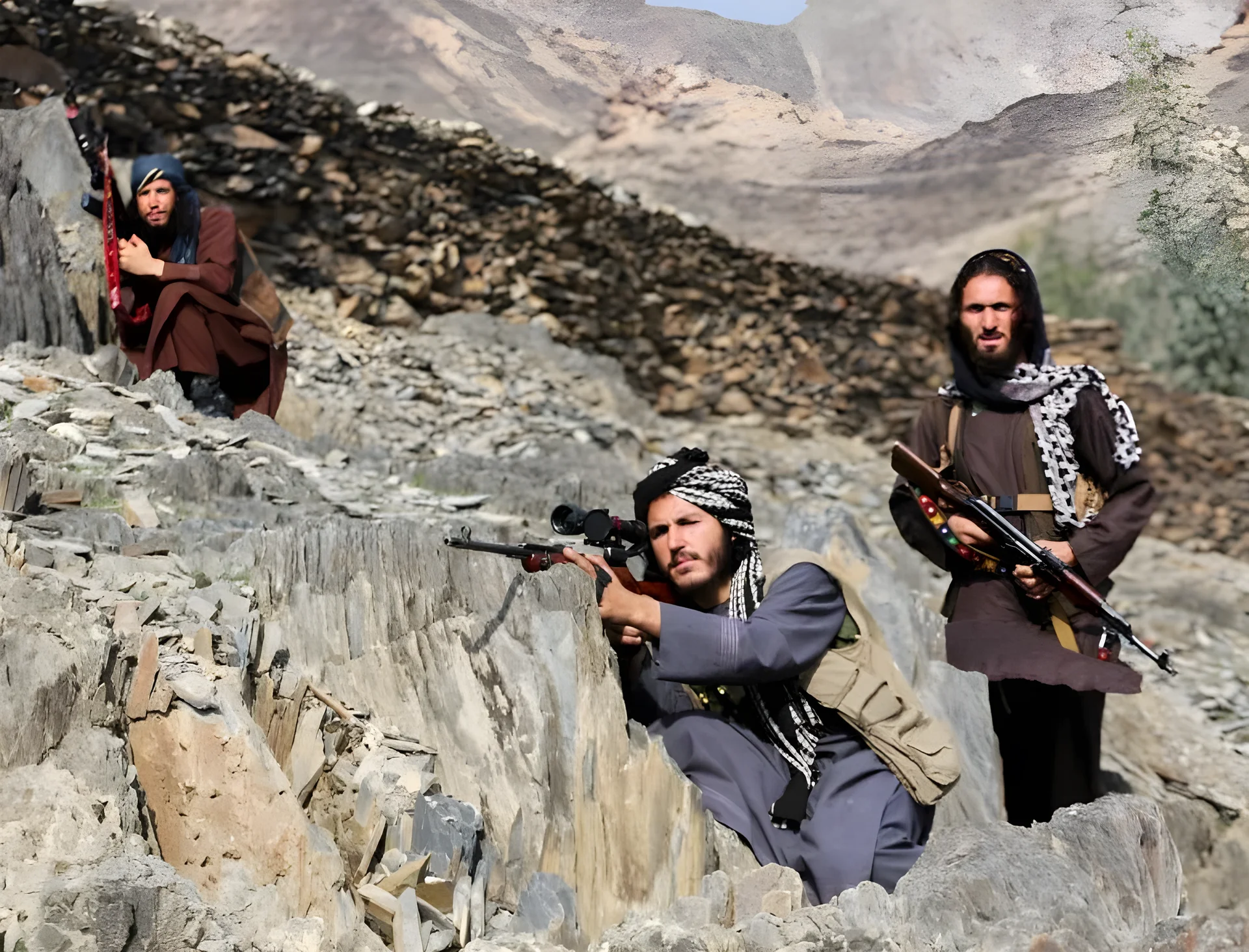
Pakistan’s defense minister has declared an ‘open war’ with Afghanistan after a series of cross-border strikes that have intensified hostilities between the two countries. The escalation comes after Afghanistan launched retaliatory attacks following deadly airstrikes by Pakistan, which the South Asian nation claims targeted military installations in the Afghan capital and other provinces.
Escalation of Cross-Border Attacks
The conflict began with Afghanistan’s cross-border attack on Pakistan late Thursday, which it said was in retaliation for deadly airstrikes by Pakistan on Afghan border areas on Sunday. In response, Pakistan conducted airstrikes in Kabul and two other Afghan provinces early Friday, according to the country’s defense ministry.
“We have targeted important military targets in Pakistan, sending a message that our hands can reach their throats and that we will respond to every evil act of Pakistan,” said Afghan government spokesman Zabiullah Mujahid in televised comments from Kandahar on Friday. “Pakistan has never sought to resolve problems through dialogue.”
Pakistan’s Defense Minister Khawaja Mohammad Asif confirmed the declaration of an “open war” on social media, stating that the country had exhausted its patience with Afghanistan. Asif expressed disappointment that the Taliban, which seized power in Afghanistan in 2021, had not focused on the welfare of Afghan people or regional stability, but instead aligned with Pakistan’s rival, India.
Historical Tensions and Regional Rivalry
Tensions between Pakistan and Afghanistan have been high for months, with border clashes in October killing dozens of soldiers, civilians, and suspected militants. Pakistan accuses the Afghan Taliban government of harboring militant groups that conduct attacks across the border and of forming alliances with India, a long-standing rival of Pakistan.
Asif accused Afghanistan of “exporting terrorism,” a charge that Islamabad frequently levels at its western neighbor. Pakistan has long accused Afghanistan of supporting the Pakistani Taliban (TTP), an outfit that has been responsible for numerous attacks in Pakistan. Both the TTP and the Afghan Taliban deny these allegations, though Pakistan maintains that the TTP operates from Afghanistan.
“Pakistan’s internal conflict is a purely domestic issue and is not a new one,” Mujahid said, noting that the TTP has been active for nearly two decades. Pakistan also frequently accuses India of backing the outlawed Baloch Liberation Army and the TTP, a claim that New Delhi denies.
Casualty Claims and International Calls for Restraint
Afghanistan’s government said that Thursday’s cross-border attack was a direct response to Pakistan’s airstrikes on Afghan border areas on Sunday. However, the two sides issued sharply differing casualty claims, with Pakistan’s army spokesperson Lt. Gen. Ahmed Sharif Chaudhry stating that at least 274 Afghan forces and militants were killed, along with more than 400 wounded, while 12 Pakistani soldiers were killed and 27 wounded. One soldier was missing in action.
Mujahid rejected these claims as “false,” stating that 55 Pakistani soldiers had been killed, with 23 of them taken to Afghanistan. He also said that “many” Pakistani soldiers were captured. Meanwhile, he reported that 13 Afghan soldiers were killed, 22 wounded, and 13 civilians injured. A religious school in Paktika province was bombed on Friday, with casualties still unknown.
International actors have called for restraint, with Turkey’s Foreign Minister Hakan Fidan reaching out to Pakistani, Afghan, Qatari, and Saudi counterparts to discuss the conflict. The United Nations also urged both sides to protect civilians and resolve disputes through diplomacy, while Russia called for an immediate halt to hostilities and expressed willingness to mediate if requested.
In a separate development, Pakistan’s Information Minister Attaullah Tarar said that the country’s anti-drone systems had intercepted several drones in the northwestern cities of Abbottabad, Swabi, and Nowshera, which he claimed were part of a failed attack by the TTP. Tarar stated that the drones were linked to the Afghan Taliban regime, further fueling Pakistan’s narrative of Afghan complicity in terrorism.
Refugee Crisis and Border Crossings
The conflict has also affected the lives of Afghan refugees living near the border. Pakistani authorities said that dozens of Afghan refugees in the Torkham border area had been relocated to safer areas. Since 2023, Pakistan has implemented a crackdown on undocumented migrants, urging them to leave voluntarily or face forced expulsion.
Millions of Afghans have crossed into Pakistan since 2021, many of whom were born in the country and had established lives there. According to the United Nations High Commissioner for Refugees (UNHCR), 2.9 million people have returned to Afghanistan since 2025, with nearly 80,000 returning this year alone.
With tensions at their highest, the declaration of an “open war” between Pakistan and Afghanistan has raised concerns about the broader regional stability and the potential for further escalation. Both sides now face the challenge of managing the conflict while addressing the humanitarian impact on civilians and the refugee population.




Comments
No comments yet
Be the first to share your thoughts