

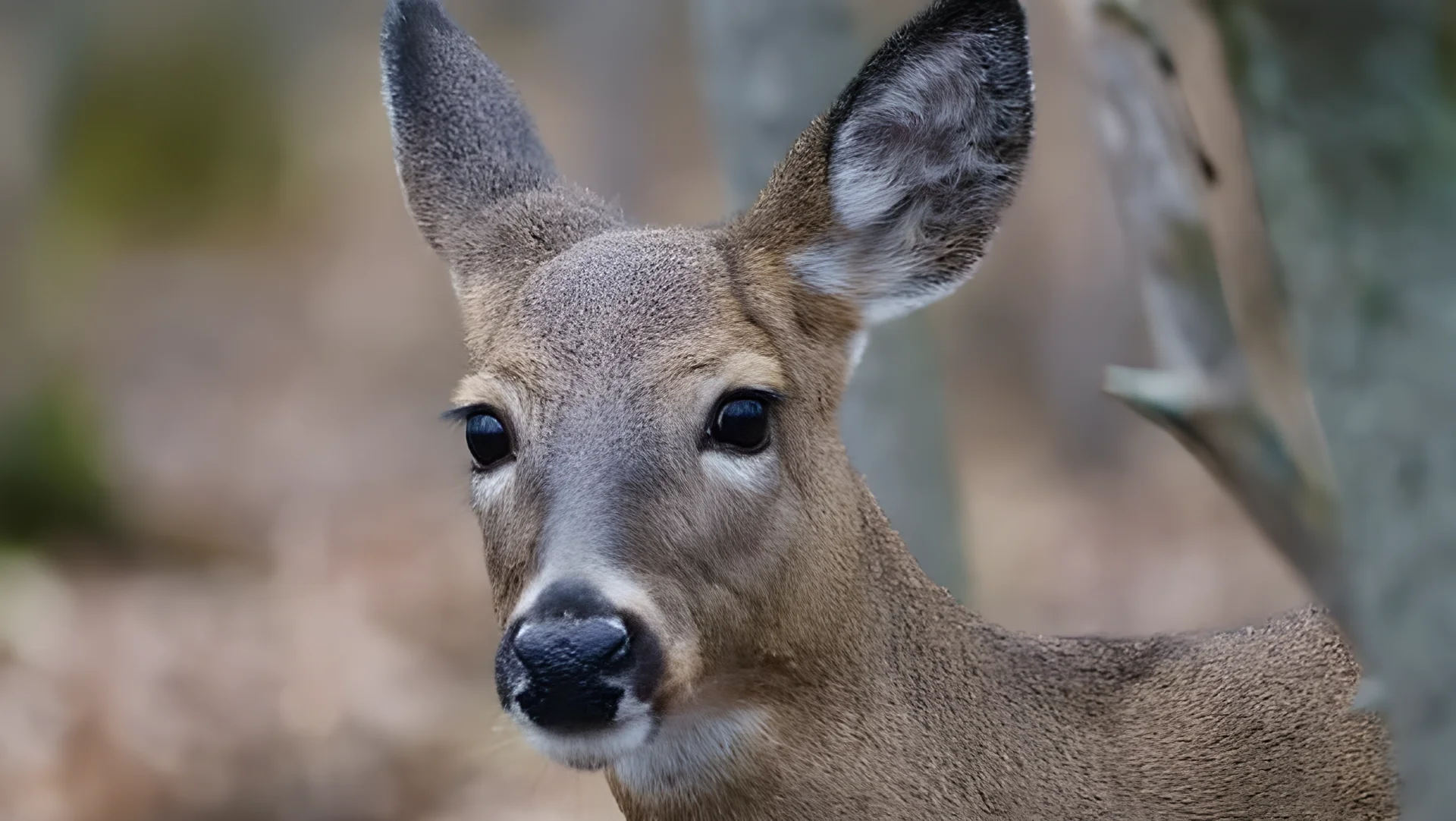
Parks Canada has announced plans to cull up to dozens of white-tailed deer on Grosse-Île, a historic island in the St. Lawrence River near Quebec City. The move comes as the agency claims the deer population poses a significant risk to rare vegetation and the safety of employees operating aircraft on the island. The proposal has sparked debate over the use of lethal wildlife management practices in a protected historic site.
Threats to Rare Flora and Safety Concerns
The island, home to rare vascular plants and endangered tree species, has seen its ecosystem under pressure from the growing deer population. Parks Canada has identified overgrazing and trampling by white-tailed deer as the main threats to the island’s vegetation, which includes two species endemic to Quebec: Victorin’s gentian and Victorin’s water-hemlock.
According to Parks Canada, the deer population on the 1.8-square-kilometre island has grown to between 89 and 95 individuals, far exceeding the estimated carrying capacity of around eight deer. The agency claims that non-lethal methods such as visual and audible deterrents have failed to keep the deer away from the aircraft runway, where their presence poses a safety risk to pilots and passengers.
“The multiple visual and audible scaring methods, such as continuous inspections of the runway in all-terrain vehicles before landings and takeoffs, and negative conditioning with the use of paint markers with white chalk balls, must be more and more intense, as white-tailed deer react little or not at all, and some return to the edge of the runway as soon as the staff leaves,” Parks Canada stated in a notice outlining its plans.
Controversy Over Lethal Management
The proposed cull has drawn criticism from animal advocates, who argue that non-lethal alternatives should be considered first. Sophie Gaillard, director of animal advocacy and legal and governmental affairs at the Montreal SPCA, called out the tendency of Canadian authorities to default to lethal wildlife management practices.
“Unfortunately, what we see, and this is at the municipal level, at the provincial level, at the federal level in Canada, is a tendency to default to lethal wildlife management practices,” Gaillard said. “As soon as there’s an issue that comes up with animals, they’re considered nuisances, they’re hindering human activity, we, by default, will resort to culls or other lethal method, when in fact other methods exist in order to solve human-wildlife conflicts.”
Gaillard pointed to potential non-lethal solutions such as physical barriers or sterilization. She also noted that the Quebec Civil Code recognizes animals as sentient beings, and previous culls in areas like Longueuil have caused public controversy.
Historic Significance and Legal Framework
Grosse-Île holds immense historical value. The island was once a quarantine station during the 19th century, where thousands of immigrants arriving from Europe were treated for diseases like typhus. An estimated 5,424 passengers died and were buried on the island during its peak in 1847.
During World War II, the site was repurposed as a research facility where secret germ warfare experiments were conducted. In 1974, the island was recognized as a national historic site and is now known as the Irish Memorial Historic Site, open to visitors from May to October.
Parks Canada plans to add Grosse-Île to the National Historic Sites of Canada Order, which would grant it the legal authority to implement the cull. The agency has also requested that Quebec’s Environment Ministry repeal the provincial regulation prohibiting hunting on the island.
Keean Nembhard, press secretary to Environment Minister Julie Dabrusin, stated that the minister supports the plan, saying it is intended to ensure responsible wildlife management to protect the island’s landscapes and historic character.
“Grosse-Île is a historic site of great heritage and commemorative significance for many communities,” Nembhard said. “The measures being considered are intended to ensure responsible wildlife management in order to protect the landscapes, ecosystems and historic character of the site for future generations.”
Green Party Leader Elizabeth May acknowledged that reducing deer numbers can be necessary in some cases but cautioned against past issues with culling. She pointed to a previous attempt in Gulf Islands National Park, where marksmen in helicopters were hired to reduce the population, which led to controversy.
“The first place to go is to the local First Nations and ask if they’re willing to help because they have hunting rights already,” May said. She also suggested non-lethal alternatives such as fencing or contraceptive sterilization.
Conservative MP Bernard Généreux, representing the area, expressed surprise at the proposal. He argued that resident hunters in nearby islands should also have access to hunting privileges on Grosse-Île.
“I understand that this can be a security issue and to propose to First Nations to harvest them is fine, but in my opinion resident hunters in the nearby islands like Île-aux-Grues should have access to the same hunting privileges,” Généreux said.
Gaillard reiterated that Parks Canada should have acted earlier to manage the deer population. She argued that if the island can only support eight or nine deer, then action should have been taken when the population exceeded 10, rather than now having to “drastically reduce the population, essentially overnight.”
The 30-day public consultation on Parks Canada’s proposal runs until April 6. The agency plans to draft rules governing the use of firearms on the site, and Quebec’s Environment Ministry has indicated it will repeal the regulation prohibiting hunting on the island.






Comments
No comments yet
Be the first to share your thoughts