

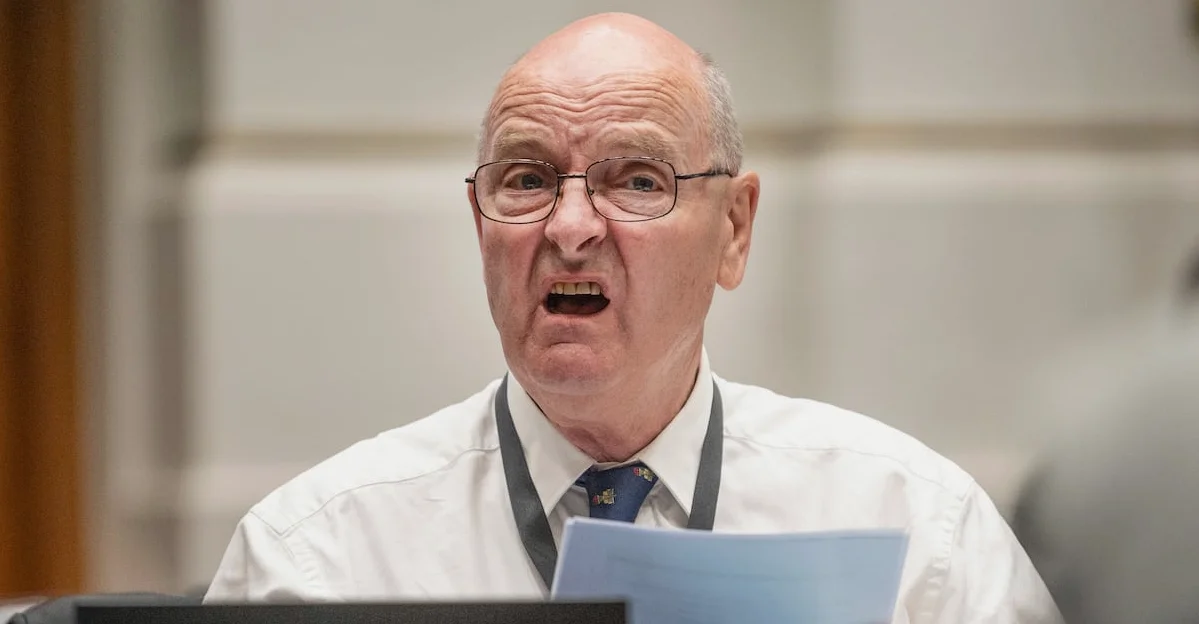
Parliament’s ad hoc committee investigating allegations of corruption in the criminal justice system has opened a criminal case against forensic investigator Paul O’Sullivan for contempt of parliament and witness intimidation. The legal action follows a series of incidents that began in November 2025, when a committee member, Nkabinde, reported receiving an intimidating message from O’Sullivan. The message, which included threats of imprisonment and accusations of bribery, prompted the committee to take formal action.
Legal Proceedings and Official Response
Parliament’s legal representative, Andile Tetyana, confirmed that a criminal case was officially opened against O’Sullivan on March 12, 2026. According to Tetyana, the matter is being investigated by the Directorate for Priority Crime Investigation (DPCI), which was informed of the case on March 13. The legal action comes after O’Sullivan appeared before the committee in February and March, where he admitted to sending the message but denied it constituted a threat.
During his testimony, O’Sullivan defended his actions by stating that a ‘tough facade’ is a necessary survival tactic in his line of work. He argued that in his professional experience, one must ‘fight fire with fire.’ O’Sullivan claimed that his actions were necessary for his own and his family’s safety, adding that he had to move his family overseas for their protection. He also offered an apology for his abrupt walkout during the parliamentary proceedings, which concluded on March 5.
Context and Background of the Allegations
The allegations against O’Sullivan emerged in November 2025 when Nkabinde informed the committee that he had received an intimidating text from O’Sullivan. The message, which included specific accusations of bribery involving individuals named Mkhwanazi and Mapula, was described as a direct threat to Nkabinde’s safety and career. The message read: ‘Get ready you lying crook. I am going to make sure you spend some years in prison. You were bribed by Mkhwanazi and Mapula. Now you will pay for your crimes, guaranteed.’
Following this incident, the committee began a formal investigation into O’Sullivan’s conduct, which led to the filing of criminal charges. The case is part of a broader inquiry into corruption within the criminal justice system, a topic that has gained significant attention in recent years. Similar investigations have been conducted in the past, including high-profile cases involving public officials and private entities accused of colluding to undermine the integrity of the legal system.
O’Sullivan’s case is the latest in a series of legal actions taken by parliament to address allegations of misconduct and obstruction of justice. The committee has previously taken action against individuals who were found to have provided false information or obstructed the investigation process. This case highlights the growing scrutiny of forensic investigators and their role in the criminal justice system.
Reactions and Implications for the Legal System
Other parties, including the Economic Freedom Fighters (EFF), have also filed a criminal case against O’Sullivan, indicating that the legal action is not solely the result of parliamentary proceedings. The EFF has long been vocal about its opposition to corruption and has taken legal action against various individuals and organizations it claims are involved in unethical practices.
Analysts suggest that the case against O’Sullivan could set a precedent for how parliament handles allegations of witness intimidation and contempt of authority. The case may also influence the way forensic investigators conduct their work, particularly in high-profile or politically sensitive cases.
According to legal experts, the charges against O’Sullivan are significant because they demonstrate the power of parliamentary committees to take legal action against individuals who are perceived to be obstructing the justice process. The case could also serve as a warning to other forensic investigators and legal professionals about the potential consequences of engaging in threatening or intimidating behavior.
O’Sullivan’s defense, while controversial, has raised questions about the ethical boundaries of forensic investigation. His argument that a ‘tough facade’ is necessary for survival in his profession has sparked debate about the balance between professional integrity and personal safety in high-risk environments. The case may prompt further discussions on the role of forensic investigators in the criminal justice system and the measures that should be taken to ensure their safety and independence.
The legal proceedings against O’Sullivan are expected to continue in the coming weeks, with the DPCI likely to conduct a thorough investigation into the allegations. The outcome of the case could have far-reaching implications for the criminal justice system, particularly in terms of how forensic investigators are perceived and treated by the legal community.
As the case unfolds, it is crucial to monitor the developments and assess their impact on the broader legal landscape. The case may also influence public perception of the criminal justice system and the measures taken to ensure transparency and accountability.






Comments
No comments yet
Be the first to share your thoughts