

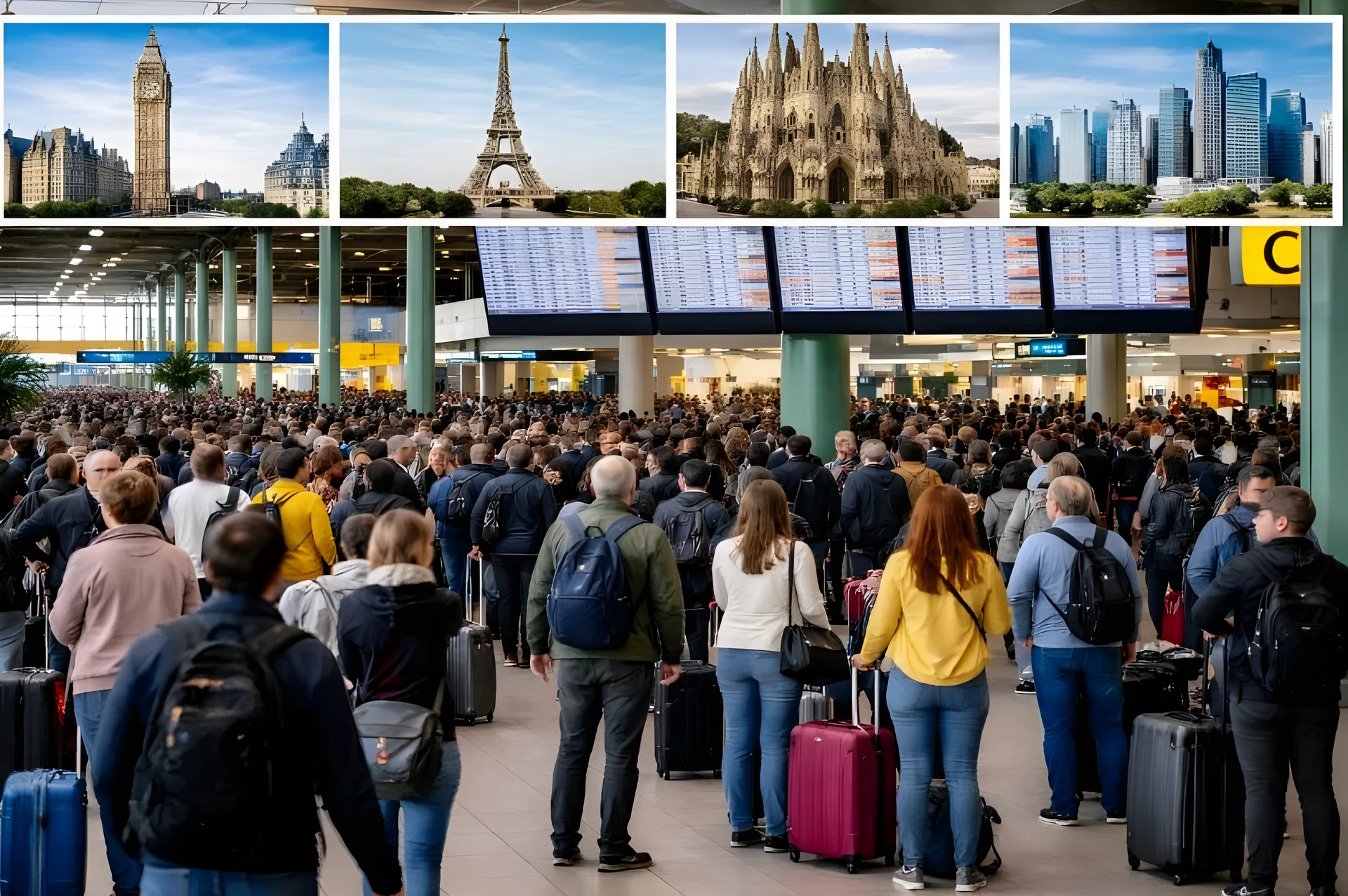
Amsterdam Schiphol Airport, one of Europe’s most critical aviation hubs, is currently facing an unprecedented wave of flight disruptions. As of today, the airport has recorded 120 delays and 11 cancellations across several major airlines, including KLM, Delta Air Lines, Transavia, easyJet, and British Airways. These disruptions are creating chaos for travelers who rely on Schiphol as a key transit point for both domestic and international flights.
Impact on Major Airlines and Flight Operations
KLM, one of the primary airlines operating out of Schiphol, has reported 50 delayed flights, accounting for nearly 40% of the total disruptions. Delta Air Lines is also heavily affected, with three cancellations and 11% of its operations delayed. Transavia Airlines has reported multiple delays, though the extent of cancellations remains less severe compared to other carriers.
easyJet, British Airways, and Iberia have also experienced delays, though the number of cancellations is relatively smaller. In contrast, Kuwait Airways and Korean Air have reported complete flight cancellations, leaving passengers with no option but to seek alternative travel arrangements. The disruptions are attributed to a combination of weather conditions, air traffic control challenges, and operational issues that have compounded over the past few days.
The 120 total delays represent a significant increase compared to previous weeks, according to flight tracking data from Flightaware. This surge in disruptions is part of a broader trend in European air travel, particularly at major hubs like Schiphol, which handles over 70 million passengers annually.
Disruptions Extend Beyond Amsterdam
The effects of Schiphol’s flight disruptions are being felt far beyond Amsterdam, with passengers in London, Paris, Barcelona, Frankfurt, and even New York experiencing delays. As Europe’s third-busiest airport, Schiphol plays a crucial role in connecting international destinations and is a vital gateway for travelers heading to the U.S., the Middle East, and Africa.
Flights to and from Schiphol are integral to the connectivity of several major European cities. For instance, passengers traveling to London via Schiphol have reported delays of up to four hours, while those bound for Paris and Barcelona are experiencing similar disruptions. Long-haul routes to destinations like Dubai, New York, and Cairo are also being impacted, leading to missed connections and increased waiting times at layover points.
Airlines have been scrambling to manage the situation, with some offering limited rebooking options and compensation for affected travelers. However, the sheer volume of disruptions has overwhelmed the airport’s operational capacity, leading to long queues at check-in counters and security checkpoints.
Passenger Impact and Travel Advice
Thousands of passengers are now facing the brunt of these disruptions, with many stranded at the airport or forced to rebook flights at short notice. Some travelers have resorted to seeking alternative accommodation or adjusting their travel plans to accommodate the delays.
According to one passenger at Schiphol, ‘I was supposed to be in Madrid by now, but my flight was delayed by six hours. I had no choice but to wait and see if they could rebook me on another flight.’ This sentiment is echoed by many others who are now dealing with the stress of uncertainty and inconvenience.
Airlines are advising passengers to check the status of their flights regularly and stay flexible with their travel plans. Some carriers are offering limited rebooking services and compensation for affected travelers, though the extent of these offers varies by airline.
Travel experts recommend that passengers keep an eye on their airline’s website or mobile app for the latest updates and consider booking flights with more flexibility, such as those with changeable dates or destinations.
Impact on the Tourism Industry
The flight disruptions at Schiphol come at a particularly sensitive time for the European tourism industry, which is gearing up for the peak travel season. As a major international gateway, Schiphol plays a crucial role in bringing millions of visitors to Amsterdam and surrounding regions each year.
With delays and cancellations impacting the airport’s operations, the tourism sector is likely to feel the ripple effects. Hotels, tour operators, and local attractions in Amsterdam, Rotterdam, and The Hague are already reporting a drop in bookings, as travelers reconsider or cancel their plans.
According to a spokesperson for a local hotel chain, ‘We’ve noticed a decline in last-minute bookings, and some of our guests have been affected by flight delays. While we’re offering flexible cancellation policies, the uncertainty is causing some travelers to hold off on their plans.’
The disruptions could also have a long-term impact on the city’s reputation as a top tourist destination. If such disruptions become a regular occurrence, it may deter potential visitors from choosing Amsterdam as their travel destination.
What’s Next for Schiphol and Air Travel
Airlines and airport authorities are working closely to resolve the current crisis, but the scale of the disruptions has raised concerns about the resilience of air travel systems during peak season. Officials at Schiphol have stated that they are monitoring the situation closely and are implementing measures to reduce delays in the coming days.
Industry analysts predict that the number of delays may decrease as the weather improves and operational challenges are addressed. However, the incident has highlighted the need for better coordination between airlines, airports, and travelers in times of crisis.
As the situation unfolds, passengers are urged to stay informed and remain patient. With the travel season in full swing, the ability of Schiphol to handle such disruptions will be closely watched by both travelers and industry stakeholders alike.






Comments
No comments yet
Be the first to share your thoughts