

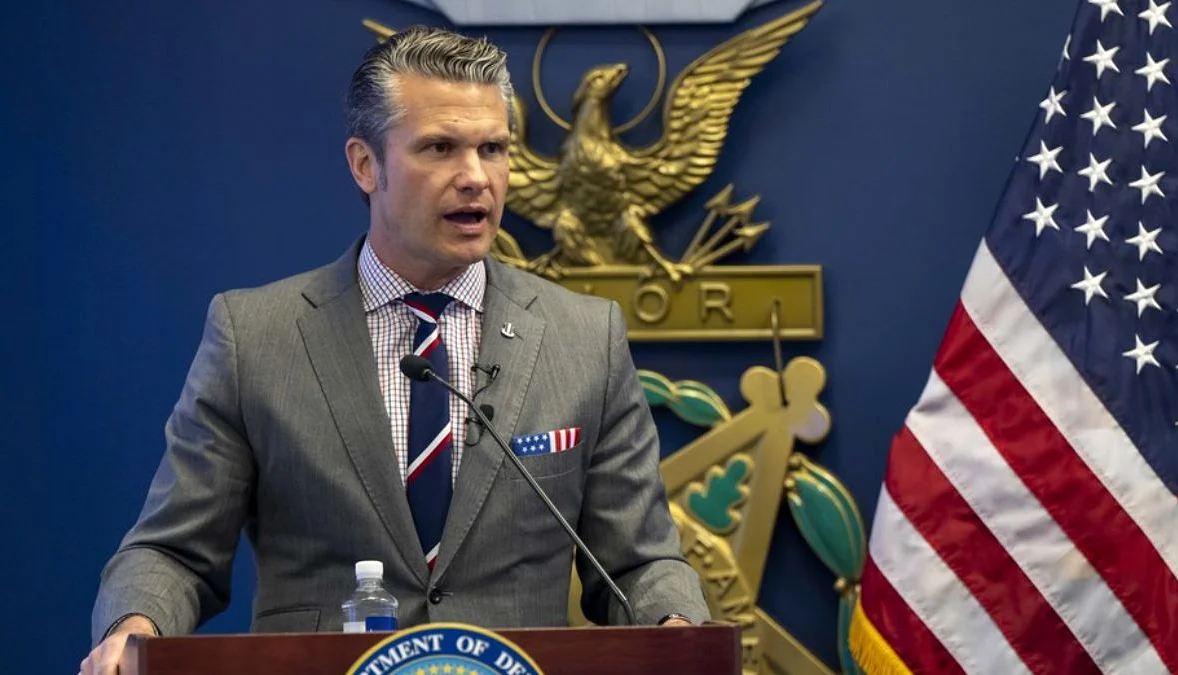
Pete Hegseth, a prominent figure in the Trump administration, has ignited controversy by suggesting that the deaths of U.S. soldiers in Operation Epic Fury are primarily a public relations issue for President Donald Trump. His remarks have drawn widespread condemnation, particularly from the families of the fallen service members, who are demanding that their loved ones be remembered as individuals rather than statistics or political setbacks.
Impact on Families and Public Perception
The comments by Hegseth, who serves as chair of the Senate Select Committee on Intelligence, have struck a nerve with the families of the slain soldiers. Sergeant Declan Coady, a 20-year-old U.S. Army member who died in the operation, was just days away from his 21st birthday. His sister, Kiera Coady, expressed deep sorrow, emphasizing that her brother was more than a casualty of war.
‘It’s hard to say anything because those that don’t know him will just know him as another person that died in combat and their lives will go on,’ Kiera Coady said in a statement. ‘I just remember all of our conversations about what he was going to do when he came back.’
Sergeant 1st Class Nicole Amor, from Minnesota, was also killed during the operation. Her husband, Joey Amor, described the loss as devastating, noting that she was nearly home with their children. ‘She was almost home. It hurts,’ he said, reflecting the grief of countless families affected by the conflict.
Captain Cody Khork, from Florida, was another casualty. His family described him as a kind-hearted individual with a generous spirit, a man who was ‘the life of the party’ and deeply cared for his fellow service members. In a statement to the Los Angeles Times, they said: ‘He was the life of the party, known for his infectious spirit, generous heart, and deep care for those who served alongside him and for everyone blessed to know him.’
Political and Public Backlash
Hegseth’s remarks were made during a media briefing where he described the deaths as ‘tragic things,’ but then quickly shifted the narrative to frame them as negative media coverage that harms Trump’s image. ‘They’re taking up front-page news, which is giving President Trump a really bad image in the eyes of the world,’ Hegseth said, according to reports.
This perspective has been met with strong opposition from both the public and lawmakers. Many argue that the focus should be on the soldiers themselves, not on political optics. The families of the fallen have been vocal in their desire for their loved ones to be remembered as individuals, not as collateral damage in a conflict.
‘Every family member of the martyred soldiers has emphasized the need for the public to see them as individuals and not collateral damage in war,’ one family representative stated. ‘They had promised to return home and had so many dreams laid ahead, and thus it was unfortunate to reduce their sacrifice to statistics or bad PR problems.’
The U.S. government and White House have been criticized for their handling of the situation. Officials have reportedly downplayed the losses, instead focusing on the successes of the Trump administration. This approach has led to backlash, especially after Hegseth’s comments.
President Trump, in response to the deaths of the troops, stated that more soldiers were expected to be killed in the ongoing conflict with Iran. He maintained that the strikes were defensive and necessary, warning that the war with Iran could last for weeks or even months.
What’s Next and the Road Ahead
As the conflict with Iran continues, the focus remains on the safety of U.S. service members and the broader implications for U.S. foreign policy. The families of the fallen have called for greater respect and recognition of their loved ones’ lives, urging the public and government to remember them as individuals, not as casualties of war.
Authorities in Iowa, Nebraska, and California have requested that flags be flown at half-mast in honor of the slain soldiers, a gesture that highlights the gravity of the situation. However, the families of some of the soldiers have asked to grieve privately, indicating the deep emotional toll of the loss.
With the ongoing conflict and the political discourse surrounding it, the U.S. military and government will likely face continued scrutiny over how they handle the sacrifices of service members. The comments by Hegseth have only heightened the tension, with many questioning the administration’s priorities in the wake of such losses.

Comments
No comments yet
Be the first to share your thoughts