

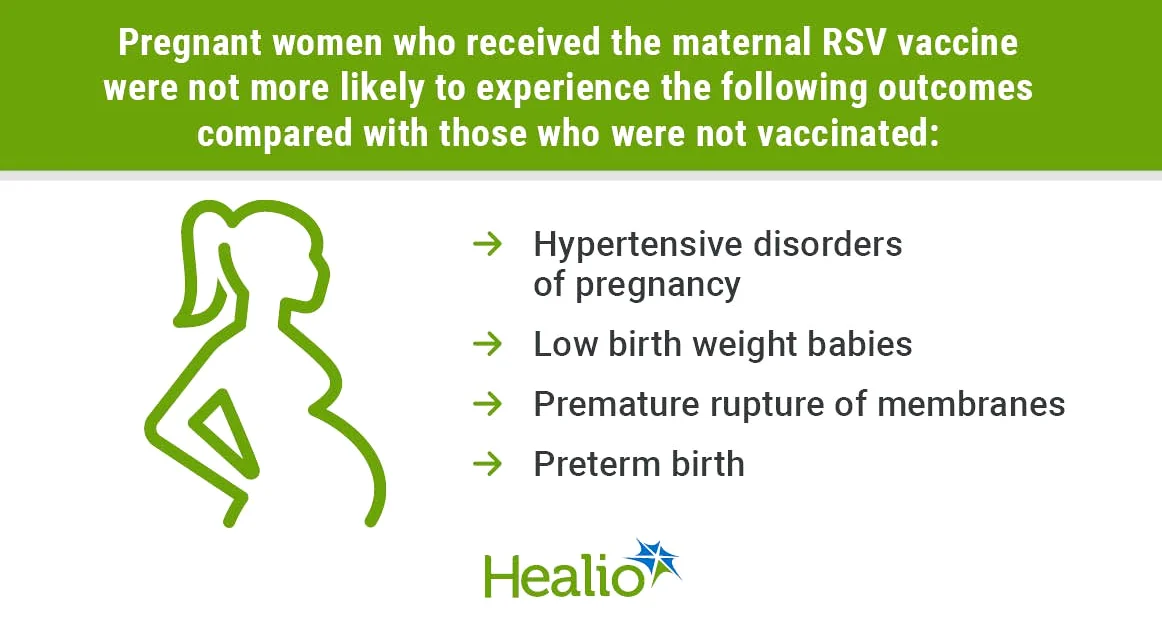
Pfizer’s Abrysvo vaccine shows no safety signals when administered to pregnant women between 32 and 36 weeks of gestation, according to an interim analysis published in JAMA.
The study matched 6,857 vaccinated pregnancies with an equal number of unvaccinated ones from five U.S. health plans. Data covered the first full RSV season after FDA approval, from Sept. 22, 2023, to June 14, 2024. Researchers tracked preterm birth, hypertensive disorders of pregnancy, premature rupture of membranes and preterm premature rupture of membranes.
Preterm birth rates stood at 4.2% among vaccinated women, compared to 5.5% in the unvaccinated group. Hypertensive disorders affected 14.3% of vaccinated pregnancies versus 13.1% of unvaccinated. Premature rupture of membranes occurred in 14% and 13.5% of the groups, respectively. Preterm premature rupture rates were 1.8% versus 2.3%.
“This interim analysis did not identify any safety concerns associated with pregnant individuals taking Abrysvo during weeks 32 through 36, six days of pregnancy,” said Sarah MacDonald, ScD, ScM, epidemiologist and director of safety surveillance research at Pfizer.
The FDA greenlit Abrysvo in August 2023. The single-dose shot protects infants from severe RSV in their first six months. Pfizer continues post-approval monitoring of all products, MacDonald told reporters.
“We work closely with health regulators to plan the studies and then regularly report our results back to them so that any potential safety issues can be identified and addressed right away,” she added.
MacDonald stressed the value of real-world data. Existing trials proved the vaccine’s effectiveness against infant RSV. Ongoing studies fill gaps in everyday use tracking.
“As part of our commitment to patient safety, all Pfizer products are monitored continuously for safety before and after approval,” she said. “This paper shares early findings from one of our ongoing studies.”
Researchers will keep watching these outcomes. Final results from the full study are due in 2029. No new concerns have surfaced so far.
Abrysvo targets a major threat to newborns. RSV hospitalizes tens of thousands of U.S. infants yearly. Vaccination during late pregnancy passes antibodies to babies.
The matched design strengthens the findings. Participants shared similar traits, reducing bias. Health plans provided thorough records on maternal and infant health.





Comments
No comments yet
Be the first to share your thoughts