

 World Headlines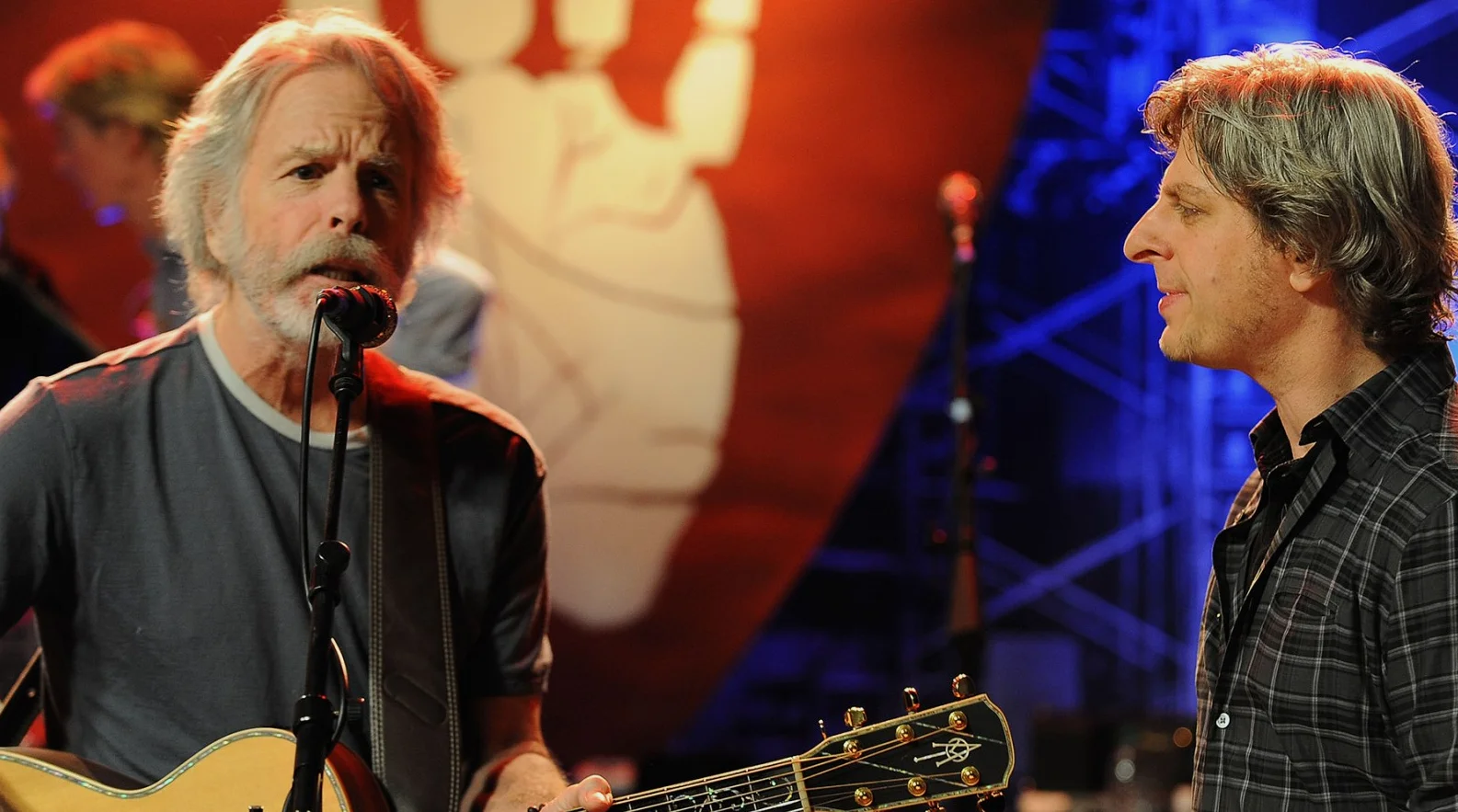
SAN FRANCISCO (AP) — Phish bassist Mike Gordon credits Bob Weir with holding the Grateful Dead together, calling him indispensable to the band’s sound and spirit.
“I don’t think the Dead could have worked without him,” Gordon said in an interview while preparing for his spring solo tour in Woodstock, New York. As the youngest member of Phish, Gordon drew parallels to Weir, known as “the Kid” in the Dead’s lineup.
Gordon first saw Weir perform as a child, mesmerized by the guitarist’s rock-star flair — the hair flicks, the self-conscious stage presence. Yet Weir’s playing struck him as selfless, weaving smoothly into the music with eloquent subtlety. “He seemed super-cold because he didn’t smile much,” Gordon recalled. “But he was one of the warmest people ever.”
Their bond deepened over years. Weir handed Gordon his phone number early on, despite barely knowing him, and they stayed in touch. They jammed together in various groups, though Weir rarely handed out praise like “nice bass line.” Instead, his humor emerged unexpectedly amid a stoic demeanor.
Gordon described Weir’s life as full of contrasts: hard-living youth giving way to disciplined health routines. At Weir’s beach house near Stinson Beach, California, they shared guided meditation inspired by Gordon’s Transcendental Meditation practice. Weir ran barefoot on pavement, rocky trails and sand, his calloused feet a testament to routine. “He combined meditation with a brisk walk or slow run, repeating his mantra,” Gordon said.
The beach house visit followed sessions at Weir’s TRI Studios in California, where they conducted brainwave experiments with MIT neurologists. The goal: capture ‘flow states’ during music. Wired to monitors with body metrics, Gordon, Weir and others pressed buttons when they felt in the zone. Results showed synchronized moments.
Weir shared a vivid dream during a Zoom call with the scientists: He watched his band from 20 feet behind the stage, a ghostly younger version of himself at the drums. Dreams, he said, shaped his creativity and songwriting.
The drive to the beach house tested Gordon’s stomach. Weir piloted his Tesla at 60 mph through Mount Tamalpais switchbacks, warning that even his kids avoided the ride. Gordon, slightly altered from THC gummies and mushrooms, fought nausea as Weir spun tales from the ’60s. One standout: At 17, underage Weir scaled a ladder to sneak into a club via skylight to meet Ramblin’ Jack Elliott. He crashed through, landing in the green room couch beside the folk legend. “Oh hi, I’m Bobby,” he said. They became lifelong friends.
At the house, Weir railed against digital music as “unlistenable,” preferring his tube stereo, turntable and analog records in a dedicated lair with a massive daybed. He played obscure country tracks, the warm sound a revelation. Guitars dotted the space; Weir demoed his one-man album setup with effects pedals, needing no chef, trainer or engineer.
Gordon’s daughter joined a return visit last year, finding Weir still polishing the same record two years on. Their friendship felt special to Gordon, a lifelong fan of Weir’s songs over Jerry Garcia’s. In group jams, Weir preached: “The singing is the face of the song. Everything serves that.”
Gordon nearly joined Dead & Company and hosted Weir with Phish. Those sessions highlighted Weir’s selfless style, always elevating the collective.
Weir, 77, continues touring with Weir’s Wolf Bros. Gordon, 58, kicks off his solo tour April 25 in Burlington, Vermont.






Comments
No comments yet
Be the first to share your thoughts