

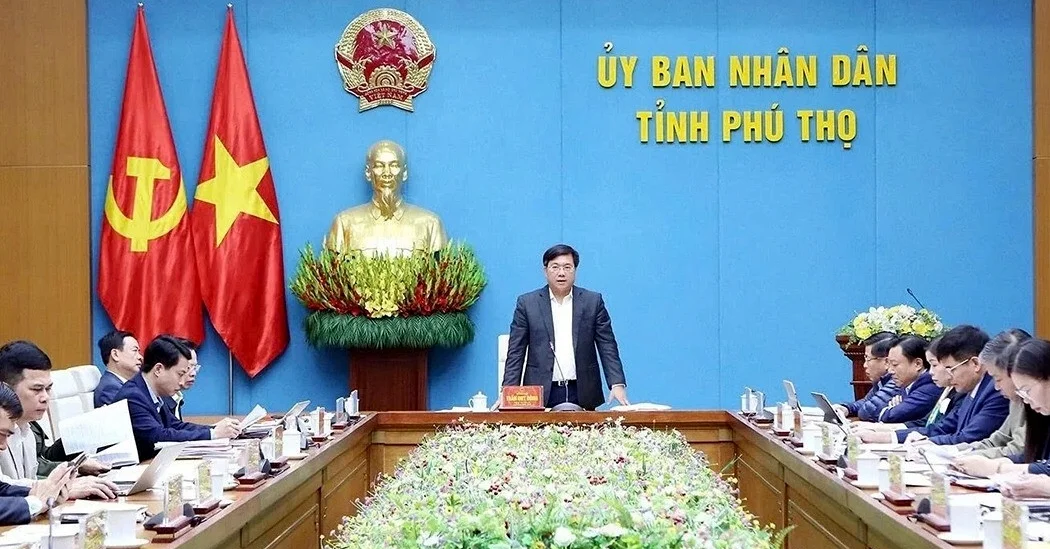
Phu Tho province has completed the review and harmonization of 1,331 legal documents 14 months ahead of schedule, aiming to unify policies and eliminate regional disparities after its administrative merger in 2023. The province, formed by the merger of Vinh Phuc, Phu Tho, and Hoa Binh, faced a complex legal landscape with three distinct sets of normative documents. The new provincial government moved swiftly to create a unified legal framework, ensuring policies on healthcare, education, and social welfare would apply uniformly across the region.
Legal Harmonization Ahead of Deadline
The National Assembly had allowed a two-year transition period for administrative synchronization, with a deadline of February 2027. However, Phu Tho’s Standing Committee of the Provincial Party and the People’s Committee chose to accelerate the process. By the end of 2025, the province had reviewed and either repealed or updated all 1,331 documents, ensuring a unified legal system would take effect on January 1, 2026.
Provincial People’s Committee Chair Tran Duy Dong emphasized the importance of unity in the merger process. ‘The most important objective of the merger is unity,’ Dong said. ‘If healthcare, education, and fee policies differ, people will naturally feel concerned.’
During the review process, 488 overlapping documents were repealed, and 235 new ones were issued. The Ministry of Justice praised the province for its efficiency, calling it a model for other regions undergoing administrative restructuring. The early completion also helped avoid a ‘one province, two mechanisms’ situation during Phu Tho’s first full fiscal year as a unified entity.
Addressing Fiscal and Social Disparities
Beyond legal documents, Phu Tho faced the challenge of aligning fiscal and social policies across the three former provinces. Review data showed significant differences in social security benefits and fiscal capacity. Vinh Phuc, which had strong revenue sources, had set its social welfare at 1.2 to 1.3 times the national minimum. Hoa Binh, on the other hand, could only offer about 80 percent of that level.
Dong noted that choosing a common standard posed a dilemma. Lowering Vinh Phuc’s benefits or taking an average would help balance the budget but could provoke public discontent. Conversely, raising the entire province’s support to Vinh Phuc’s level would ensure social consensus but place significant pressure on recurrent expenditures.
Phu Tho opted for the latter, adopting what it called the ‘upward synchronization’ strategy. The province decided to apply the most superior policies on healthcare, education, and support to all citizens, including those in the formerly less-developed areas of Hoa Binh and Phu Tho. This decision helped stabilize the population and create public consensus for the new administrative model.
Reorganizing the Administrative Structure
Alongside legal and policy harmonization, Phu Tho also restructured its administrative apparatus to operate a two-level local government model starting July 1, 2025. The abolition of the district level, which had served as an intermediary, created challenges for law enforcement and administrative capacity at the commune level.
To address this, the province implemented a personnel transfer plan. According to the Provincial People’s Committee, 651 cadres, civil servants, and public employees from provincial agencies and former district-level units were seconded or mobilized to work at communes and wards. This move aimed to bring professionals with expertise and management experience from higher levels to reinforce the grassroots workforce.
In addition, the province added 74 Vice Chairmen of Commune People’s Committees to key areas to strengthen leadership capacity. The reorganization was designed to ensure that the new administrative structure could function smoothly and efficiently, supporting the province’s broader development goals.
Phu Tho’s approach has been praised for its speed and effectiveness. The province’s economy, valued at approximately $16 billion, is now supported by a unified legal and administrative framework, setting a precedent for other regions undergoing similar administrative reforms.






Comments
No comments yet
Be the first to share your thoughts