

 BBC
BBC 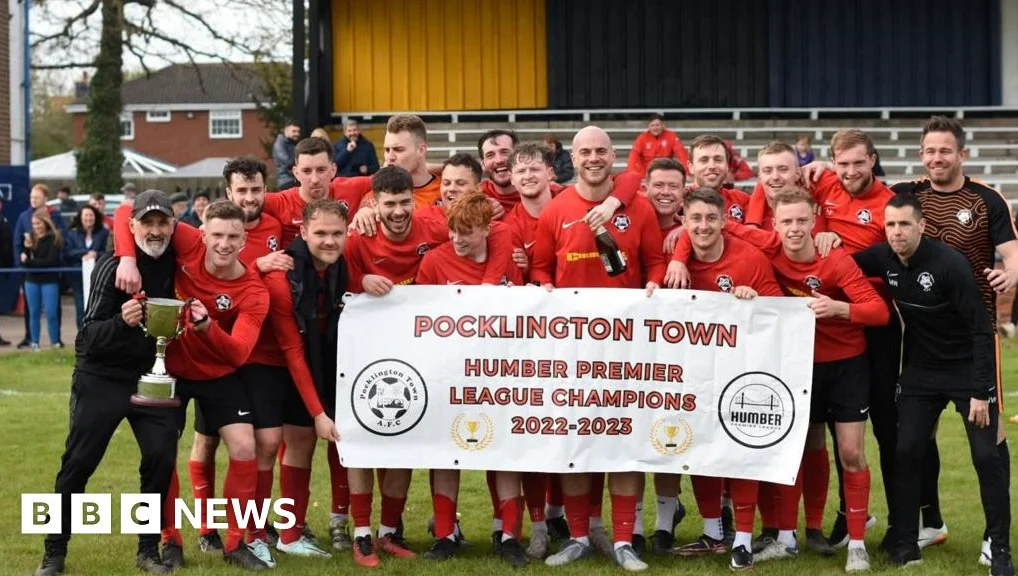
Pocklington Town Football Club has announced its withdrawal from the Humber Premier League, citing a lack of available players as the primary reason for the decision. The club, which has previously won league and cup titles, said the move was made reluctantly after long-term injuries and changing social dynamics have severely impacted player availability.
Struggles in Senior Men’s Football
The club’s statement, posted on Facebook, expressed deep regret over the decision. ‘We have been proud to have been a part of the league for over 20 years and wish the league and teams in it all the best in the future as we concentrate on rebuilding our senior section,’ the club said.
Secretary Richard Bower explained that the situation has worsened since Christmas, forcing the club to remove one of its teams from the league. ‘We were left with the decision to pull one of our teams out of one of the leagues that we play in because we don’t have enough players to field teams every week,’ Bower said.
Bower noted that over the past 15 to 20 years, opportunities for people to play football have diversified, with many players opting for alternative social activities on weekends. ‘They can go spend half an hour on a 3G facility on a Tuesday night, for example, and get their football fix that way,’ he added.
Broader Impact on Local Football
The Humber Premier League, established in 2000, is the highest level of local football outside the Northern Counties and Central Midlands leagues. It includes clubs based in and around Hull and north Lincolnshire. Pocklington Town FC had run four teams before this season but had to also withdraw a team from the East Riding County League due to similar issues.
The club’s junior girls and ladies’ football teams, however, are thriving, according to Bower. ‘It’s a shame, because we’re a great club with great facilities, [with] thriving teams, just not at the senior age group at the moment,’ he said.
The departure of Pocklington Town FC from the Humber Premier League highlights a growing challenge for local football clubs across the UK. The issue is not isolated to this club, with similar withdrawals reported in other regions over the past five years. The Football Association has noted that the number of registered players in senior men’s football has declined by 8% over the last decade, with some areas experiencing even steeper declines.
Looking Ahead
Bower remains optimistic about the future for the club’s senior men’s teams. ‘We are open to building up the senior men’s teams again in the future,’ he said. The club plans to focus on developing youth and women’s football in the interim, which has shown significant growth in recent years.
Experts suggest that the issue of player shortages in senior men’s football is likely to persist unless there are substantial changes in how the sport is and supported. ‘This is a symptom of broader societal shifts,’ said Dr. Emily Carter, a sports sociology researcher at the University of Hull. ‘People are more engaged with other activities on weekends, and football needs to adapt to that reality.’
The Humber Premier League is expected to hold a meeting in the coming weeks to discuss the implications of Pocklington Town FC’s departure. There is currently no official deadline for the club to re-enter the league, but Bower emphasized that the focus remains on rebuilding the senior section in a sustainable manner.
The club’s exit highlights the challenges faced by local football clubs in maintaining competitive teams in an increasingly fragmented sporting landscape. As the sport evolves, so too must the strategies to attract and retain players at all levels.






Comments
No comments yet
Be the first to share your thoughts