

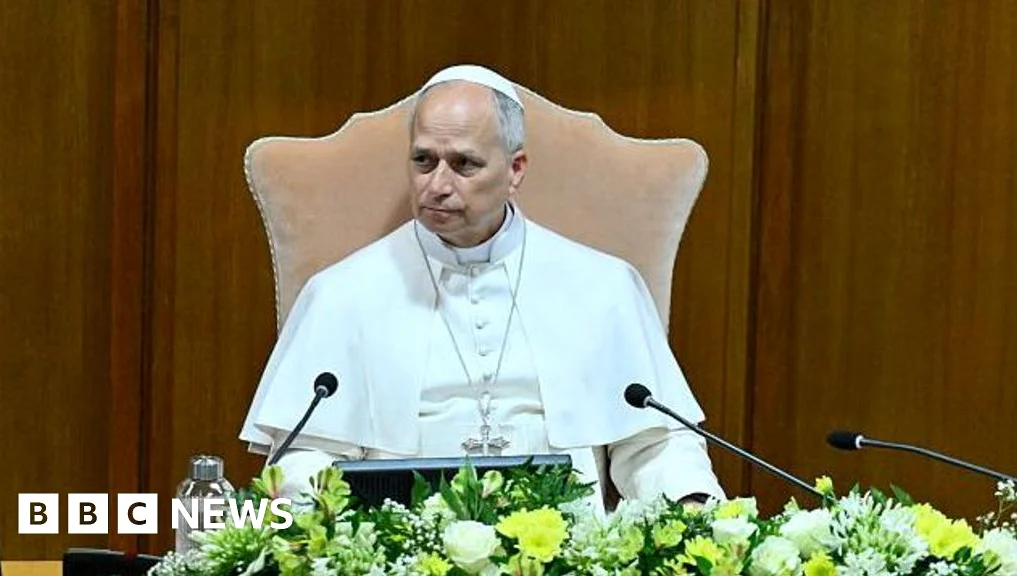
Pope Leo XIV has issued a call to ‘disarm’ artificial intelligence in his first major encyclical, titled Magnifica Humanitas, according to the BBC, National Catholic Reporter, and Todo Alicante. The document. Released on May 25. 2026, addresses the ethical and moral implications of AI and its potential to erode human dignity and solidarity.
Disarming AI: A Moral Imperative
During the presentation of the encyclical, Pope Leo emphasized the need to ‘disarm artificial intelligence of the logic that turns it into domination, exclusion, and death,’ according to ABC. He explained that the word ‘disarmed’ was chosen deliberately to ‘awaken consciences’ at a ‘grave’ moment in history, as AI increasingly influences decisions that shape human coexistence and even the conduct of war.
Leo compared AI to nuclear energy, arguing that both must serve the common good and not be used as tools of control; he cited the Church’s long-standing work for nuclear disarmament as a model, saying, ‘In a similar sense, artificial intelligence must now also be disarmed.’
Ethical Responsibility of Developers
The encyclical issues a ‘special appeal’ to AI developers, according to the BBC, stating they bear a ‘particular ethical and spiritual responsibility’ because ‘every design choice reflects a vision of humanity.’ Leo warned against technologies that ‘merely imitate certain functions of human intelligence’ without possessing the emotional, physical, or relational depth of human beings.
‘So-called artificial intelligences do not undergo experiences, do not possess a body, do not feel joy or pain, do not mature through relationships and do not know from within what love, work, friendship or responsibility mean,’ the encyclical states, according to the National Catholic Reporter.
Historical Echoes and Future Concerns
Leo’s encyclical draws parallels between the current AI crisis and historical failures to act on moral issues, such as the delayed denunciation of slavery. He also references the 2015 encyclical Laudato Si by Pope Francis, which addressed the climate crisis, and expressed concern that similar inaction may occur with AI, according to the BBC.
The encyclical was presented at an event at the Vatican on May 25, 2026, featuring testimony from the pope, prominent cardinals, theologians, and a co-founder of AI company Anthropic, Christopher Olah, according to the National Catholic Reporter. The document is the result of 10 years of dialogue between the Vatican and the tech industry.
Leo XIV. A mathematician and web designer by background, has positioned himself as a moral leader in the AI revolution, according to Todo Alicante. His encyclical. Titled Magnifica Humanitas. Was signed on May 15, the 135th anniversary of the encyclical Rerum Novarum by Pope Leo XIII, a text that inspired Leo XIV to choose his papal name.
The 110-page Spanish version of the encyclical is not only a reflection on AI but also on broader challenges facing humanity, including war, modern slavery, wealth inequality, and the erosion of democracy, according to Todo Alicante. The document aims to update the principles of the Church’s social doctrine in the context of the digital age.






Comments
No comments yet
Be the first to share your thoughts