

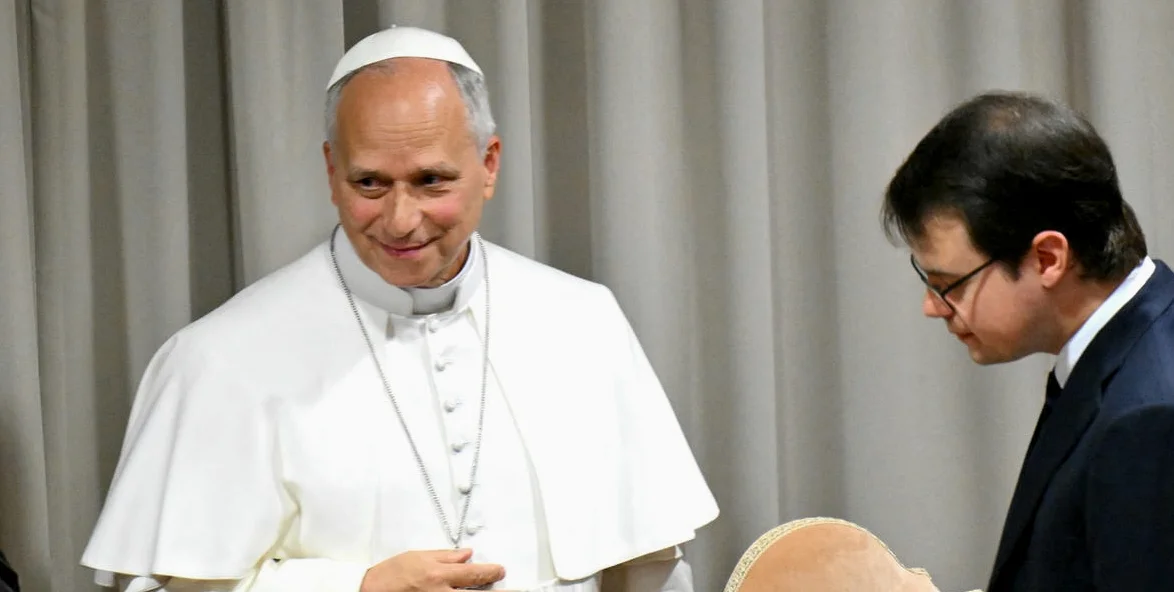
Encyclical Calls for Ethical AI Development
In a lengthy address published on Monday, Pope Leo XIV released his first encyclical, a significant letter to the Church, titled ‘Magnifica humanitas: on safeguarding the human person in the time of artificial intelligence,’ as reported by Business Insider. The 245-paragraph text outlines the pope’s concerns about AI, ranging from job losses to the influence of Big Tech.
Big Tech’s Monopoly on AI Is a Concern
Throughout the encyclical. Pope Leo emphasized the need to prevent AI power from being concentrated in the hands of a few. He warned about ‘major economic and technological actors’ controlling platforms, infrastructure, data, and computing power, noting that this concentration increases the risk of distorted forms of development. The pope did not explicitly name companies but referenced major players in the industry, including Nvidia, Microsoft, Amazon, Google, Meta, OpenAI, and Anthropic.
He called for AI to be ‘disarmed’ from the race for more powerful algorithms and commercial dominance. According to the pope, ‘disarming’ AI means freeing technology from monopolistic control and opening it to discussion and debate, making it human-friendly and restoring it to the plurality of human cultures and ways of life. The encyclical also draws on the Catholic principle of the ‘universal destination of goods,’ traditionally applied to natural resources, suggesting it should now extend to algorithms, digital platforms, and data.
Also, the pope warned that ‘small but highly influential groups’ could use AI to shape democratic processes and economic systems to their advantage. This intervention marks a significant papal stance in the ongoing AI debate, echoing concerns previously raised by AI skeptics.
Message to AI Developers
Pope Leo issued a ‘special appeal’ to AI developers, emphasizing their ‘particular ethical and spiritual responsibility.’ He stated that every design choice reflects a vision of humanity and urged developers to embed systems with the values of transparency, responsibility, and a ‘careful attention to ensuring that what is being cultivated is a genuine good.’
The pope also cautioned against presenting AI systems as entirely neutral and objective, noting that they often reflect and reinforce the biases of their creators. In a statement, he said, ‘I accept your invitation to work together, to listen and to speak, and together, to find a way for humanity in this time of artificial intelligence,’ referring to Anthropic cofounder Chris Olah, who spoke at the Vatican City after the letter’s release.
Concerns About AI-Related Unemployment
A major theme of the encyclical was AI-related unemployment, with Pope Leo warning that mass unemployment could become a ‘true social calamity.’ The pope argued that while it is ‘certainly desirable’ for AI to make people’s jobs safer and easier, ‘the protection of employment opportunities and the irreplaceable role of the individual must remain the general rule.’
He stressed that the ‘pursuit of greater profits’ cannot justify decisions that eliminate jobs. Mass job losses from AI, he warned, risk creating ‘human and cultural impoverishment.’ The encyclical suggests that governments and companies should prepare for AI disruption before more jobs disappear. ‘Every introduction of automation and AI should be accompanied by verifiable measures to protect the employment, retraining, and participation of workers,’ the pope wrote.
Stephen Parker, co-head of global investment strategy at JPMorgan Private Bank, recently told Business Insider that ‘companies are realizing that AI has the potential to upskill workers’ rather than make them obsolete. However, the pope’s concerns highlight the need for proactive measures to ensure AI focuses on ‘freeing up human time and capabilities, rather than producing exclusion.’





Comments
No comments yet
Be the first to share your thoughts