

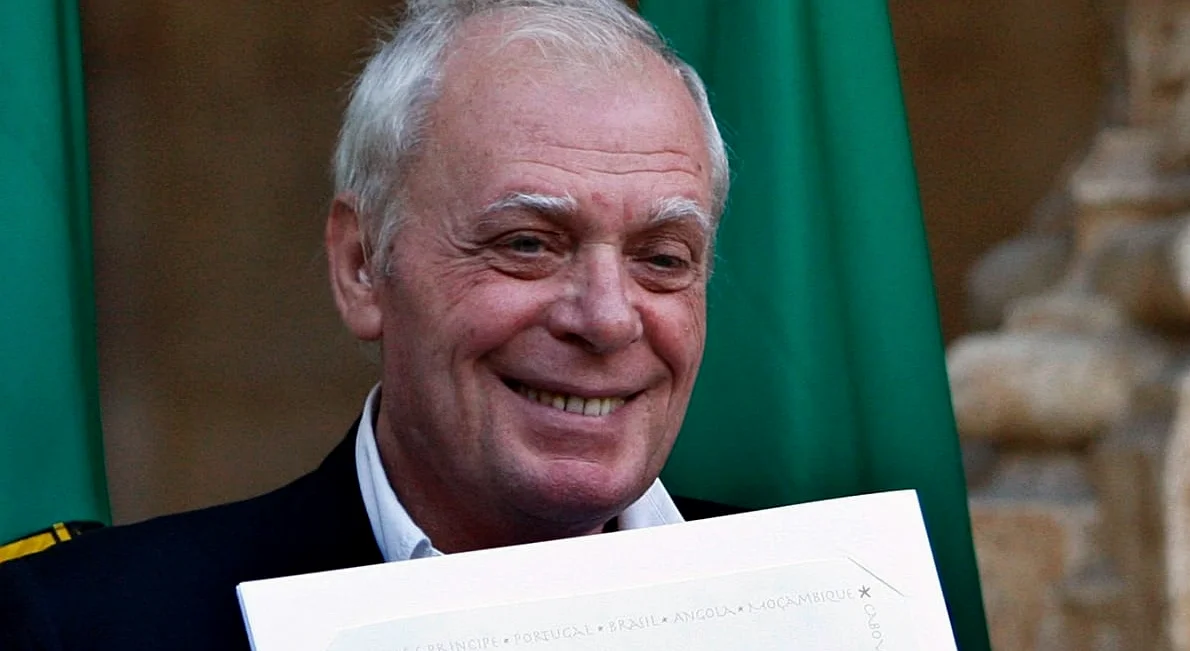
António Lobo Antunes, one of Portugal’s most celebrated and widely translated writers, has died at the age of 83. His passing was confirmed by his publishing house, the Leya Group, which described him as a towering figure in modern Portuguese literature.
A Career Rooted in Medicine and War
António Lobo Antunes was born in Lisbon in September 1942. He graduated from the Faculty of Medicine in Lisbon, where he specialised in psychiatry and worked as a psychiatrist for several years before turning to writing.
His literary career began after his service in Angola in 1973 during Portugal’s colonial war. As a field doctor, he witnessed the brutal realities of war, experiences that deeply influenced his later work.
His first books, Memory of an Elephant and The Land at the End of the World, were published in 1979, followed by Knowledge of Hell the next year. These early works set the tone for a literary career that would span more than 40 years.
Literary Legacy and Recognition
Lobo Antunes went on to publish numerous acclaimed works, including Fado Alexandrino (1983), As Naus (1988), The Inquisitors’ Manual (1996), and The Splendour of Portugal (1997). These works solidified his reputation as a major voice in contemporary Portuguese literature.
Since 1985, he devoted himself exclusively to writing, often drawing on themes of Portugal’s past, from the Age of Discoveries to the Carnation Revolution of 1974. His work frequently revisited the Lisbon neighborhood of Benfica, where he spent his childhood and adolescence.
Lobo Antunes’s writing has been translated into multiple languages, earning him international acclaim. He received numerous awards, including the Camões Prize in 2007, the Jerusalem Prize in 2005, and the Ovid Prize in 2003. In 2008, he was awarded the insignia of Commander of the Order of Arts and Letters by the French Ministry of Culture.
Impact on Portuguese Culture and Beyond
António Lobo Antunes’s work has had a profound impact on Portuguese culture, both domestically and internationally. His novels often explore the psychological and emotional toll of war, colonialism, and historical trauma, themes that resonate with readers across the globe.
According to the Leya Group, his books have sold millions of copies worldwide, with translations in over 30 languages. His work has been taught in universities and referenced in academic studies, cementing his legacy as a literary giant.
“His writing captured the essence of human suffering and resilience,” said one literary critic. “He was not just a writer, but a storyteller of the soul.”
His death has prompted an outpouring of tributes from fellow authors, readers, and cultural institutions in Portugal and abroad. Events are being planned to honor his life and work, including book fairs and literary symposiums.
With no immediate plans for a formal memorial, his family has requested privacy during this time. However, his legacy will undoubtedly continue to influence the next generation of writers and readers.




Comments
No comments yet
Be the first to share your thoughts