

 BBC
BBC 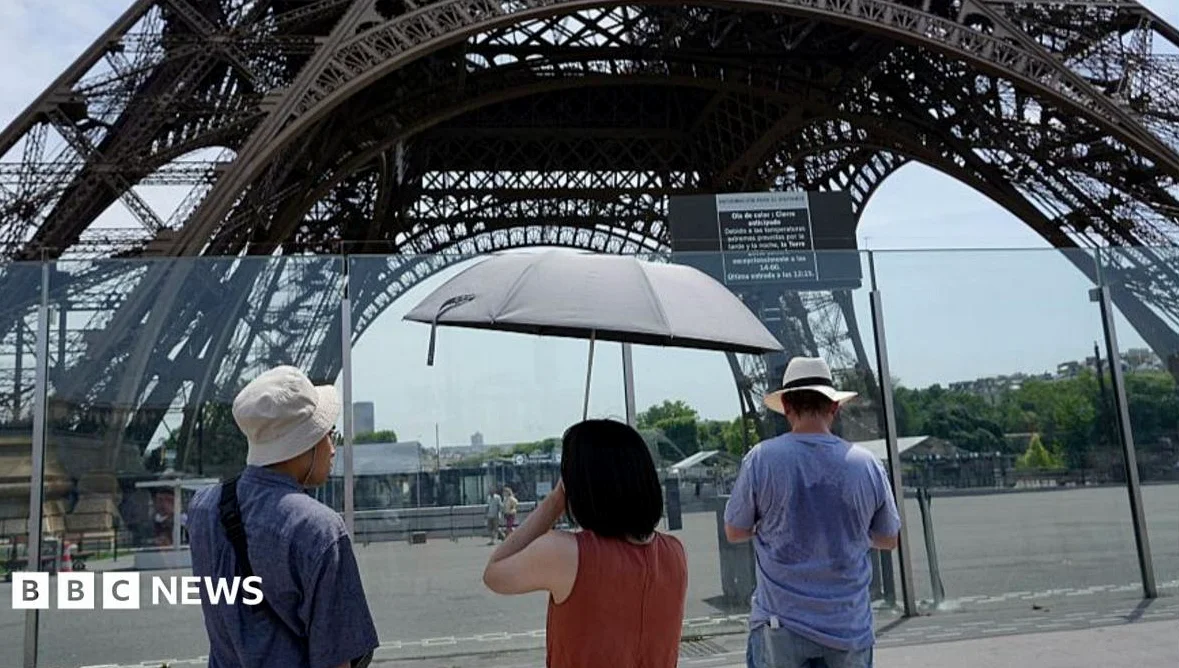
Tens of thousands of homes in western France are without power as the country’s record-breaking heatwave peaks on Wednesday, according to BBC. About 68. 000 homes in the region of Brittany have been affected, with electricity unlikely to be fully restored until Wednesday night at the earliest, authorities said.
Red Heat Alerts Across Much of France
More than half of the country remains under a red heat alert, with a high of 43C (109.4F) possible later in the day in the southwest, according to forecaster Météo France. The peak comes after the country experienced its hottest day since records began on Tuesday, with an average temperature of 29.8C (85.54F).
Pissos, in the south-western Landes region, saw a scorching temperature of 44.3C on Tuesday, Météo France said. The country also experienced its hottest night ever recorded from Monday night into Tuesday, with an average temperature of 29.9C across the country, the forecaster added.
Heatwave Spreading Across Western Europe
The heatwave spread to other parts of western Europe on Wednesday, with an orange alert for dangerous weather in place for parts of the Netherlands — a rare red heat alert is in place for parts of the UK, where temperatures could hit 38C on Thursday.
Temperatures are expected to peak in the Netherlands and Belgium on Friday, while the mercury in Germany is expected to rise to 40C over the weekend. The heatwave will also extend to eastern Europe over the next few days, with severe heat warnings issued for countries including Poland, Croatia and Hungary for later in the week.
So far, France, Spain and Italy have been hardest hit by the heatwave — At least forty people have drowned in heatwave-related incidents in France since last Thursday, according to the prime minister.
On Wednesday. Red alerts in France were extended to include four more regions, Météo France said, bringing the total number to 58; Thirty-one more regions are under an orange alert. As of 05:00 local time. La Rochelle in the southwest had already recorded a temperature of 29C, the forecaster said.
Severe Heat Impacts and Warnings
Highs of 39 to 40C are forecast across much of the country’s west, from Paris to Brittany, and are expected to remain the same until the weekend. In Bordeaux. It is possible that the city’s all-time record temperature could be broken for a third day running, and the previous record was 41.6C on 11 August 2025. But on Monday it reached 41.8C, while on Tuesday it was 42.1C.
Some relief from the heat is expected from Friday, with temperatures forecast to gradually drop over the weekend — this change will come with thunderstorms, bringing a risk of flash flooding and large hail.
Speaking to French radio. Labour minister Jean-Pierre Farandou said “we’re in the process of finding out we’ve become a hot country” and warned society may need to adapt; Authorities warn that the risk of forest fires is higher during such a prolonged and intense heatwave.
In the Maine-et-Loire region, more than 150 firefighters were deployed to fight a major fire on Tuesday in the Breignon forest in Saint-Macaire; it was brought under control overnight, authorities said, with no-one reported injured.
Sights in the French capital Paris have also been impacted by the hot weather, as the world’s most visited museum, the Louvre, said it would close its doors earlier this week. The Louvre said its historic building “remains fragile, external and is not sufficiently adapted to climate change”, adding that the “build-up of heat is at its highest at the end of the day, and intensified by the volume of visitors”.
The Eiffel Tower is also closing earlier than usual on Tuesday and Wednesday. Among those who died in heatwave-related drownings was a six-year-old child who had gone to an unsupervised beach with his parents in Bègles, Gironde on Tuesday evening. A 17-year-old girl also drowned while swimming in a prohibited area of the Marne river in Champs-sur-Marne, on the outskirts of Paris.
Several drownings have also been reported in Germany, including that of a 26-year-old man who died after going into the Danube River near Regensburg in Bavaria on Tuesday evening. Emergency services spent hours searching for the Syrian man, who could not swim, using a helicopter and boats; Attempts to resuscitate him after he was found some hours later were unsuccessful.
Temperatures are expected to reach 37C on Wednesday in Germany, and people are being warned not to underestimate the dangers of swimming; there are also fears of drought in some regions. In Brandenburg. Hesse and North Rhine-Westphalia, authorities are urging people to use water sparingly, German newspaper Die Welt reports.
Barbecue bans have also been introduced in cities including Stuttgart and Freiburg in Baden-Württemberg, local media report. While Spain has experienced baking heat over the last few days, temperatures are expected to start falling on the Iberian peninsula on Wednesday.






Comments
No comments yet
Be the first to share your thoughts