

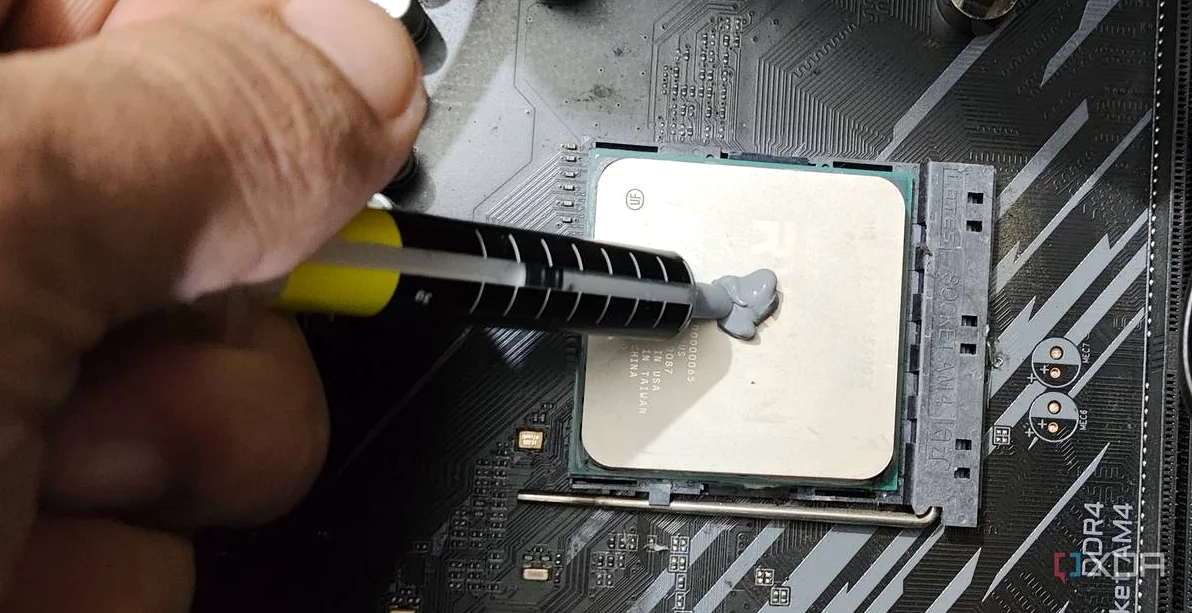
Premium thermal pastes promise dramatic cooling boosts, but real-world results fall short of the hype. Swapping Arctic MX-4 for Kryonaut on an Arctic Liquid Freezer II cooler dropped temperatures by just 2C, despite the premium paste’s 12.5 W/mK thermal conductivity—50% higher than MX-4 on paper.
Tech writer Ayush Pande tested multiple compounds after battling high CPU and GPU heat. He ordered high-end options from Amazon and Newegg whenever temps spiked. The fixes helped slightly but never transformed performance. Average temperatures stayed similar across cheap and quality pastes, though max temps occasionally spiked higher with generics.
Mounting matters more than marketing claims. Thermal paste fills tiny gaps between the CPU’s integrated heat spreader and cooler base. Heat transfers primarily through metal contact, not the paste layer. Uneven pressure or poor seating undermines even top-tier compounds. Arctic’s Liquid Freezer III addresses this with a contact frame for Intel’s LGA 1700 socket, ensuring flatter, firmer connections.
Officials at cooler makers emphasize consistent pressure for optimal results. Pande learned this after underwhelming repastes. Manufacturers tout ‘extreme performance’ and conductivity specs, leading users to treat paste upgrades like hardware swaps. In practice, dry or botched applications cause bigger issues than paste choice.
Premium pastes shine in niches. Laptops often ship with subpar stock compounds; a $20 tube like Kryonaut can tame throttling. Extreme overclockers chasing every degree gain value from the slim margin. Casual builders, though, see little payoff. CPUs often use extra headroom to boost clocks by 50-100MHz, with no perceptible real-world speedups.
For everyday rigs, solid basics deliver. Prioritize cooler quality, even mounting, case airflow and fan curves. A generic paste suffices once those fundamentals align. Liquid metal offers bigger drops—up to 10C—but risks shorting components and demands expertise.
Pande’s seven years in tech, including stints at MakeUseOf and XDA, shaped his views. He runs Windows desktops and MacBooks but prioritizes temps over OS quirks. His tests underscore a simple truth: Good thermal paste gets the job done for most.






Comments
No comments yet
Be the first to share your thoughts