

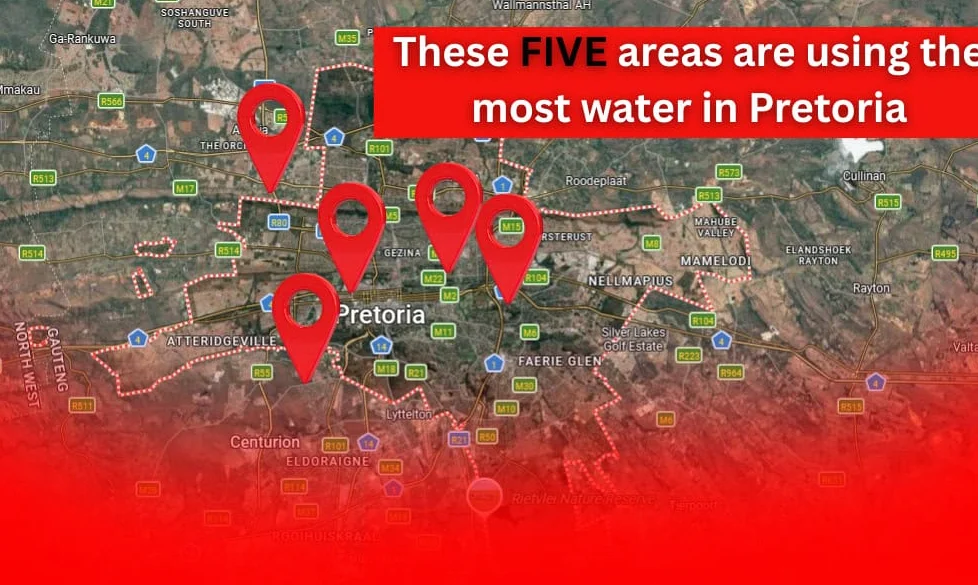
Pretoria residents in Atteridgeville, Laudium, Mabopane, Soshanguve and another hotspot guzzle the most water, officials with the City of Tshwane reported. Consumption in these areas has spiked to more than 30.6 kiloliters per household monthly since December 2025. The trend piles pressure on reservoirs and pipelines already stretched thin.
City of Tshwane spokesperson urged immediate cutbacks. Residents should hunt for leaks, shorten showers, skip garden watering unless essential and wait for full loads before running washing machines or dishwashers. “If it is not reduced, it could lead to larger-scale outages,” the city warned in a February 18 statement.
High demand hits hardest in the identified zones. Atteridgeville HL and Laudium reservoirs hold steady for now but groan under persistent use. Mabopane Main and Kruisfontein Reservoirs sit critically low. Soshanguve L, DD systems and parts of Mabopane stand empty, halting active supply. Technical crews battle to refill them amid depleted networks.
Some relief appeared on February 12. Reservoirs in Regions 1, 3 and 4 showed early stabilization signs after last week’s drain from inflow issues. Ga-Rankuwa and Mabopane Central reservoirs run normally. Pretoriusrand Reservoir bounced back to stable levels.
Still, the city stressed high-use areas pose the biggest risk. Average household consumption citywide climbed sharply, taxing the entire system. Officials link the rise to post-December habits that fail to account for network limits. Tshwane’s water grid serves over 3 million people across its regions, making every kiloliter count.
Conservation pushes come amid broader South African water woes. Nearby metros face similar strains from drought, aging infrastructure and population growth. Tshwane officials previously flagged leaks and wasteful practices as culprits in 40% network losses. Households in the top five areas exceed the city’s 20-kiloliter monthly target by 50% or more.
Residents in flagged neighborhoods report mixed responses. Some blame faulty meters or unrepaired municipal pipes. Others point to summer heat driving extra irrigation. City data, however, pins the bulk on domestic over-use.
Tshwane plans targeted interventions. Meter checks and leak audits target the hotspots starting next week. Non-essential outdoor use could face restrictions if levels don’t drop. Officials eye incentives for low-usage households to encourage compliance.
The crisis highlights Tshwane’s vulnerability. Major suppliers like the Integrated Vaal River System hover near capacity. Any prolonged demand spike risks cascading shortages. City leaders called for collective action to avert blackouts.






Comments
No comments yet
Be the first to share your thoughts